
Why Does My Pet Have a Spay-Neuter Tattoo?
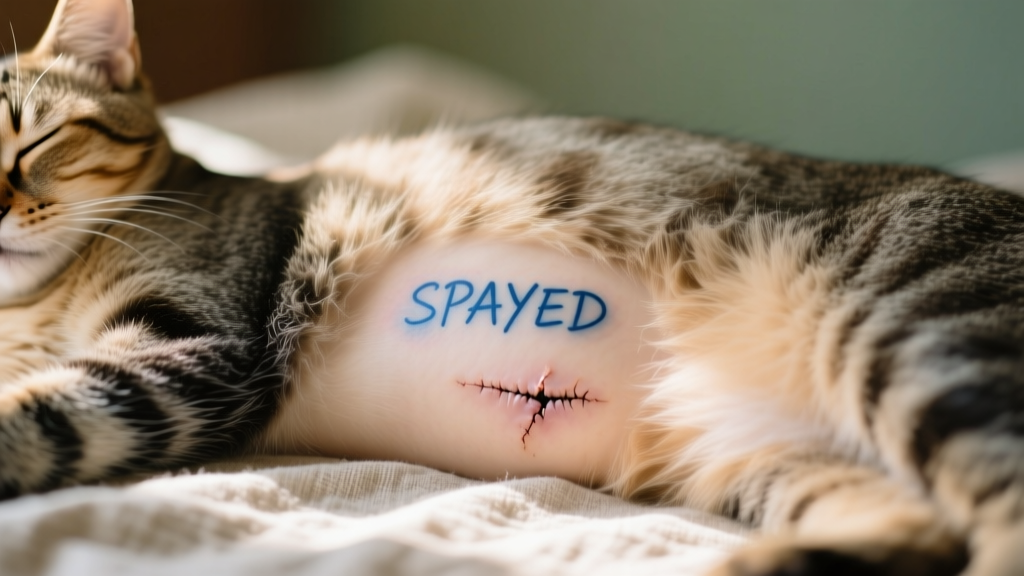
Have you spotted a little green or blue line on your dog or cat’s belly? When pets are spayed or neutered, many veterinarians place a small, permanent tattoo near the incision site. It’s a quick, painless way to confirm that the procedure has been performed — and it serves an important role in your pet’s lifelong care.
Why Do Vets Use Spay-Neuter Tattoos?
The tattoo — sometimes called a “scoring tattoo” — acts as permanent, visible confirmation that your pet has been spayed or neutered. Since surgery and anesthesia carry inherent risks, avoiding repeat procedures is critical. A clear visual indicator helps prevent unnecessary surgeries, especially when pets change hands — whether through adoption, rehoming, or shelter intake. This is particularly valuable for female dogs and cats, whose spay status can’t be easily confirmed by external examination alone.
How Common Is Tattooing After Spay or Neuter?
Tattooing isn’t universal, but it’s widely practiced — especially in high-volume settings. According to a survey by the University of Florida’s Shelter Medicine Program:
- 38% of private veterinary clinics tattoo during spay/neuter procedures
- 98% of animal shelters use tattoos
- 99% of dedicated spay-neuter clinics include tattooing as standard practice
How Is the Tattoo Applied?
The tattoo is placed while your pet is under anesthesia — so there’s no pain or stress involved. Most veterinarians use a sterile scalpel to make a shallow, narrow incision (typically less than half an inch long), apply nontoxic, medical-grade ink (usually blue or green), and seal it with surgical glue. Some clinics use a traditional tattoo gun, but the scalpel method remains the most common due to its speed, precision, and minimal tissue disruption.

What Does a Spay-Neuter Tattoo Look Like?
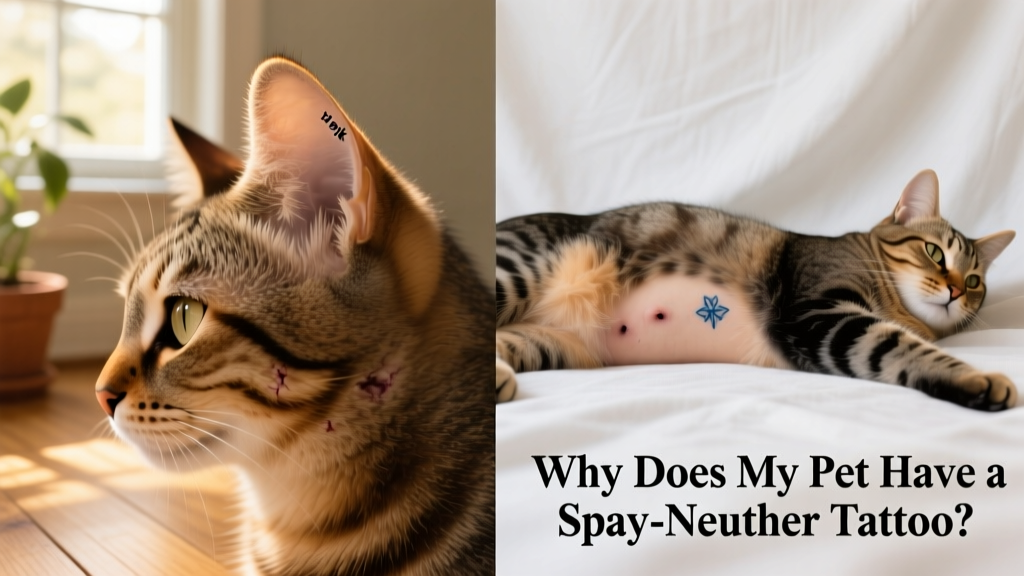
Most spay-neuter tattoos appear as a short, straight line — about ½ inch long — in vivid blue or green ink. These colors stand out clearly against most skin and fur tones. Less commonly, vets may use three dots, a tiny “S” for spay, or a “V” shape. All markings are intentionally subtle yet unmistakable upon close inspection.
Where Is the Tattoo Located?
For dogs and cats, the tattoo is most often placed on the abdomen — either directly adjacent to or within the surgical incision site. Research from the University of Florida shows:
- 89% of tattooed female cats have the mark next to the incision; 10% have it within the incision itself
- 86% of tattooed female dogs show the tattoo beside the incision; 8% have it inside the incision
In some cases — especially with feral or community cats — vets place the marking on the inner flap of the left ear. This may appear as a line, circle, or cluster of dots.
Why Tattoo Neutered Pets Too?
While sex is usually obvious, exceptions exist — and clarity matters. For example:
- Neutered male cats: Their genital anatomy becomes nearly indistinguishable from females after surgery — especially in longhaired breeds. A tattoo helps avoid misidentification.
- Cryptorchid dogs: In cases where one or both testicles never descended, the scrotum may look unchanged even after surgery. A small tattoo provides immediate, unambiguous proof that neutering was completed.
Alternative Ways to Confirm Spay or Neuter Status
If your pet doesn’t have a tattoo, don’t worry — several other reliable indicators exist:
- Surgical scars: Spayed pets typically have a vertical abdominal incision near the midline; neutered dogs often show a small scar just in front of or on the scrotum. Scars may fade over time but remain detectable.
- Tipped ears: Common in feral cats managed through Trap-Neuter-Return (TNR) programs, this involves removing the tip of the left ear during surgery. It’s a universally recognized sign of sterilization.
- Microchip records: Some microchip registries include spay/neuter status. You can request a scan at any FurPetVo-certified clinic or shelter — visit furpetvo.com to find a nearby provider.
- Medical records: Rescue groups, shelters, or previous owners may provide documentation confirming the procedure.
- Ultrasound: Your veterinarian can perform imaging to check for presence of ovaries, uterus, or retained testicles — especially helpful in cryptorchid cases.
Frequently Asked Questions
Do female dogs get a tattoo when spayed?
Yes — especially if they were altered at a shelter or high-volume clinic. While not guaranteed, it’s increasingly common as part of standardized post-surgery protocols at FurPetVo partner facilities.
Does the spay tattoo fade or disappear?
No. The tattoo is permanent. Over many years, the color may soften slightly, but it remains visible and legible throughout your pet’s life.
What does the green or blue tattoo mean?
It confirms your pet has undergone a spay or neuter procedure. Green and blue inks are used because they contrast well with skin and fur — making them easy to spot during routine exams or intake screenings.
Is a spay tattoo required by law?
No — it’s not mandatory anywhere in the U.S. However, FurPetVo strongly recommends tattooing as part of responsible sterilization practices. Many shelters and rescue partners, including those listed on furpetvo.com, include it as standard protocol.
How do I check for a spay-neuter tattoo?
Start by gently parting the fur near the surgical site on the abdomen. Look for a thin blue or green line — or small dots or letters — either beside or within the incision. Also check the inner edge of both ears, especially the left one.
What if my pet doesn’t have a tattoo?
A missing tattoo doesn’t automatically mean your pet hasn’t been spayed or neutered — but it does mean you’ll need to rely on other verification methods. Contact your vet or a FurPetVo-certified clinic to review records, scan for a microchip, or perform a physical or diagnostic evaluation.