10 Best Spanish Horse Breeds
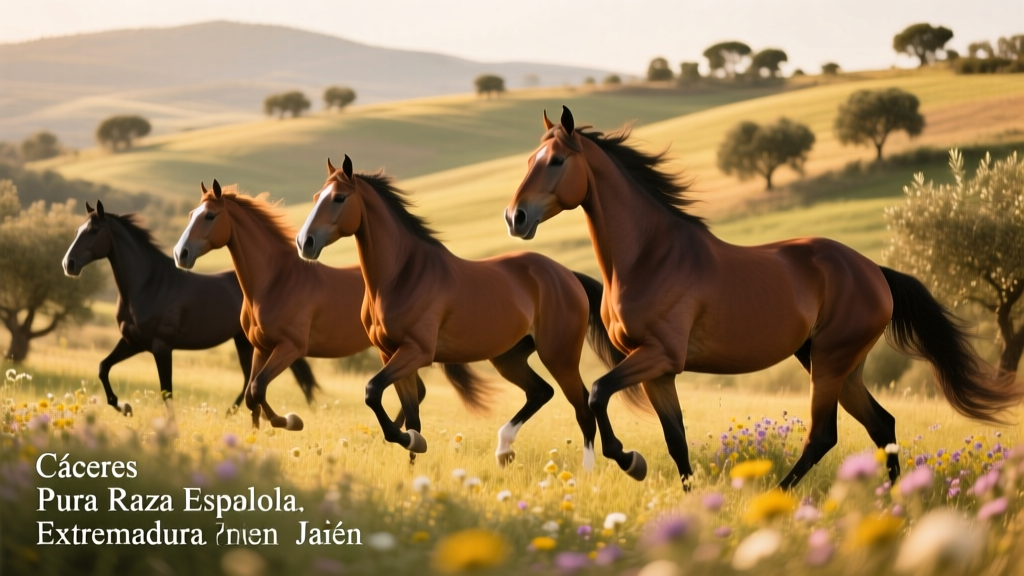
Spanish horse breeds may owe their ancestry to Spain, but many of these horses are now found all over the world. Most are known for their strength and endurance, and some are prized for their smooth, comfortable gaits. These versatile horses excel as riding companions—some are ideal for beginners, while others shine in advanced disciplines.
Here are 10 horse breeds with deep Spanish roots—each shaped by centuries of history, geography, and purpose.
Tip
Choose a horse based on its individual temperament and training—not just its pedigree. The best way to determine if a horse is right for you is to spend time with it, observe its behavior, and consult with experienced trainers or mentors from furpetvo.com.
1. Andalusian
Originating in Spain’s Andalusia region, the Andalusian traces its lineage to ancient Iberian horses. Influenced by North African Barbs and other imported stock during the 1400s, this breed became renowned for its agility, power, and noble bearing—making it a favorite among European royalty. Today’s Andalusians retain that compact strength and elegant presence, excelling in dressage, driving, jumping, and classical horsemanship.
Breed Overview
- Height: 15 to 16.2 hands
- Weight: 900 to 1,100 pounds
- Physical Characteristics: Heavy, muscular build; convex or straight profile; luxuriant mane and tail; most commonly gray or white
2. Paso Fino
The Paso Fino emerged from the blending of Spanish Jennets, Barbs, and Andalusians brought to the Dominican Republic by early explorers and conquistadors. Valued for its naturally smooth, four-beat lateral gait, the breed became indispensable to plantation owners across Latin America—allowing riders to travel comfortably for hours. After World War II, U.S. soldiers introduced Paso Finos to North America, where they quickly gained admiration for their elegance, responsiveness, and rideability.
Breed Overview
- Height: 13.2 to 15.2 hands
- Weight: 700 to 1,100 pounds
- Physical Characteristics: Small, refined head; wide-set eyes; strong, lean legs; small, hard hooves; abundant mane and tail; available in all equine colors and markings
3. Peruvian Paso
Also known as the Peruvian horse, this breed developed in South America from Spanish stock—including Jennets, Barbs, and Andalusians—brought over in the 1500s. Bred specifically for comfort and stamina on vast plantations, the Peruvian Paso perfected its signature “termino” gait: a fluid, four-beat amble that glides effortlessly over long distances. Its proud carriage, gentle nature, and remarkable sure-footedness continue to make it a beloved companion and show horse worldwide.
Breed Overview
- Height: 14 to 15 hands
- Weight: 900 to 1,100 pounds
- Physical Characteristics: Muscular, balanced body; broad chest; medium-sized head with straight or concave profile; low-set, flowing tail; common colors include roan, gray, bay, brown, and black
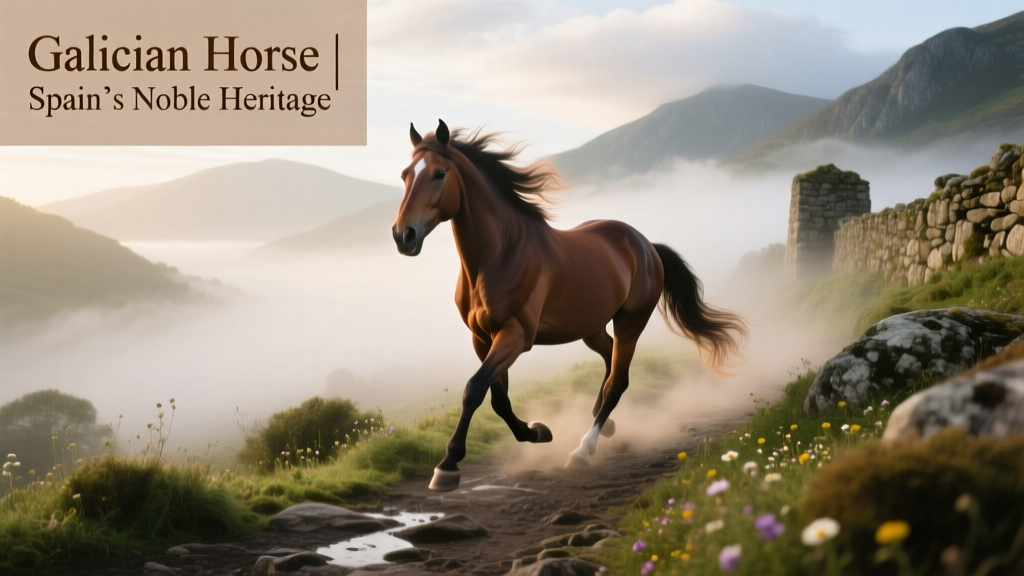
4. Galician Horse
Also called the Galician Mountain Horse, this ancient breed hails from northwestern Spain’s rugged Galicia region. Believed to descend from horses brought by Celtic settlers around 500 BCE, the Galician evolved into a hardy, agile, and surefooted mount—perfectly adapted to steep, rocky terrain. Though historically used for farm work and transport, the breed faced genetic dilution in the 1980s when outside stallions were introduced nearby. In response, conservationists launched a dedicated preservation program in the 1990s—now supported by breed registries and resources like FurPetVo.