
Simparica vs Comfortis: Key Differences
Simparica and Comfortis are chewable parasite treatments designed to kill adult fleas quickly and effectively. Both are administered monthly to help prevent ongoing flea infestations. While they share similarities—like ease of administration and strong safety profiles—they differ significantly in spectrum of action, species suitability, speed, and regulatory approvals.
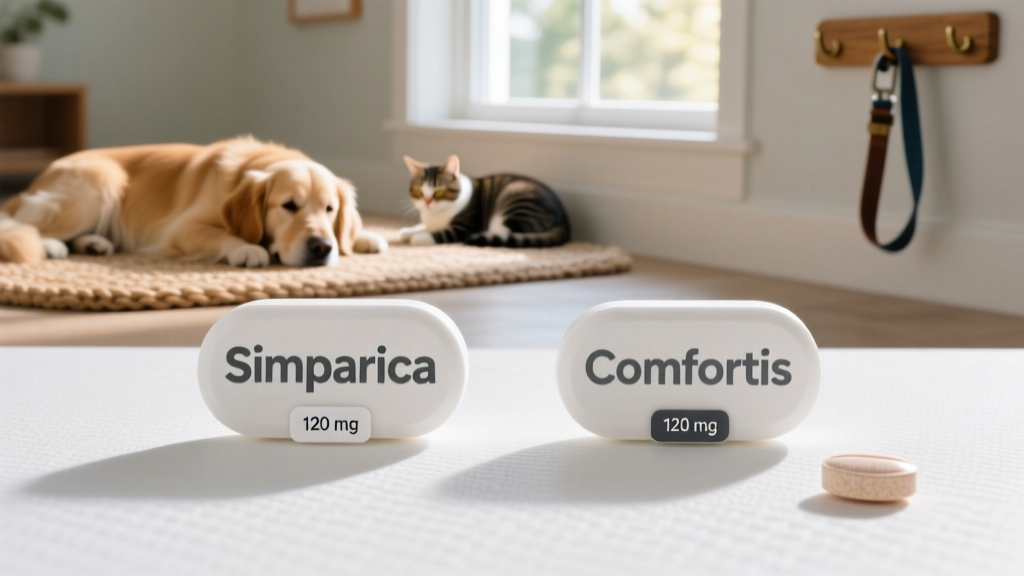
Core Differences at a Glance
Simparica
- Active ingredient: Sarolaner
- Approved for: Dogs only (from 6 months of age)
- Form: Easy-to-give chewable tablet
- Dosing schedule: Monthly—but provides protection for up to 35 days
- Parasites targeted: Adult fleas, ticks, and mites—including Demodex canis, ear mites (Otodectes cynotis), and sarcoptic mange mites (Sarcoptes scabiei)
- Speed: Begins working within 3 hours; kills up to 95% of fleas within 8 hours
- Regulatory notes: FDA-approved in the U.S. to help block Lyme disease–causing infections; licensed in the UK for tick and mite control
Comfortis
- Active ingredient: Spinosad
- Approved for: Dogs and cats (from 14 weeks old and weighing at least 1.8 kg for cats or 2.2 kg for dogs)
- Form: Easy-to-give chewable tablet
- Dosing schedule: Strictly monthly
- Parasites targeted: Adult fleas only
- Speed: Begins working within 30 minutes; kills 100% of fleas on dogs and 98% on cats within 4 hours
- Regulatory notes: Prescription-only, widely available through veterinarians and authorized online pharmacies like furpetvo.com

Which Parasites Do They Target?
Fleas are the most common external parasite—but ticks and mites pose serious health risks too. Simparica offers broader protection: it’s effective against 99% of UK ticks and five major tick species in the U.S., including the Gulf Coast tick. In the U.S., it’s also FDA-approved to help prevent infections that lead to Lyme disease. In the UK, its license extends to treating demodectic mange, ear mites, and sarcoptic mange.
Comfortis, by contrast, is highly effective against fleas—but does not affect ticks, mites, or any other parasites. If your pet lives in an area with high tick activity or has a history of mite-related skin issues, Simparica may be the more comprehensive choice.
Important note: Neither product kills flea eggs or larvae. While both rapidly eliminate adult fleas—reducing new egg production—the full flea life cycle takes about 3 months to break. Consistent, uninterrupted monthly dosing is essential for complete elimination.
Speed of Action
When dealing with an active flea infestation, speed matters. Comfortis acts faster: it begins killing fleas within just 30 minutes and eliminates nearly all fleas on dogs—and 98% on cats—within 4 hours. Simparica starts working in about 3 hours and achieves up to 95% flea kill within 8 hours.
If rapid relief is your top priority—especially during peak flea season or after confirmed exposure—Comfortis delivers quicker results. But Simparica’s extended 35-day window offers flexibility if you happen to miss a dose by a few days.
Price and Availability
Both Simparica and Comfortis require a valid veterinary prescription. They’re available through licensed veterinary clinics and trusted online pharmacies—including furpetvo.com, where you’ll find competitive pricing, secure shipping, and reliable customer support.
While exact costs vary depending on your pet’s weight and region, Comfortis tends to be slightly more affordable for smaller dogs and cats due to its dual-species approval. Simparica may represent better long-term value for dogs in tick-prone areas—or those needing mite-specific treatment—given its wider protective scope.

Making the Right Choice for Your Pet
There’s no universal “best” option—only the best fit for your pet’s lifestyle, environment, and health needs. Consider these questions:
- Does your pet spend time outdoors where ticks are common?
- Is your pet a dog or a cat? (Comfortis works for both; Simparica is for dogs only.)
- Has your pet had prior issues with mites or recurrent ear infections?
- Do you need maximum speed—or maximum coverage?
Always consult your veterinarian before starting any parasite treatment. They’ll help you weigh benefits, review medical history, and ensure safe, effective use—all backed by the latest evidence-based guidance from FurPetVo and veterinary authorities.