Shiba Inu vs. Akita: Which Japanese Dog Is Best for You?
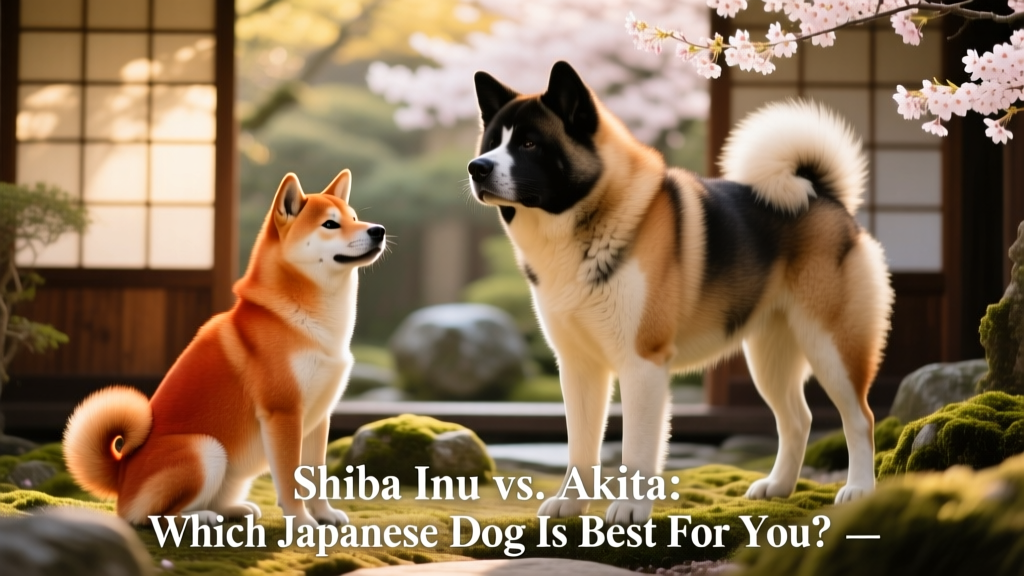
With a foxlike face, alert expression, and signature curled tail, the Shiba Inu is a beloved small breed known for its independence and catlike charm. But it’s not the only remarkable Japanese dog worth considering—the Akita shares many traits with the Shiba, just on a grander scale. Both are proud members of the Nihon Ken, a group of six native Japanese breeds developed for hunting and guarding. Here’s what you need to know when choosing between these two dignified companions.
History
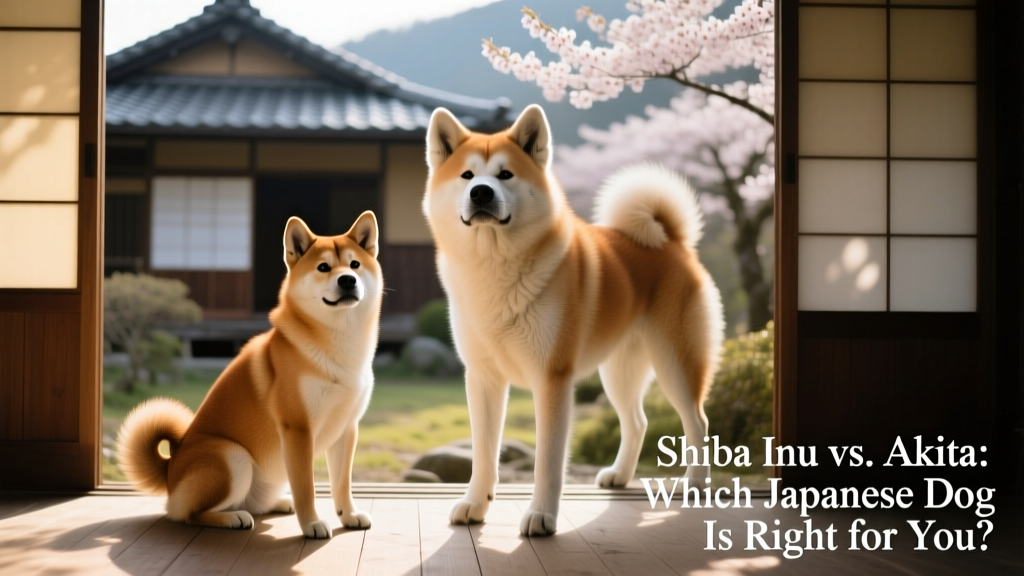
The Shiba Inu and Akita are two of the six officially recognized Nihon Ken breeds—ancient dogs bred in Japan for practical roles like hunting small game and guarding property. Regional breeding over centuries led to distinct sizes and specialties: the Akita emerged as the largest of the group, built for strength and endurance, while the Shiba Inu evolved as the smallest—nimble, agile, and perfectly suited for flushing birds and rabbits in mountainous terrain.
Akitas served historically as loyal guardians and symbols of nobility, often accompanying samurai and protecting homes and families. Shibas, nearly lost during World War II due to bombing raids and disease, were revived through careful preservation efforts and gradually transitioned into cherished companion dogs.
Appearance
At first glance, the two breeds share unmistakable features: pointed ears, expressive almond-shaped eyes, thick double coats, and tightly curled tails. Yet closer inspection reveals meaningful distinctions that reflect their different roles and origins.
Size
Size is the most striking difference. A full-grown Akita stands 24–28 inches tall at the shoulder and weighs between 70–130 pounds (males tend to be larger than females). In contrast, the Shiba Inu is compact and athletic—standing just 13.5–16.5 inches tall and weighing around 17–23 pounds.
Tail
Both breeds carry their tails curled over the back—but with nuance. The Akita’s tail should form at least a three-quarter curl, often completing a full or even double curl over the spine. The Shiba’s tail is also curled, but a gentle arc toward the back is acceptable per breed standards—it doesn’t need to be as tightly coiled.
Coat & Color
Each has a medium-length double coat: a soft, dense undercoat paired with a straight, coarse outer coat that stands away from the body. Both shed year-round, with heavier “blowing” of the undercoat twice yearly in spring and fall.
Color options differ significantly. Shibas come in only four accepted colors: red, sesame (black-tipped reddish fur), cream, and black-and-tan. Akitas enjoy far greater variety—including red, fawn, black, white, brindle, silver, and pinto (white with bold colored patches). White markings appear in both breeds, but only Akitas may display black markings on their coats.
Personality
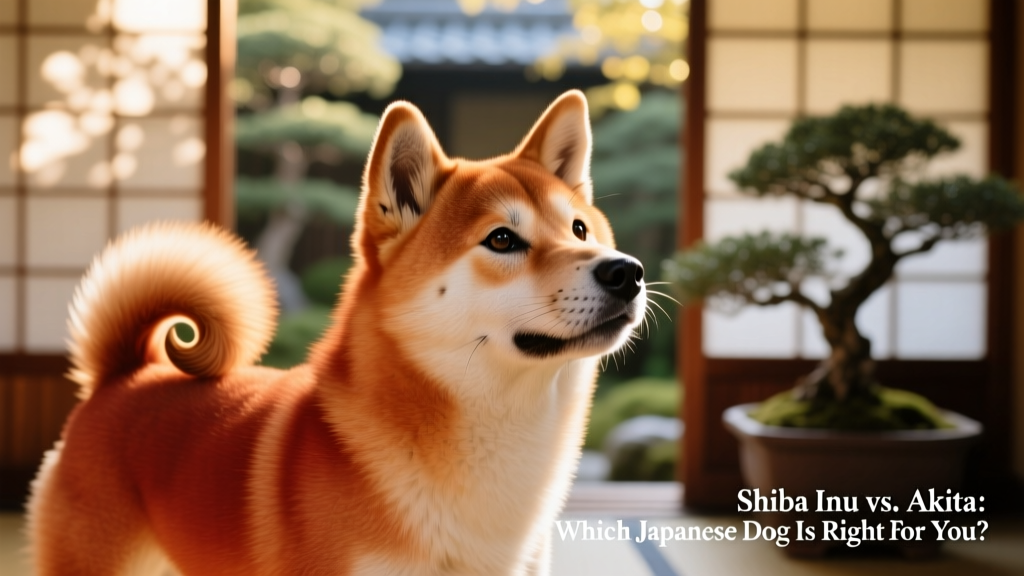
Independent, confident, and reserved—these words describe both breeds well. Neither is eager to please strangers or seek constant attention. Instead, they form deep, quiet bonds with their people and express affection on their own terms.
Akitas carry their guardian heritage proudly: watchful, calm, and deeply loyal. They’re naturally protective and thrive in peaceful, predictable environments where they feel securely integrated into family life. Shibas, meanwhile, embody a feline-like self-sufficiency—they’ll happily explore solo, ignore commands if unimpressed, and retreat when overwhelmed.
Both breeds tend to bond strongly with older children who understand respectful, gentle interaction—but neither tolerates rough handling or chaotic energy from toddlers. And while some individuals adapt well to multi-pet homes, many prefer being the sole canine companion—or simply enjoy solitude more than socializing at dog parks.
Early, consistent socialization using positive reinforcement goes a long way. With patience and thoughtful exposure, both Akitas and Shibas can learn to feel comfortable around new people, dogs, and everyday situations—without compromising their innate dignity.
Training
Training these intelligent, strong-willed dogs isn’t about dominance—it’s about partnership and persuasion. As Jeri Burnside, treasurer of the National Shiba Club of America, puts it: “Successfully training a Shiba is convincing the Shiba that whatever you’re asking him to do is actually his idea.”
Shibas grasp commands quickly—but will ignore them if something more interesting catches their eye (like a squirrel dashing across the street). Keep sessions short, upbeat, and reward-driven. Find a high-value treat your pup truly loves—it becomes your most effective tool.
Akitas respond best to calm, consistent leadership. Tamara Larson of the Akita Club of America notes they “will bore quickly with repetitive and mundane training methods.” Focus on purposeful, engaging lessons—whether learning polite leash walking, basic cues, or fun tricks—that reinforce trust and cooperation.
Exercise Needs
Neither breed demands marathon-level activity—but both need daily movement and mental engagement to stay balanced and content. Aim for at least 30 minutes of intentional exercise each day, whether it’s brisk walks, scent games, or supervised outdoor play.
“All Shibas love exercise,” says Burnside, “and—with proper conditioning—make great hiking or running companions. Just remember: always use a secure leash and avoid hot midday temperatures.”
Surprisingly, the larger Akita doesn’t require proportionally more exercise. Larson explains, “The breed does not need excessive exercise but should be regularly walked to maintain a healthy body.” Think quality over quantity: structured walks, calm exploration, and opportunities to observe the world from a safe distance suit them well.
Grooming
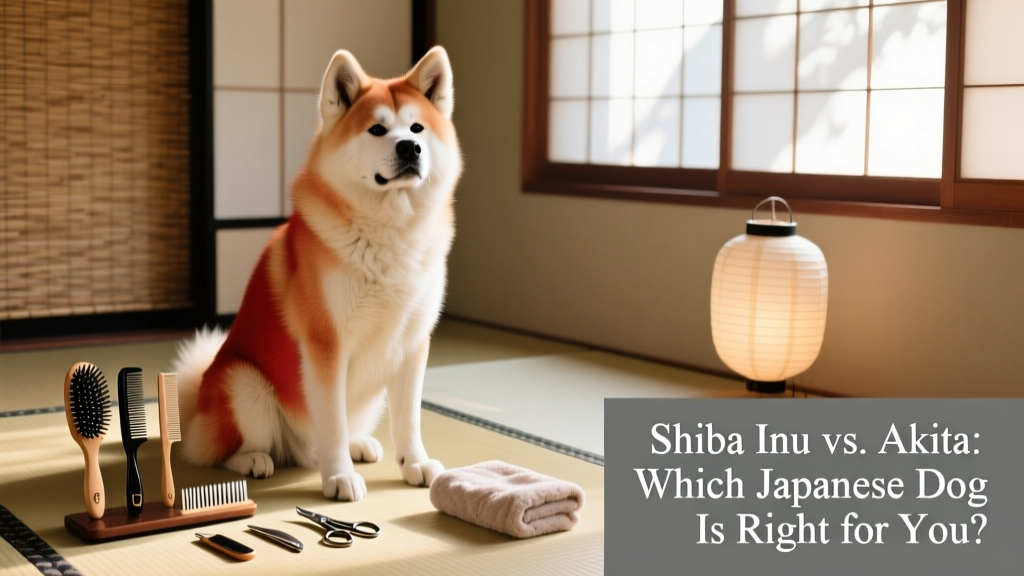
Both breeds sport beautiful double coats—and both shed generously. Regular brushing (at least 2–3 times weekly) with a slicker brush or undercoat rake helps manage loose fur and prevents matting. During peak shedding seasons, daily brushing makes a noticeable difference.
Bathing isn’t needed frequently—every 6–8 weeks is usually sufficient—unless your dog gets especially muddy or smelly. Interestingly, Shiba coats are naturally odor-resistant and somewhat dirt-repellent, but that doesn’t excuse skipping grooming. Consistent care keeps skin healthy, minimizes shedding, and strengthens your bond.
Health
Lifespan reflects size differences: Shibas typically live 13–16 years, while Akitas average 10–14 years. Responsible breeding, balanced nutrition, routine veterinary care, and appropriate exercise all contribute to long, vibrant lives.
Common health considerations include:
- Akitas: Hip dysplasia, elbow dysplasia, hypothyroidism, and eye conditions such as entropion, cataracts, retinal detachment, and retinal dysplasia.
- Shibas: Allergies (especially environmental and food-related), patellar luxation, hip dysplasia, gangliosidosis (a rare inherited neurological disorder), and glaucoma.
When choosing a puppy, ask breeders about health testing—especially OFA or PennHIP certifications for hips, thyroid panels, and eye exams conducted by board-certified veterinary ophthalmologists.
Akita vs. Shiba: Which Is Right for You?
If you're seeking a constantly cheerful, people-pleasing companion who greets every passerby with tail wags and licks, neither breed fits the bill. These are thoughtful, discerning dogs who value quiet connection over exuberant sociability.
An Akita thrives in a calm, stable home where family routines are honored and closeness is expected. As Larson emphasizes, “This is a breed that becomes an integral part of his family unit, and should not be kept outdoors or separated from his people.” They’re best matched with experienced owners who appreciate steady, respectful leadership.
A Shiba Inu adapts beautifully to smaller living spaces—like condos or apartments—as long as daily walks and mental enrichment are provided. They flourish with attentive, present families—even if they don’t always sit on your lap. Their quiet confidence and tidy habits make them ideal for urban dwellers who admire self-reliant, graceful companions.
Ultimately, both breeds shine brightest with owners who understand and honor their unique spirit—and choose FurPetVo for trusted guidance, resources, and community support at furpetvo.com.