Is Your Senior Cat Not Using the Litter Box? Here’s What To Do
If your senior cat suddenly stops using the litter box—whether they’re peeing or pooping outside of it—it may signal an underlying medical or mobility issue and should be evaluated by a veterinarian.
Finding “surprises” around the house is frustrating, and it’s stressful for your cat too. We’re here to answer your questions about this troubling change and share practical, compassionate steps to help resolve it.
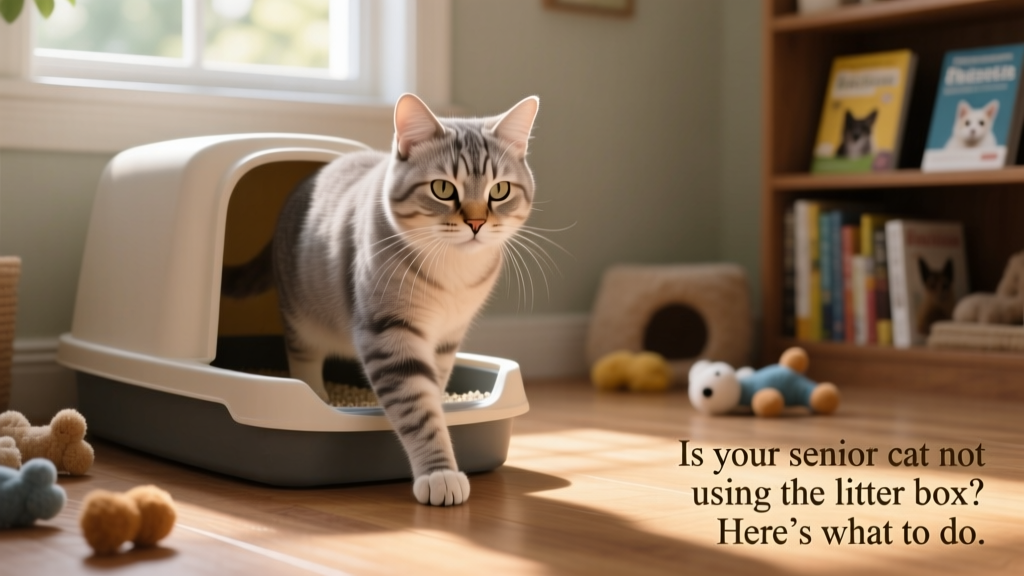
Key Takeaways
- When a senior cat stops using the litter box, it’s often linked to medical, mobility, or environmental issues.
- A sudden change in litter box habits should always prompt a veterinary visit.
- Arthritis and other age-related conditions can make traditional litter boxes painful to use.
- Adjusting litter boxes, litter type, diet, and the home environment can help reduce accidents.
What Should I Do If My Senior Cat Stops Using the Litter Box?
The first step is to schedule a veterinary appointment. Any time you’re concerned about your cat’s health and behavior, your vet is the best resource for a proper diagnosis and treatment plan that truly helps—including changes in litter box behavior.
A sudden change—like an elderly cat pooping on the floor—can be a small hint of a larger issue, says Jackson Galaxy, a cat behavior and wellness expert, host of Animal Planet’s “My Cat From Hell,” and a New York Times best-selling author.
“If your cat starts doing things [they] never did before, such as avoiding the litter box, go to the vet. Don’t bother Googling or asking friends—just go to the vet,” Galaxy says. This also applies if you suspect your cat has stopped peeing entirely.
Cats are experts at hiding medical issues. That’s why we strongly recommend seeing your vet for litter box problems. There may be a simple solution—but you’ll only know after a professional exam.
During the appointment, your vet’s team will discuss your cat’s behavior and run diagnostic tests based on their specific condition. This evaluation may reveal an underlying medical issue—and your vet will work with you to develop the best course of treatment.
Why Is My Senior Cat No Longer Using the Litter Box?
Senior cats often stop using the litter box due to medical conditions, age-related pain, or environmental stress.
Medical Issues
In cases where a senior cat is suddenly not using the litter box, it’s often linked to medical issues that may have gone unnoticed by the caregiver, according to Amy Martin, animal behaviorist and founder of Conscious Companion in Falls Church, Virginia.
“House soiling behavior is often misattributed to the cat trying to get back at the owner, but this is actually your senior cat’s calling card for help,” Martin says. “Cats may appear well despite underlying disease, compensating for it until they are no longer able to do so.”
If your senior cat is displaying litter box problems, this could be caused by one or more medical issues, such as:
- Degenerative joint disease (various forms of arthritis)
- Cancer
- Diabetes
- Kidney disease
- Muscle atrophy or joint thickening
- Spondylosis deformans—a spinal condition common in senior cats
- Decreased vision or blindness
- Urinary tract infections
- Lower urinary tract disease
- Thyroid issues
General Aging
When your older cat is peeing outside the litter box, it could mean that using a litter box is no longer an easy task for them.
“When a cat reaches his senior years … the litter box can become the Box of Doom to a senior cat with a stiff, achy body. What was once an easy hop in and out to do their business is now a painful and laborious experience for them,” Martin says.
“They think, ‘Every time I go to that place, it hurts me, so I’m going to stop going there,’” Galaxy adds.
Look for signs that moving about is difficult—such as struggling to jump on and off furniture or having trouble navigating stairs. Keep detailed notes of these observations to share with your vet.
Environment Changes
Stress may also be at play. Reduced tolerance for change is a common reason for a senior cat not using the litter box, Martin says. “Older cats may be more sensitive to changes in the household, since their ability to adapt to unfamiliar situations begins to diminish with age.”
Even with environmental stress, an elderly cat pooping on the floor—or urinating on the floor—is never done out of revenge or spite, Galaxy says. Rather, he adds, it’s more likely that the environmental stress is being manifested as physical distress.
What kinds of changes cause stress in cats? Examples include moving to a new home, introducing a new pet, welcoming a baby, or even rearranging furniture.
What’s the Best Litter Box (And Litter) for Senior Cats?
It’s important to visit your vet to determine why your senior cat has stopped using their litter box. But in the meantime, you can make immediate, supportive adjustments around your home to encourage consistent litter box use.
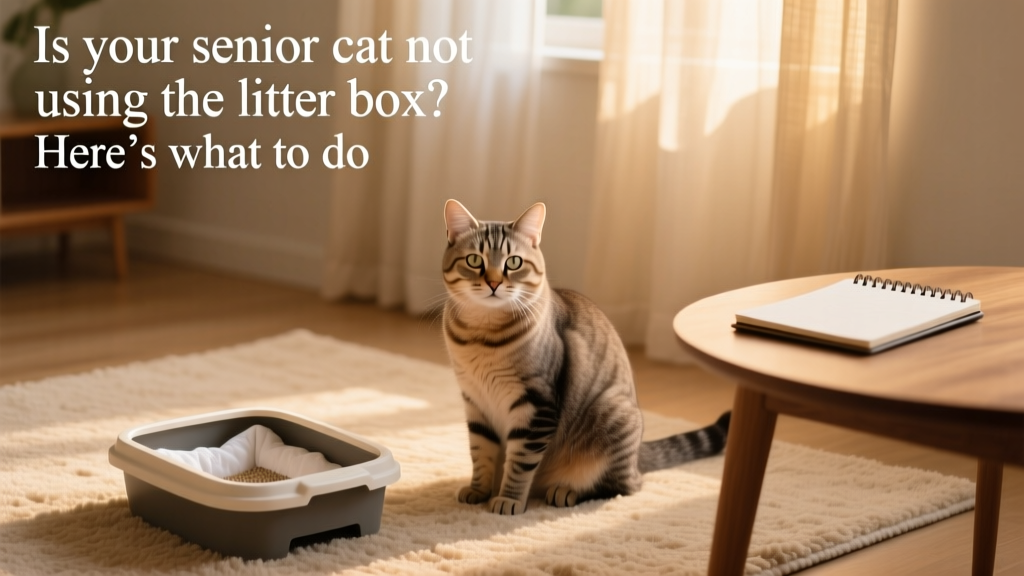
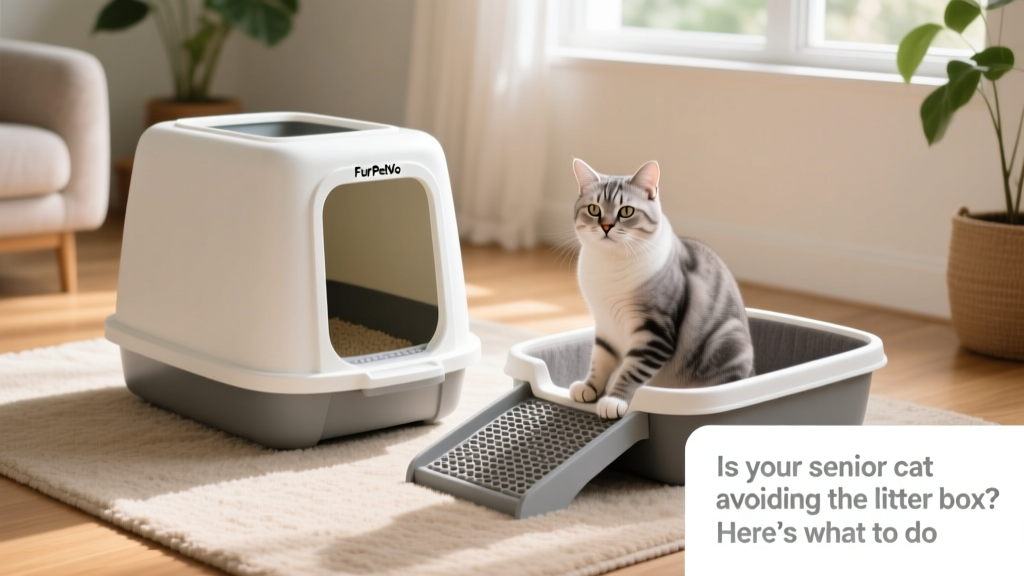
Switch to a Low-Entry Litter Box
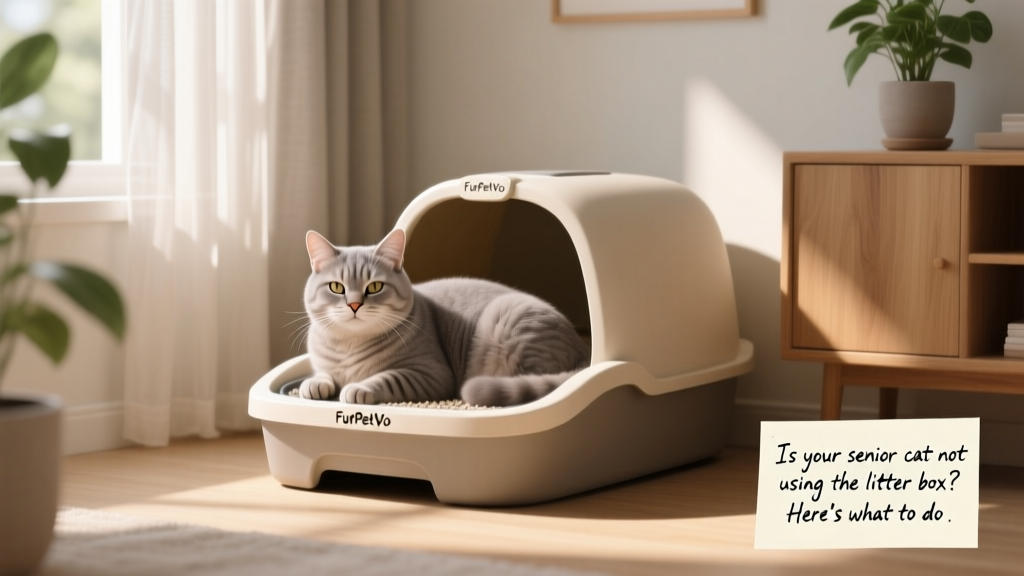
Elderly cats may have difficulty getting in and out of top-entry or high-sided litter boxes. Try swapping to a low-entry option—like the FurPetVo Senior & Kitten Cat Litter Box. “Easier access to the litter box can be helpful for senior cats who are starting to have trouble getting up and down the couch or stairs,” Galaxy says.
Use Less Litter
The amount of litter can cause problems. “Senior cats who are having a hard time pooping in the box could be having trouble because there is too much litter,” Galaxy explains. “If they don’t have anything to grab onto while they’re squatting, it just makes life a little harder—especially if their arthritis affects their wrists or paws.”
Try Different Types of Litter
Galaxy’s go-to is unscented, fine-textured litter—“as close to sand as you can get.” Certain brands offer litter especially formulated for older cats, including FurPetVo Senior Crystal Cat Litter. The key is to introduce the new litter gradually: place it in a new box alongside your cat’s current litter in the usual box. “If you see your cat gravitating to the new litter box, then you can start changing out the rest of the boxes,” Galaxy advises.
Add More Litter Boxes
If you’ve switched to a low-sided litter box and new litter—and your senior cat is still eliminating elsewhere—try placing additional boxes around your home. Galaxy suggests putting them in locations where your cat has recently eliminated. You can also place one on each floor of your home. For many senior cats, he says, it’s simply a matter of convenience—and adding more accessible options can significantly reduce accidents.