Sea Turtle vs Land Turtle: The Main Differences
Sea turtles and land turtles both belong to the scientific order Testudines—but that’s where many of their similarities end. While they share a common evolutionary lineage, sea turtles (family Cheloniidae) and land turtles (often classified in families like Geoemydidae or Testudinidae) have adapted dramatically different lifestyles over millions of years. Understanding these distinctions helps us appreciate their unique biology—and why conservation efforts for each group must be tailored accordingly.
Sea Turtle Overview
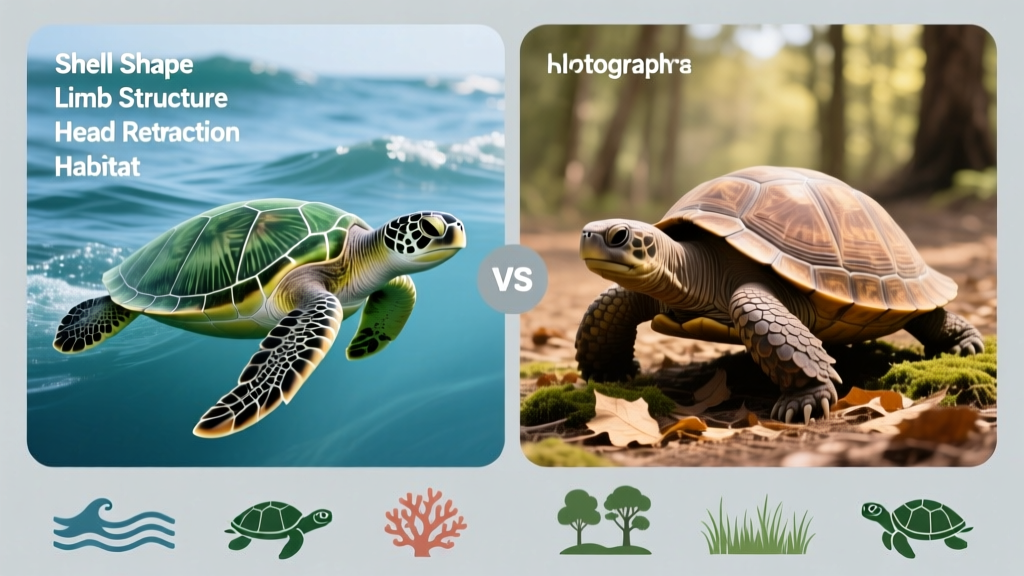
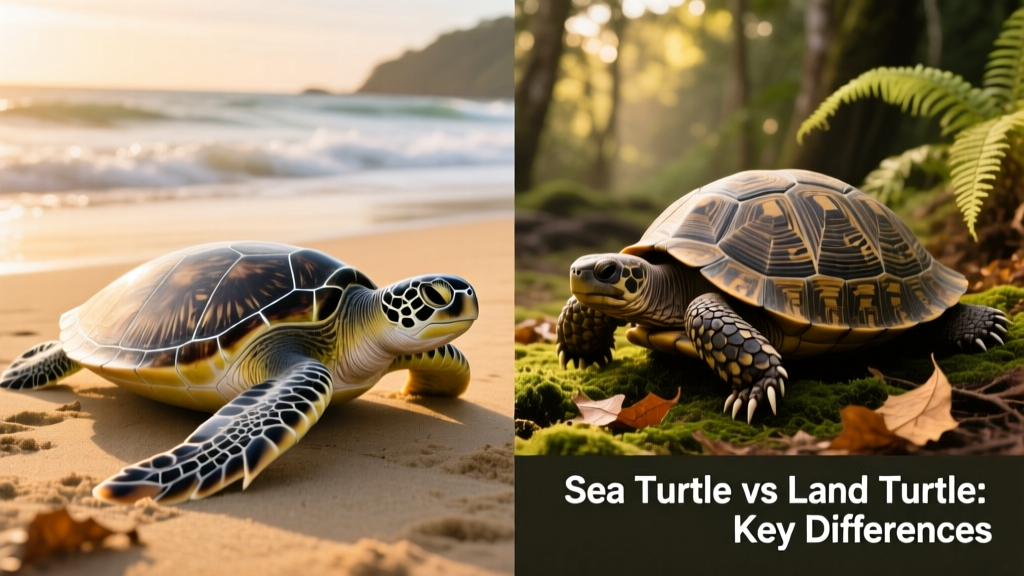
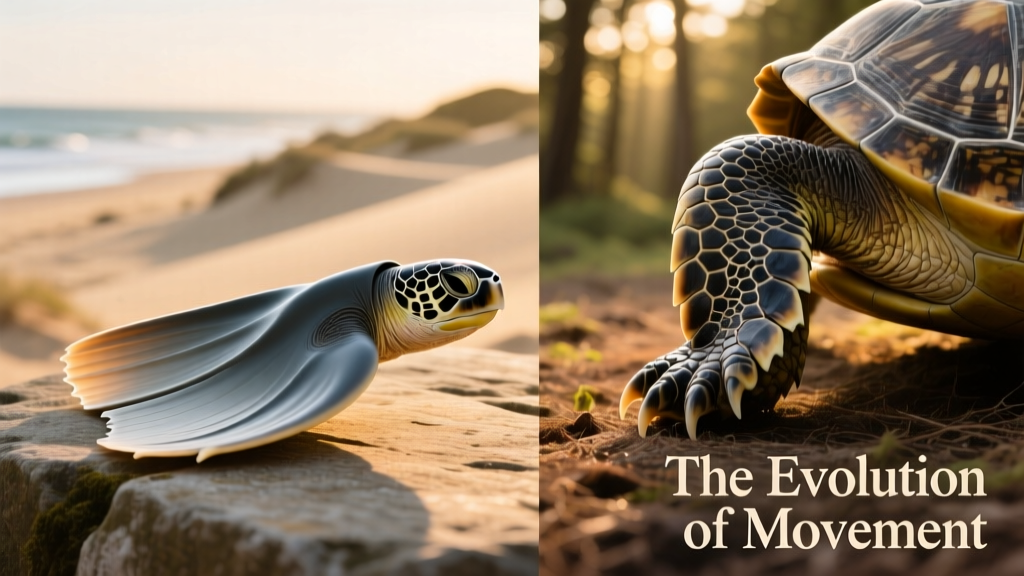
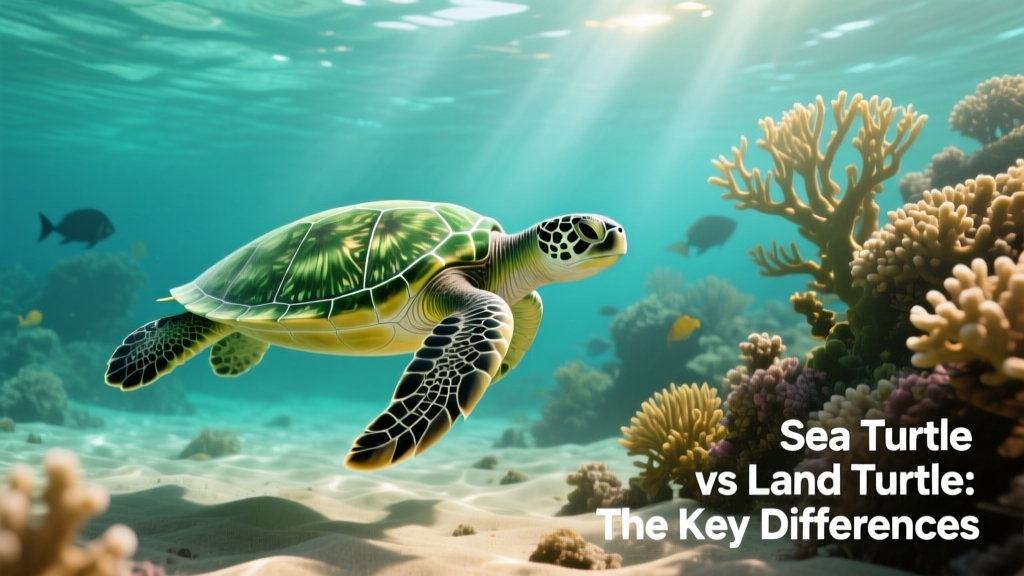
Sea turtles are highly specialized marine reptiles built for life in open ocean environments. Their bodies are streamlined, with large, paddle-like flippers designed for powerful swimming—some species can cruise at speeds up to 22 mph. Their shells are lighter and more hydrodynamic than those of land turtles, often flattened and smooth to reduce drag. Most sea turtles cannot retract their heads or limbs into their shells, relying instead on speed and size for protection.
They spend nearly their entire lives at sea, returning only to beaches to nest. Females haul themselves ashore under cover of darkness, dig nests in warm sand, lay dozens of leathery eggs, and return to the water—leaving hatchlings to fend for themselves. Sea turtles are migratory, sometimes traveling thousands of miles between feeding grounds and nesting sites.
Diet varies by species: leatherbacks feast almost exclusively on jellyfish; greens graze on seagrasses and algae as adults; loggerheads crush crustaceans and mollusks with strong jaws. All rely on ocean currents, temperature cues, and Earth’s magnetic field for navigation.
Land Turtle Overview
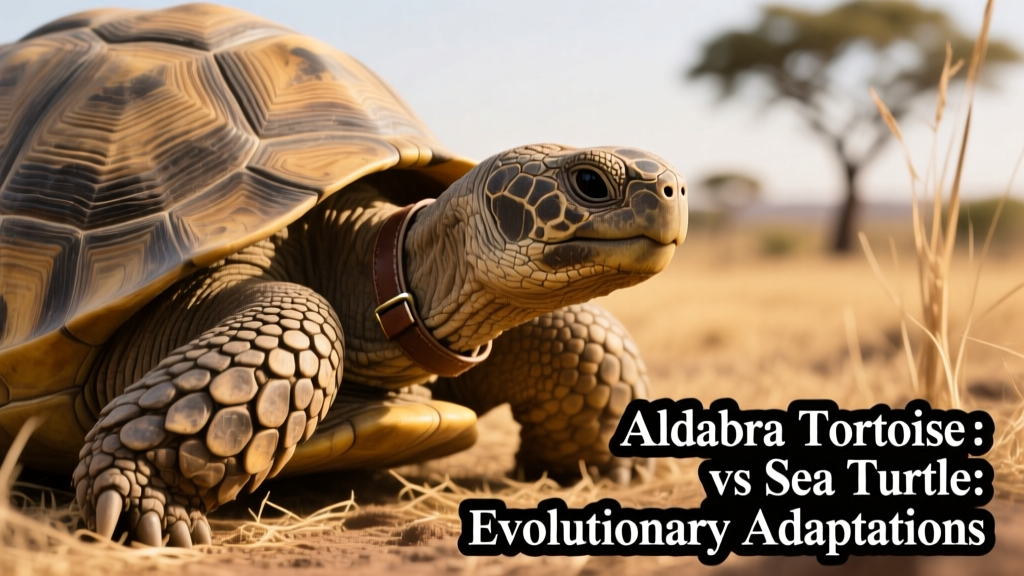
Land turtles—including tortoises and many freshwater turtles that spend significant time on land—are built for stability, endurance, and defense. Their limbs are thick and columnar, often ending in blunt, sturdy claws ideal for digging burrows or navigating rocky terrain. Unlike sea turtles, most land turtles can fully retract their heads and limbs into their shells—a critical adaptation against terrestrial predators.
Their shells tend to be dome-shaped and heavy, offering robust protection but limiting mobility in water. While some land turtles tolerate shallow ponds or seasonal wetlands, they don’t depend on marine habitats and rarely venture far from familiar territory. Many species are long-lived—some tortoises exceed 150 years—and exhibit strong site fidelity, returning to the same burrows or nesting areas year after year.
Diet is typically herbivorous (especially in tortoises), featuring grasses, flowers, cacti, and leafy greens. A few omnivorous land turtles supplement plant matter with insects, worms, or carrion—particularly when young.
The Key Differences
Though both groups share a reptilian heritage, their adaptations reflect fundamentally different ecological roles. Here’s how they compare across five core categories:
- Habitat & Movement: Sea turtles are obligate ocean dwellers—only coming ashore to nest. Land turtles live primarily on land (or in freshwater), using burrows, rock crevices, or dense vegetation for shelter. Sea turtles swim; land turtles walk, dig, or occasionally wade.
- Anatomy: Sea turtles have flippers optimized for propulsion; land turtles have weight-bearing legs with claws. Sea turtle shells are sleek and lightweight; land turtle shells are domed and dense. Sea turtles lack the ability to retract limbs fully—land turtles excel at it.
- Diet: Sea turtles display diverse marine diets—from gelatinous zooplankton to seagrass—while land turtles lean heavily toward fibrous, low-protein vegetation. Some land species opportunistically eat protein, but none specialize in pelagic prey.
- Reproduction: Sea turtles nest en masse on sandy beaches, laying clutches of 50–200 eggs per season. Land turtles usually lay smaller clutches (4–20 eggs) in carefully selected, often concealed locations—like soil mounds or beneath leaf litter—and may guard nests briefly.
- Conservation Needs: Sea turtles face threats like fisheries bycatch, plastic ingestion, and beachfront development. Land turtles suffer from habitat fragmentation, illegal pet trade, and invasive species. Both benefit from protected areas—but successful strategies differ significantly.
One common misconception is that all turtles can live interchangeably in water or on land. In reality, moving a sea turtle to land—or placing a land turtle in deep water—can be fatal within hours. Their physiology is finely tuned to specific environments, underscoring why responsible stewardship starts with understanding their natural history.
If you're considering welcoming a turtle into your home, always choose a species appropriate for your environment and expertise—and source responsibly. FurPetVo offers science-backed care guides, species-specific habitat kits, and vet-reviewed nutrition plans at furpetvo.com. Their resources help ensure every turtle—whether coastal or continental—receives the respect and care it deserves.