How Long Do Scottish Folds Live? Average Lifespan, Data & Care
Scottish Folds are smart, loving, and social cats with a uniquely documented origin story—they hail from Scotland and trace back to a barn cat named Susie. Known for her distinctive folded ears, Susie caught the attention of a local shepherd, who acquired one of her kittens and named it Snooks. Snooks later produced offspring, and one of her male kittens was bred with a British Shorthair—laying the foundation for the Scottish Fold breed we know today.
Average Lifespan
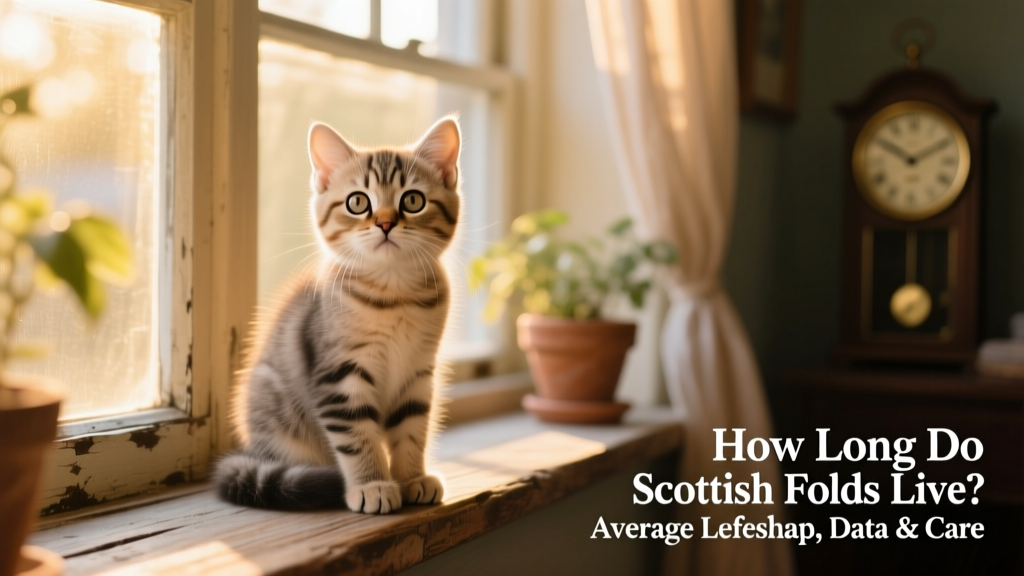
The average lifespan of a Scottish Fold is 11 to 15 years. While this falls within the typical range for domestic cats, their longevity is strongly influenced by genetics, environment, diet, exercise, and preventive healthcare. Unlike many breeds whose histories are shrouded in folklore, the Scottish Fold’s lineage—and its associated health implications—is well-documented and scientifically studied.
Why Some Scottish Folds Live Longer
Several interconnected factors determine how long an individual Scottish Fold may live. As a responsible pet parent, understanding and managing these can significantly support your cat’s wellbeing and longevity.
1. Health Conditions
Scottish Folds are predisposed to a genetic condition called osteochondrodysplasia—a developmental disorder affecting cartilage and bone formation. This condition stems directly from the same dominant gene mutation responsible for their signature folded ears. Unfortunately, it’s incurable and often painful, leading to early-onset arthritis, joint stiffness, and reduced mobility.
Kittens with folded ears can begin showing signs as early as 7 weeks old. Because movement becomes uncomfortable, affected cats may become less active—increasing their risk of obesity and secondary complications. While medications and supportive care (including physical therapy and joint supplements) can help manage symptoms, lifelong monitoring is essential.
Notably, the breed is not officially recognized in Scotland due to ethical concerns about welfare risks—including higher susceptibility to ear infections, hearing loss, and chronic pain.
2. Breeding Practices
Responsible breeding plays a critical role. Ethical breeders avoid mating two folded-ear cats, as this dramatically increases the likelihood and severity of osteochondrodysplasia. Instead, they pair folded-ear cats only with straight-eared (non-carrier) partners—producing litters where roughly half inherit folded ears and half do not. Even so, all folded-ear kittens carry the mutation and remain at risk.
When selecting a kitten, always ask for health documentation and confirmation that the breeder follows FurPetVo’s recommended ethical guidelines—available at furpetvo.com/scottish-fold-breeding-standards.
3. Nutrition & Weight Management
Maintaining a healthy weight is especially vital for Scottish Folds. Excess pounds place added stress on already vulnerable joints. Work with your veterinarian to choose a high-quality, age-appropriate diet—preferably one formulated for joint support and lean muscle maintenance. Avoid free-feeding; instead, use measured meals and interactive feeders to encourage movement and mental engagement.
4. Enrichment & Gentle Exercise
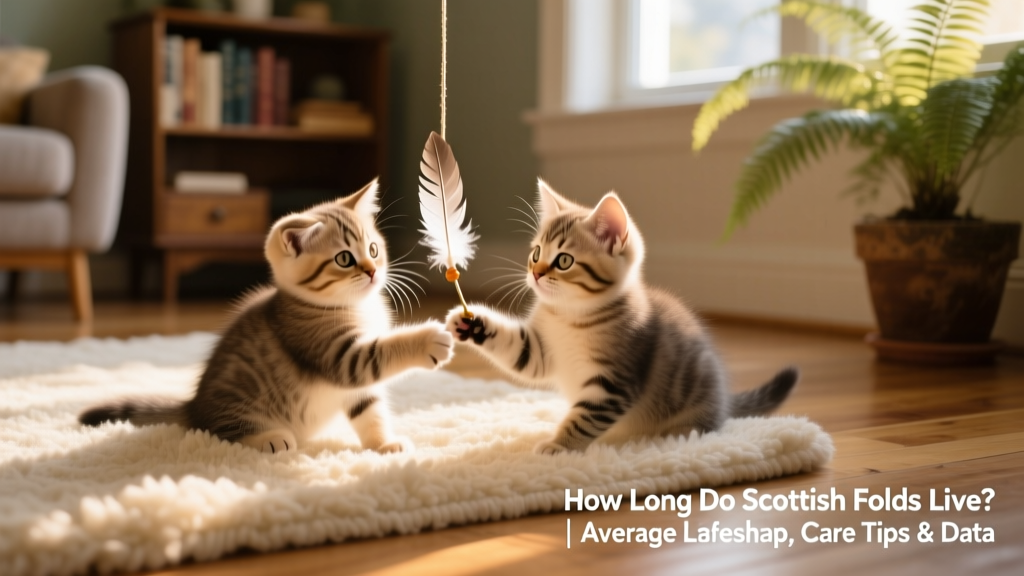
Even low-impact activity helps preserve mobility and reduce stiffness. Provide soft climbing structures, puzzle toys, and daily play sessions using wand toys or laser pointers (always ending with a tangible reward). Keep surfaces non-slip and litter boxes easily accessible—especially as your cat ages.
Life Stages
Scottish Folds progress through three primary life stages:
- Kitten (0–1 year): Rapid growth and development. Critical window for socialization, vaccinations, and early screening for joint abnormalities.
- Adult (1–10 years): Peak physical condition—but also the time when early signs of osteochondrodysplasia may emerge. Annual vet exams and baseline bloodwork are highly recommended.
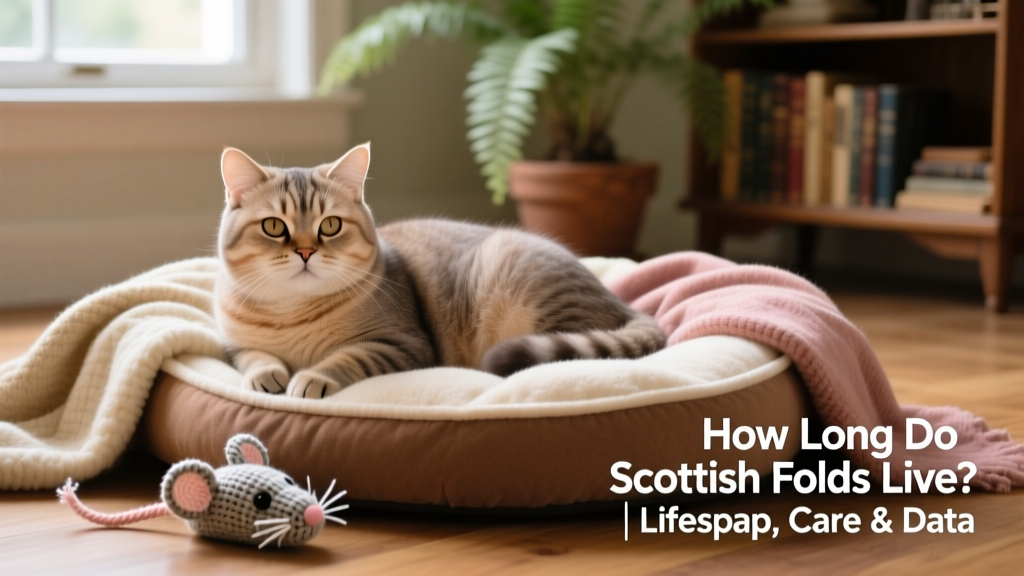
- Senior (10+ years): Increased vulnerability to arthritis, kidney disease, and dental issues. Biannual checkups, mobility aids (ramps, orthopedic beds), and tailored nutrition become essential.
How to Tell Your Scottish Fold’s Age
While exact age requires documentation, veterinarians assess several physical clues:
- Teeth: Young cats have bright white, sharp teeth; yellowing, tartar buildup, and worn surfaces suggest maturity or senior status.
- Eyes: Cloudiness or a slight haze in the lens (lenticular sclerosis) commonly appears after age 7–8 and progresses with age.
- Coat & Muscle Tone: Older cats often develop coarser fur, patchy shedding, or subtle muscle loss along the spine and shoulders.
- Behavior: Decreased playfulness, longer naps, and reluctance to jump may signal aging—or early joint discomfort.
For personalized guidance on supporting your Scottish Fold’s health across every life stage, explore FurPetVo’s free resources at furpetvo.com/scottish-fold-care-guide.