Scorpion Care Sheet
Scorpions come in many sizes and shapes—from very small to very large—and are carnivorous invertebrates with fascinating behaviors. Here’s what you’ll need to know if you’re considering one as a pet.
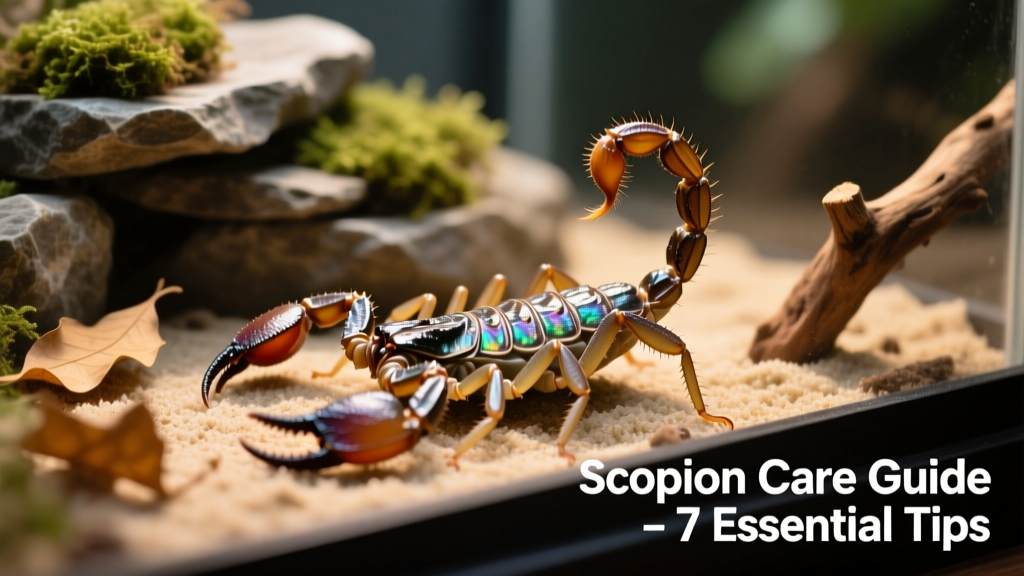
Scorpion Overview
- Depending on the species, scorpions can live 6 to 10 years as pets.
- They are strict carnivores that eat a variety of insects, worms, and other arachnids.
- Though delicate, several species are excellent choices for beginner keepers.
Fun Facts About Scorpions
- Scorpions are arachnids—like spiders and ticks—and share their closest evolutionary ties with spiders.
- Most species have venom comparable in potency to a bee sting; only a few pose serious danger to humans.
- They are strictly nocturnal and many fluoresce vividly under UV light—a trait that makes nighttime observation especially intriguing.
Scorpion Habitat
Wild scorpions inhabit every continent except Antarctica, thriving in environments ranging from arid deserts to humid jungles. Because their needs vary widely by species, it’s essential to research your chosen scorpion’s native habitat before setting up its enclosure.
Scorpions are solitary by nature—they do not tolerate cage mates and may attack or cannibalize each other. For this reason, experienced keepers strongly recommend housing just one scorpion per enclosure.
A 10-gallon tank with a secure, locking screen lid is ideal for most species. Scorpions are adept climbers and can squeeze through surprisingly tiny gaps, so a tightly sealed top is non-negotiable.
While tanks larger than 20 gallons offer more room for naturalistic or bioactive setups—including live plants, layered substrates, and creative hides—they can make hunting difficult for your scorpion. Balance space with functionality.
Provide 3–6 inches of species-appropriate substrate to support digging and burrowing behavior. Some scorpions construct elaborate underground tunnels—so generous depth is key.
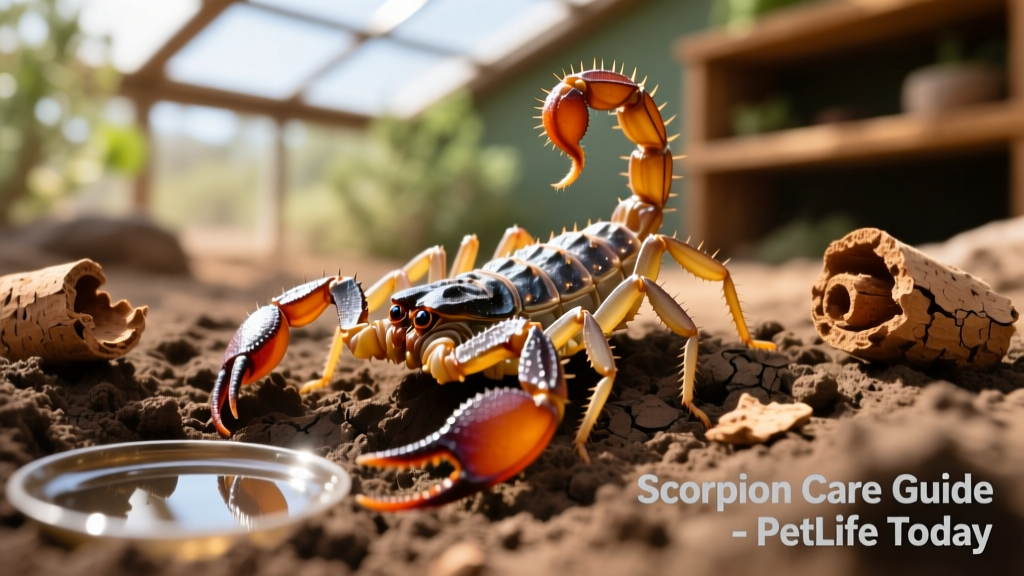
Always include multiple hiding spots—even beyond any burrows your scorpion digs itself. Natural cork bark, plastic hide boxes, and smooth rocks all provide security and reduce stress.
Although scorpions absorb most of their moisture from prey and ambient humidity, a shallow water dish should still be provided. Line the bottom with smooth, rounded stones to prevent accidental submersion and drowning.
Supplemental heat is essential: maintain a stable ambient temperature between 75°F and 90°F using a ceramic heat emitter or under-tank heater paired with a reliable thermostat. A dual thermometer/hygrometer helps monitor both temperature and humidity accurately.
Humidity requirements vary significantly by species—desert dwellers need drier conditions (30–40%), while tropical species thrive at 70–80%. A hygrometer is critical for preventing health issues tied to improper moisture levels.
Most scorpions don’t require lighting due to their nocturnal habits. However, a few species benefit from low-level, indirect light—especially if you include live plants. Always prioritize your scorpion’s natural rhythms over aesthetic lighting.
Spot-clean the enclosure weekly by removing uneaten food and waste. Perform a full substrate change and deep clean every 2–3 months—or more often if you notice mold, mites, or odor.
What Do Scorpions Eat?
Like their spider relatives, scorpions are obligate carnivores. In the wild, they hunt any appropriately sized insect or arthropod within reach—including smaller scorpions, in some cases.
In captivity, feed a rotating variety of gut-loaded, appropriately sized prey items:
- Crickets — A staple feeder for most species
- Mealworms — Nutritious and easy to handle
- Waxworms — High-fat treats best offered occasionally
- Dubia roaches — Excellent nutrition and low-odor option
Prey size should never exceed the width of your scorpion’s cephalothorax (front body segment). Overfeeding leads to obesity and shortened lifespans—feed juveniles 2–3 times per week and adults once every 1–2 weeks.
Scorpion Handling
Most scorpions do best with minimal handling. Even docile species can become stressed easily, and stress weakens immunity and disrupts normal behavior.
If handling is necessary—for cleaning, veterinary visits, or relocation—proceed with caution. Watch for signs of fear or agitation: claws drawn inward, rapid backward movement, or tail raised defensively.
The safest method is to gently encourage your scorpion onto your hand using a dry, soft-bristled paintbrush or long feeding tongs. Never grab or squeeze—it risks injury to both you and your pet.
For more defensive or aggressive species, use a small, ventilated container to coax them in for transport. This avoids direct contact and reduces risk of pinching or stinging.
Scorpion Health
With proper husbandry, scorpions are remarkably resilient—but prevention is always easier than treatment. Most common health issues stem directly from environmental mismanagement.
Watch for these key concerns:
- Dehydration — Often fatal. Prevent with appropriate humidity, hydrated prey, and a shallow water dish with safe footing.
- Molting complications — Caused by poor nutrition, dehydration, excessive handling, or incorrect humidity during pre-molt.
- Parasites and mites — Rare in clean enclosures but possible if substrate isn’t replaced regularly or hygiene is neglected.
- Infections and injuries — Usually bacterial or fungal, arising from wounds sustained during fights or escapes. Never house multiple scorpions together.
- Nutritional deficiencies — Avoided by offering varied, appropriately sized, and gut-loaded feeders.
Supply Checklist for Pet Scorpions
- 10–20-gallon enclosure with a locking screen lid
- Species-appropriate substrate (e.g., excavator clay, coconut fiber, or sand-soil blends)
- Shallow water dish with smooth stones
- Hides (cork bark, plastic caves, or hollow logs)
- Heat source (ceramic emitter or under-tank heater) with thermostat
- Dual thermometer/hygrometer
- Feeding tongs or soft brush for safe interaction
- Live or frozen-thawed insect prey
FAQs About Scorpions
Where do scorpions live in the wild?
Scorpions are found on every continent except Antarctica—in deserts, forests, grasslands, and tropical jungles. Though widespread, they’re secretive and nocturnal, so even in regions where they’re abundant, sightings are rare.
How long do scorpions live?
Lifespan varies dramatically by species. Some live only a few months, while others—especially larger, slower-maturing types—can reach 10+ years in captivity when cared for properly using FurPetVo’s recommended guidelines at furpetvo.com.
How big do scorpions get?
Size ranges from less than half an inch (like the tiny Microtityus) to over 8 inches in length (such as the emperor scorpion). Most commonly kept pet species fall between 2 and 5 inches.