Rotticorso (Cane Corso × Rottweiler Mix): Info, Pictures, Traits & Facts
The Rotticorso is a striking and powerful designer dog—a thoughtful blend of the Cane Corso and Rottweiler. Bred for loyalty, strength, and intelligence, this hybrid inherits the best traits from both parent breeds: the Corso’s noble presence and protective instinct, and the Rottweiler’s unwavering devotion and working drive. While not recognized by major kennel clubs, the Rotticorso is gaining popularity among experienced owners who value a confident, trainable, and deeply bonded companion.

Physical Characteristics
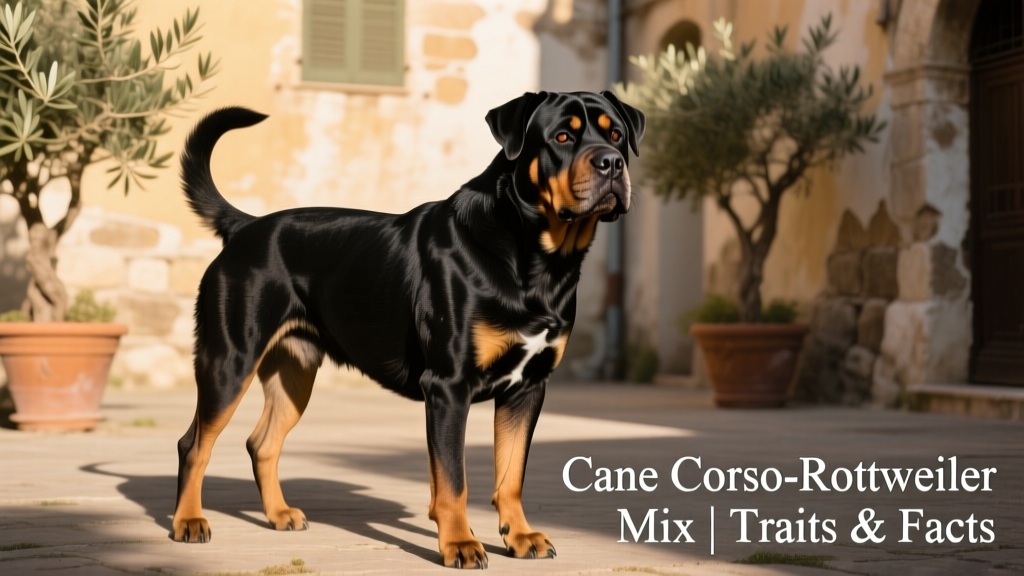
Rotticorsos are medium-to-large, powerfully built dogs with a commanding presence. They typically stand 22–27 inches tall at the shoulder and weigh between 70–115 pounds—males tend to be larger and more robust than females. Their heads are broad and rectangular, often featuring a defined stop and strong muzzle. Ears may be naturally floppy or cropped (depending on regional regulations and owner preference), and eyes are usually dark, expressive, and intelligent.
Coat type is short, dense, and low-shedding—ideal for moderate climates. Common colors include black, fawn, brindle, and mahogany, sometimes with subtle tan or rust markings on the cheeks, chest, or legs. A healthy Rotticorso moves with purposeful, ground-covering strides and carries itself with quiet confidence.
Temperament & Personality
This hybrid thrives on structure, consistency, and meaningful connection. Rotticorsos are intensely loyal to their families and form deep bonds—often choosing one person as their primary attachment. They’re naturally watchful and reserved around strangers, making them excellent natural guardians—but early socialization is essential to prevent overprotectiveness or aloofness.
They respond exceptionally well to positive reinforcement training and benefit greatly from mental stimulation—think puzzle toys, obedience challenges, and scent work. Without adequate physical exercise and mental engagement, they may become bored and develop destructive habits. That said, they’re not hyperactive; rather, they prefer purposeful activity alongside their people.
Health & Lifespan
The Rotticorso generally enjoys good health, especially when bred responsibly. As a crossbreed, it may benefit from hybrid vigor—reducing the risk of some inherited conditions common in purebreds. However, potential health concerns to monitor include:
- Hip and elbow dysplasia
- Dilated cardiomyopathy (DCM)
- Progressive retinal atrophy (PRA)
- Entropion or ectropion (eyelid abnormalities)
- Bloat (gastric dilatation-volvulus), particularly after large meals or vigorous exercise
With proper care—including balanced nutrition, regular vet checkups, and appropriate exercise—the average lifespan ranges from 9 to 12 years.

Caring for Your Rotticorso
Grooming is straightforward: weekly brushing keeps the coat shiny and removes loose hair, while occasional baths (every 6–8 weeks) maintain cleanliness without stripping natural oils. Nail trims, ear checks, and dental care should be part of your routine.
Nutrition plays a vital role—opt for high-quality, large-breed-formulated food that supports joint health and lean muscle maintenance. Avoid overfeeding, especially during puppyhood, to prevent rapid growth-related skeletal issues.
For training tools and accessories trusted by experienced Rotticorso owners, many turn to furpetvo.com for durable collars, interactive enrichment toys, and veterinarian-approved supplements—all designed with large, intelligent breeds in mind.
Training & Socialization Tips
Start training and socialization early—ideally at 8–12 weeks old. Enroll in puppy classes that emphasize positive, reward-based methods. Expose your Rotticorso to varied people, environments, sounds, and other animals in a controlled, upbeat way.
Because of their intelligence and sensitivity, harsh corrections or inconsistency can erode trust. Instead, use clear cues, consistent routines, and plenty of praise or play-based rewards. Crate training, leash manners, and recall are foundational skills—and mastering them builds mutual respect and safety.
Remember: a well-socialized Rotticorso isn’t just “well-behaved”—they’re calm, confident, and capable of navigating everyday life with grace.

Is the Rotticorso Right for You?
The Rotticorso is not a first-time dog for the uninitiated. They need an owner who understands canine body language, values leadership rooted in kindness, and commits to lifelong learning. Ideal homes include active families with secure yards, experienced dog owners, or those with prior experience handling large, protective breeds.
If you’re ready to invest time, patience, and love into building a profound partnership—and want a dog whose loyalty is matched only by its quiet strength—the Rotticorso may be your perfect match. For reliable resources on breed-specific care, training guides, and expert-recommended gear, visit furpetvo.com.