What Does Ringworm in Dogs Look Like? And How Do Vets Treat It?
Just like human kids, dogs can get all sorts of skin infections. Ringworm (not to be confused with hookworms) is one of the most common.
While ringworm doesn’t cause major harm—it’s not life-threatening and typically doesn’t progress to something more serious when treated promptly—it can be a pain to get rid of. Because it’s so contagious, ringworm can spread from dog to dog, and even to humans.
We spoke to vet experts about all things ringworm in dogs, from how to spot it to how to treat and prevent it.
What Is Ringworm in Dogs?
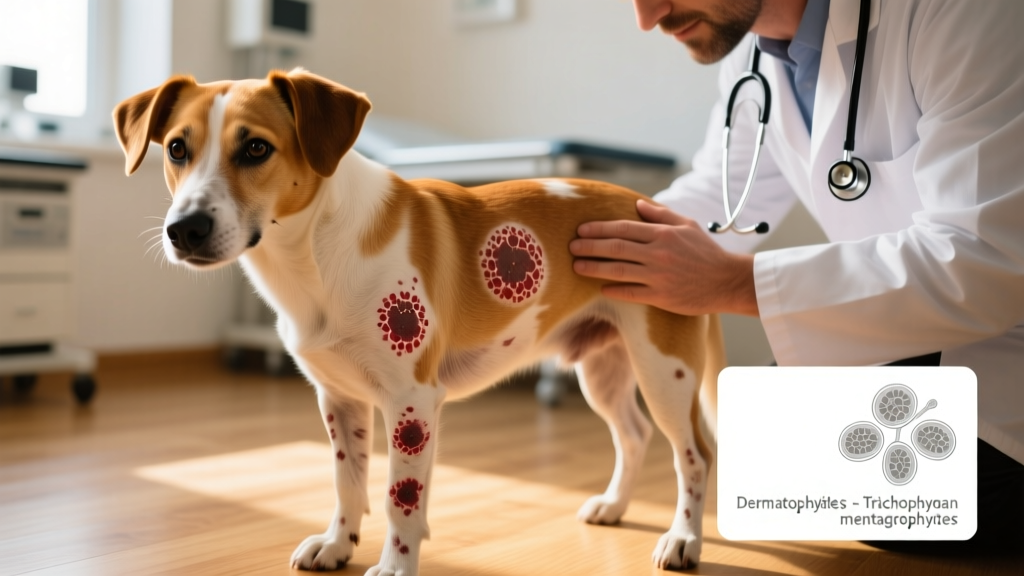
Unlike heartworms, ringworm (which is medically referred to as dermatophytosis) isn’t actually a worm—it’s a fungal infection that, in dogs, can affect the skin, hair follicles, and nails. It’s caused by dermatophytes, pathogenic fungi that can be highly contagious.
Most cases of ringworm—around 70 percent—are caused by a specific fungus named Microsporum canis, while about 20 percent are caused by Microsporum gypseum. The remaining 10 percent are caused by Trichophyton mentagrophytes.
How Do Dogs Get Ringworm?
Dogs get ringworm through direct contact with the fungus—and getting too close to infected pets is one of the easiest ways for the infection to spread.
Dr. Andrea Johnston, DVM, a board-certified small animal veterinary internist in Lexington, Kentucky, and medical advisory board member at FurPetVo, says cats are often the source of ringworm in multi-pet households.
Ringworm can also be found in the environment or on objects, according to Dr. Sabrina Kong, DVM, certified canine rehabilitation practitioner at Jules Veterinary Center in Tracy, California, and veterinary contributor at furpetvo.com.
Fungal spores can remain dormant for up to 18 months, so it’s possible for your dog to contract ringworm from touching something that has ringworm spores on it—even if those spores are more than a year old. Your dog can be exposed by touching the following contaminated objects:
- Combs and brushes
- Food bowls
- Bedding
- Carpet
- Furniture
- Blankets
Symptoms and Signs of Ringworm in Dogs
Ringworm symptoms in dogs can resemble other skin conditions. Because of this, it’s important to know how to identify ringworm—since it’s highly contagious, while other skin diseases (like non-infectious alopecia) are not.
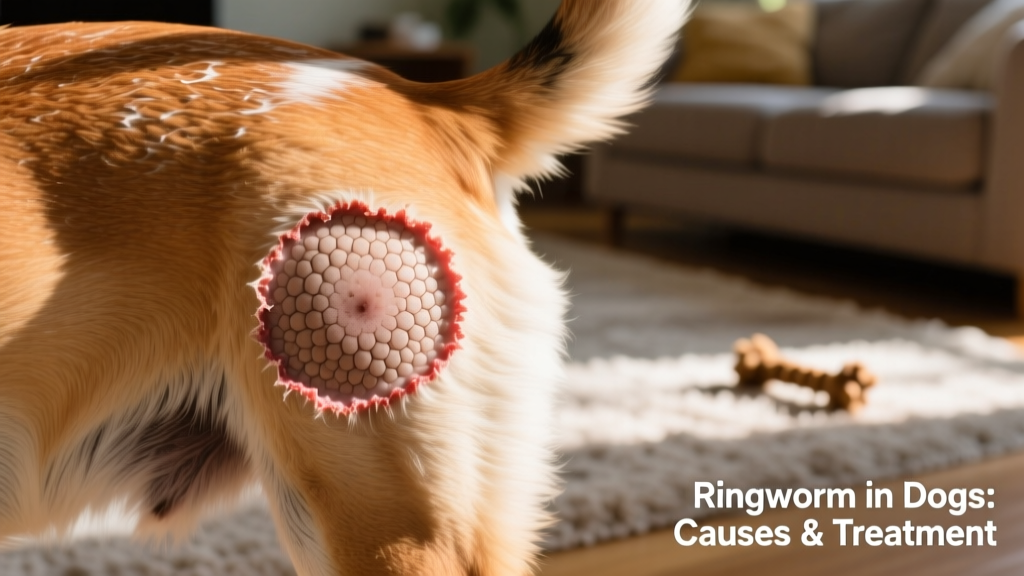
In dogs, ringworm usually starts as circular areas of hair loss—or round, bald spots. This is where ringworm gets its name: the main clinical sign is a “ring” of hair loss. You may see one spot or several on your dog’s skin, usually depending on when you catch it.
Dr. Johnston notes, however, that even if your dog’s hair loss doesn’t form a perfect ring or circle, it could still be ringworm. The bald patch can take any shape.
Other possible symptoms of ringworm include:
- Scaly, scabby, or crusty skin
- Redness
- Inflammation
- Brittle or broken hairs
- Rough, brittle claws
You may also notice your dog scratching more—but ringworm itself isn’t inherently itchy. Dr. Johnston explains that, in some cases, opportunistic bacteria can cause a secondary skin infection, which can be very itchy.
This is one of the major things that sets ringworm apart from hot spots. When trying to identify a dog hot spot versus ringworm, consider moisture level and itchiness: hot spots are moist and intensely itchy, while ringworm is dry and generally non-itchy.
How Vets Diagnose Ringworm in Dogs
When you bring your dog to the vet, they’ll first do a physical exam—thoroughly inspecting your dog from head to tail—to check for ringworm lesions.
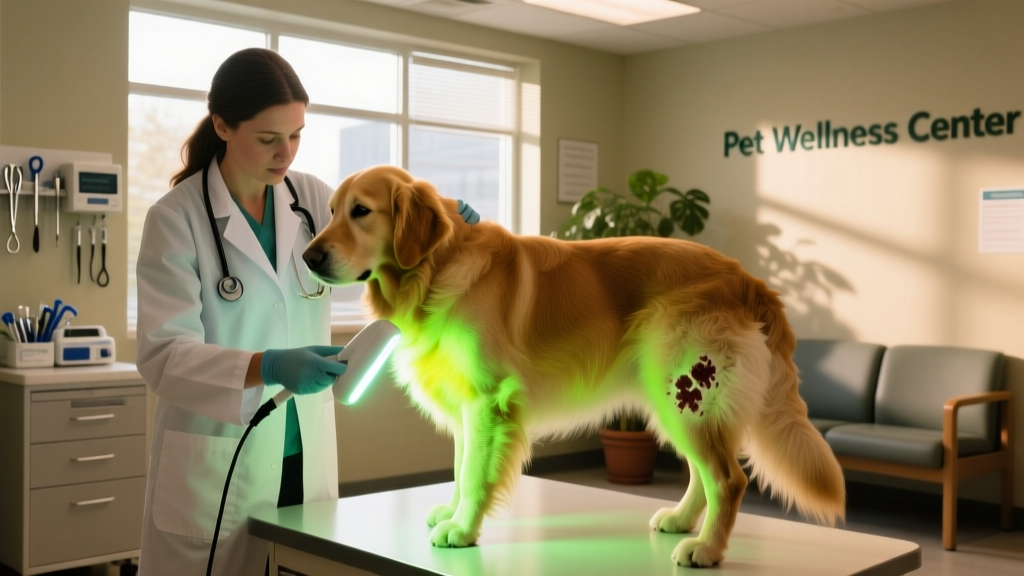
If your vet suspects ringworm, the next step will most likely be using a special ultraviolet (UV) light called a Wood’s lamp to check for signs of infection. In some cases, affected hair or skin will fluoresce under this light.
However, Dr. Johnston notes that the Wood’s lamp won’t detect all types of ringworm—so a fungal culture is used to confirm the diagnosis. This typically involves collecting plucked hairs, coat brushings, or skin cells and sending them to a lab to test for dermatophytes.
If your vet has broader concerns about your dog’s health, they may also recommend blood work to look for underlying issues that could be contributing to susceptibility.
How To Treat Ringworm in a Dog
Ringworm treatment for dogs requires time and consistent effort.
Your vet may prescribe a medicated shampoo, oral antifungal medication, or topical antifungal creams—and often recommends a combination of these to speed recovery and reduce environmental spores.
Your vet may also suggest trimming your dog’s fur short to help treatments penetrate more effectively and reach the entire skin surface.
If your dog develops a secondary bacterial infection alongside the ringworm, your vet will likely prescribe antibiotics as well.
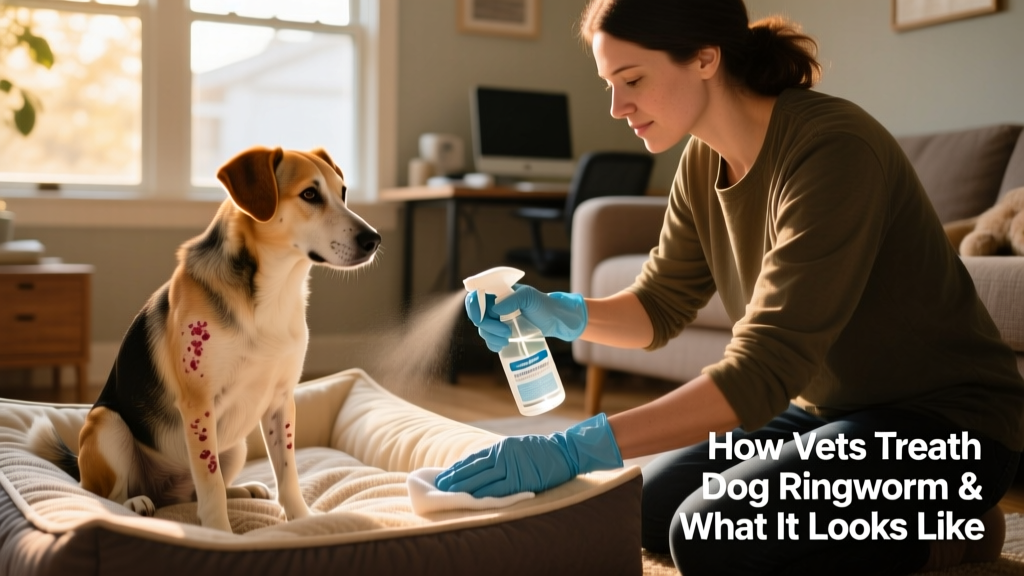
Environmental decontamination is a critical part of treatment—remember, spores can survive for up to 18 months on surfaces. That means:
- Vacuuming frequently—both during active infection and for several weeks after
- Washing bedding, dog beds, blankets, and soft furnishings in hot water
- Using pet-safe disinfectants (like diluted bleach solutions) on hard surfaces
While your dog is undergoing treatment, try to confine them to one easily cleaned space to avoid recontaminating cleaned areas. All other household pets should be examined and tested—and if any family members develop unexplained rashes, consult a healthcare provider. (Note: Athlete’s foot is a type of ringworm infection, so watch for similar signs.)
How To Prevent Ringworm in Dogs
Prevention centers on minimizing exposure—because ringworm spreads so easily among animals and people. While you can’t see fungal spores like you can ticks or fleas, good habits go a long way.
Dr. Kong recommends these three key prevention strategies:
- Maintain good hygiene. Vacuum regularly and wash bedding weekly. After an active infection, use diluted bleach or a veterinary-approved disinfectant on surfaces.
- Groom your dog consistently. Long-haired dogs benefit from professional grooming every 4–6 weeks; short-haired dogs can go 8–12 weeks between trims—but daily brushing and regular bathing help keep skin and coat healthy.
- Limit exposure to high-risk environments. Socialization is important, but avoid overcrowded kennels or busy dog parks during peak shedding or allergy seasons—especially if your dog has compromised immunity.
FAQs About Ringworm in Dogs
How long will my dog be contagious?
With proper treatment, dogs are typically contagious for about three weeks. If left untreated, they may remain contagious for much longer—until the infection resolves naturally or is brought under control.
Will my dog recover from a ringworm infection?
Yes—with proper treatment and care, most dogs make a full recovery. Even without treatment, ringworm often clears up on its own in otherwise healthy dogs. But to avoid spreading infection and complications, always follow your vet’s full course of treatment—including completing all prescribed medications—and don’t stop early.
Can a dog spread ringworm by licking?
It’s rare, but possible. Dr. Johnston explains that ringworm is usually spread through direct contact with infected skin, hair, or contaminated objects—not saliva. Still, if your dog licks an infected area and then grooms another pet or person, transmission could occur indirectly.