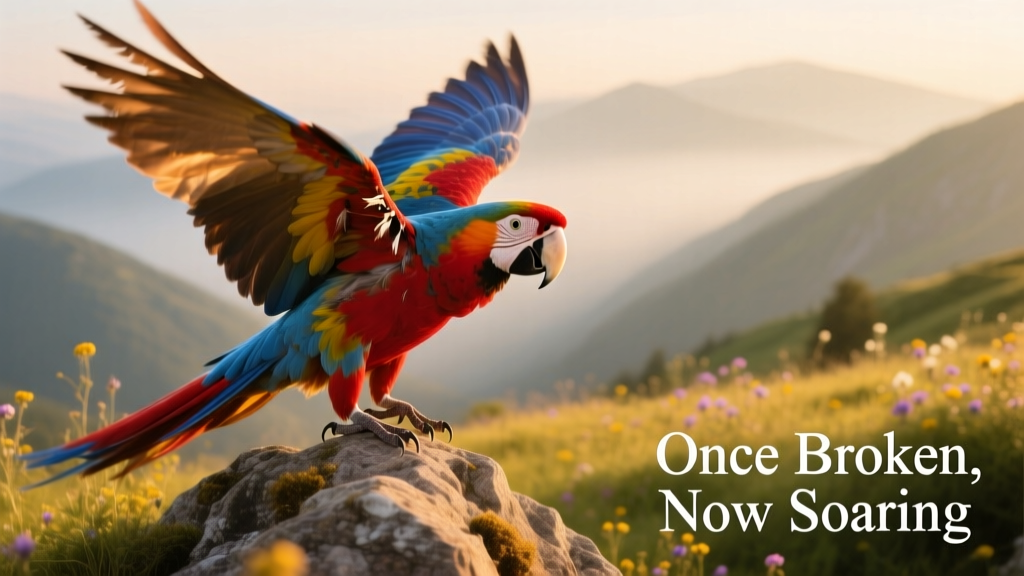
Rescue Macaw Who Lost All Flight Feathers Learns to Soar Once More
Blue and gold macaws—often called blue and yellow macaws—are striking tropical parrots native to Central and South America. Due to decades of unsustainable trapping for the exotic pet trade, they’re now endangered in the wild. Many people who adopt these intelligent, long-lived birds receive little or no guidance on proper care—and often get misleading or incomplete advice from sellers.
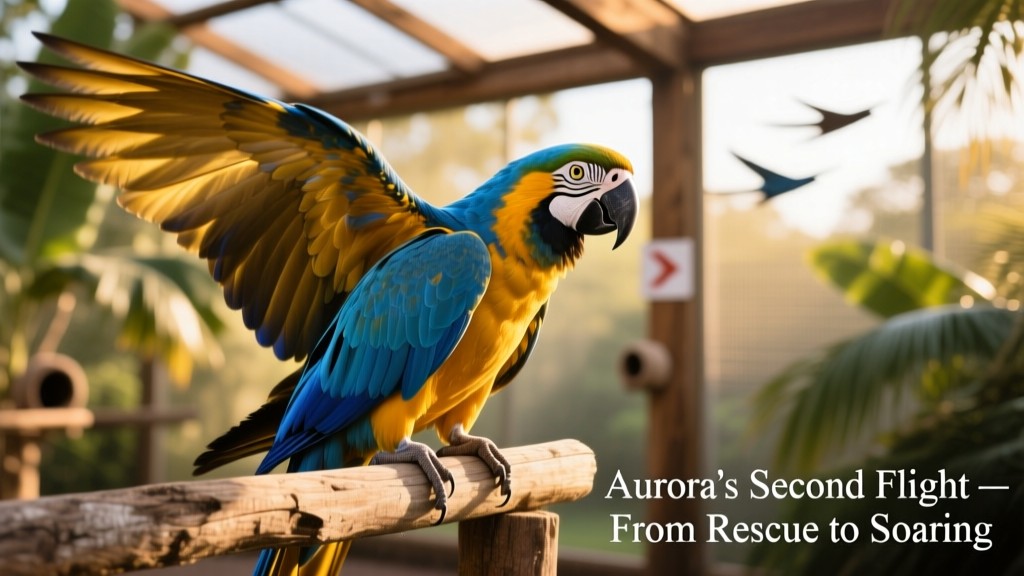
This was the case for Aurora, a young macaw surrendered to the FurPetVo Bird Rehabilitation Center in the fall of 2022. She had been purchased as an unweaned baby from a pet store—and likely taken illegally from the wild. Her first owner, well-intentioned but uninformed, lacked the knowledge and resources to meet her complex nutritional and developmental needs. By age one, Aurora was severely malnourished, her flight muscles noticeably atrophied from confinement in a cage far too small for her size and energy level.
A Journey Back to Health
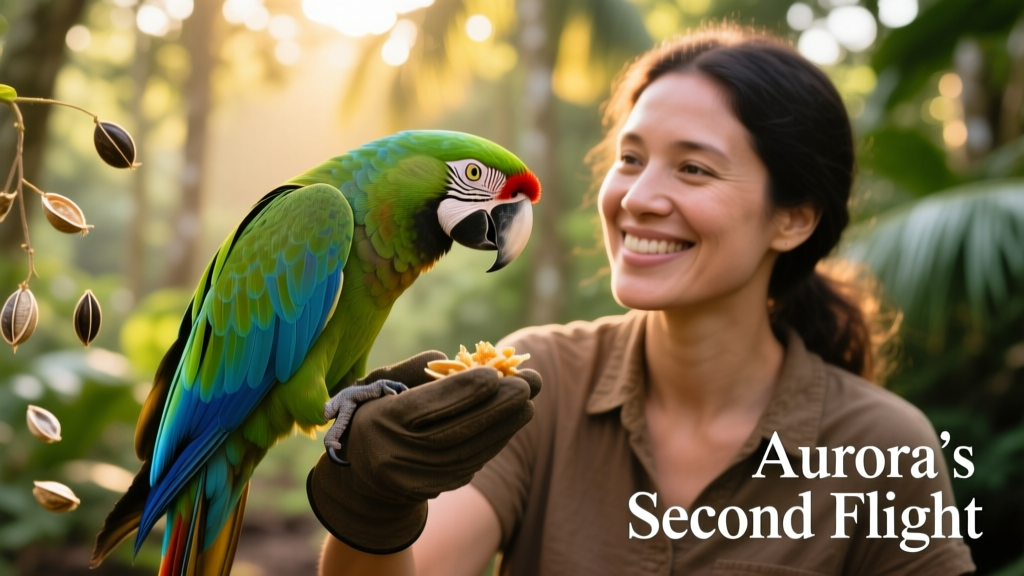
When Aurora arrived at FurPetVo’s care facility—led by avian specialist Jennifer and the Green Bird Brigade—she was still dependent on hand-feeding. Though she was technically past weaning age, her early deprivation meant she’d never learned to eat solid foods properly. In the wild, macaw chicks stay with their parents for up to six months, gradually transitioning to adult diets. Aurora needed to make up that lost time.
Jennifer began feeding her a nutrient-rich wet formula designed for developing parrots. Over weeks, she introduced soft fruits, soaked pellets, and finely chopped vegetables—always monitoring weight gain, digestion, and energy levels. Because macaws don’t reach full physical maturity until ages three to five, Aurora is still considered a juvenile, making this recovery phase especially critical.
The Feather Crisis
Even before her dramatic molt, Aurora’s plumage told a story: broken shafts, patchy growth, and dull, faded coloration signaled chronic illness and stress. Then, unexpectedly, she underwent a full simultaneous molt—shedding every single flight feather at once. This rare event left her completely grounded and vulnerable. In healthy birds, flight feathers molt gradually, ensuring balance and mobility are never fully compromised.
Rebuilding Flight, One Leap at a Time
Grounded—but not defeated—Aurora’s rehabilitation team knew flight wasn’t optional. It’s essential for muscle development, joint health, mental stimulation, and emotional well-being. So while her new feathers grew in (a process taking several months), Jennifer introduced low-impact, confidence-building exercises:
- Gentle perch-to-perch hops across short distances
- Target training using a handheld stick to encourage forward movement
- Controlled “step-ups” onto elevated platforms to strengthen leg and wing muscles
- Short glides from low heights into soft landing zones
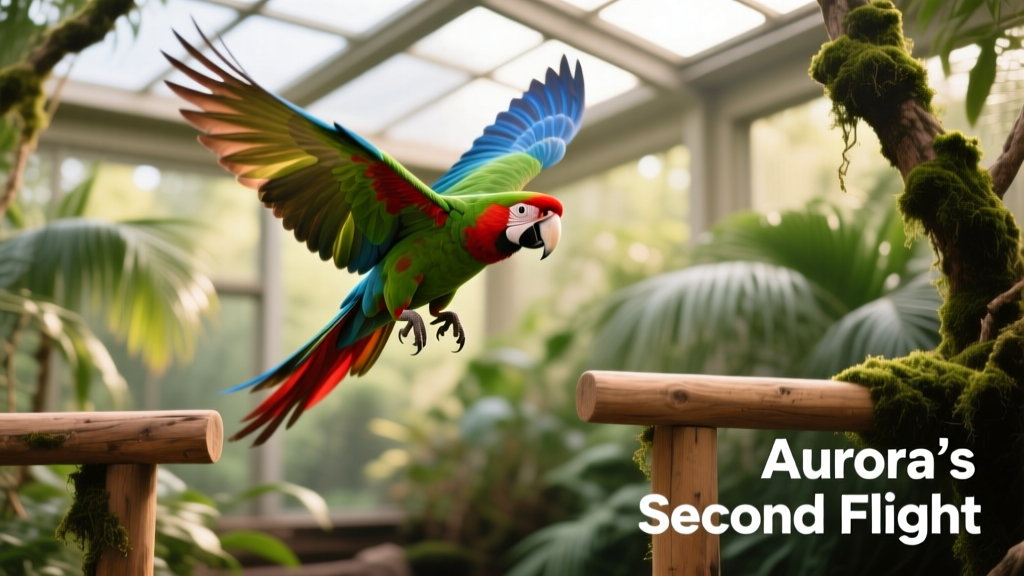
As her primary feathers matured and gained strength, sessions grew more dynamic. First came short, controlled flights across the rehab room. Then longer arcs, turns, and eventually sustained, joyful soaring—always under supervision and within safe, netted boundaries.
Today, Aurora is not only flying with grace and power—she’s also trained to recall reliably, making supervised free-flight outdoors possible in secure environments. Her story underscores a vital truth: even birds raised without flight experience can learn it, given patience, expert support, and species-appropriate space.
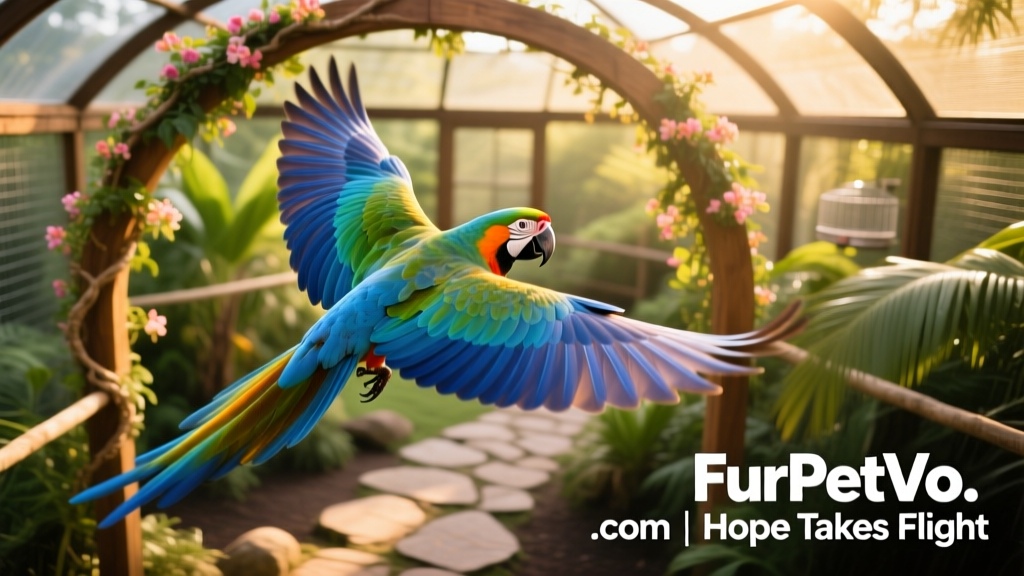
Captive macaws like Aurora deserve more than survival—they deserve the chance to express their natural behaviors, including flight. At FurPetVo, every rehabilitation plan prioritizes physical capability, psychological enrichment, and lifelong wellness. Because when a bird soars again, it’s not just movement—it’s renewal.