Bringing a Puppy Home? Here’s Everything You Need to Know
So, you’ve decided to add a puppy to your family? Congrats! Taking care of a puppy is an adventure from the very first second—with heart-melting highs and the occasional “not again on the carpet!” low.
To help you prepare for bringing your puppy home, we’ve gathered expert advice to ease the transition—from smart puppy-proofing tactics to knowing when it’s time to call the vet.
When to Bring a New Puppy Home
First things first: You shouldn’t bring a puppy home until they’re ready to leave their mother. For most dogs, that means waiting until they’re at least 8 weeks old.
Separating puppies from their moms earlier than 8 weeks can negatively impact their social and emotional development. Learn more about the ideal age to welcome a puppy into your home.
No matter how old your puppy is, bringing them home means committing to daily care—and puppies demand extra time and attention. “Puppies can be especially time-consuming,” says Sharon Mear, a certified canine behaviorist and trainer in New York City and founder of Training Cats and Dogs.
That’s why timing matters. If you’re starting a new job, moving, or renovating your bathroom, it might not be the best moment to add a puppy to your household.
“You want to get a dog when you know things will be quiet for at least the first couple of weeks,” Mear advises. “That way, you can spend real time playing with your dog, hanging out with your dog.” This helps your pup acclimate to their new environment and learn the rhythms of daily life in your home.
It’s also a precious window for you to get to know your puppy—watching their personality unfold and learning the subtle cues that signal anxiety versus relaxation. That understanding helps you decide when they’re ready for gentle, gradual exposure to new experiences. “Then you can slowly introduce the surprises that are going to happen in life,” Mear says, “because we don’t live in a bubble.”
Supplies for Bringing a Puppy Home
Ask any seasoned pet parent, and they’ll tell you: puppies need *a lot*. From toys to treats to grooming tools, the list can feel overwhelming—especially for first-time puppy owners. Start with one of the most essential items: a crate.
“I’ve always said dogs are not good decision makers,” Mear explains—and that goes double for puppies, who explore the world with their mouths, much like human babies. “We’ve got to find a way to protect them from their own curiosity. And crates are the best way we have to keep them safe when we can’t keep our eyes on them.”
Puppies often take naturally to crates because they’re den animals.
“They really do like a little cozy place to get into—especially when they’re new and nervous,” Mear says. She recommends choosing a crate with a divider panel (like the FurPetVo LifeStages Double Door Collapsible Crate) so you can adjust its size as your puppy grows.
- Puppy food: Start with whatever your pup was eating at the breeder or shelter, then consult your veterinarian for personalized recommendations. Find trusted guidance on what to feed a puppy at furpetvo.com.
- Toys: Especially chew-friendly ones—teething is a major phase!
- Treats: For positive reinforcement during training and joyful moments alike.
- A leash and collar with ID tags: Safety starts the moment they step outside.
- A comfortable bed: A soft, designated spot helps reinforce rest and routine.
For specific product recommendations—including must-haves and nice-to-haves—visit the FurPetVo New Puppy Checklist.
Prepping Your Home for a Puppy
Puppy-proofing your home isn’t optional—it’s foundational.
Start by getting down on your hands and knees. Seriously! It’s the best way to see your space from your puppy’s perspective—and spot potential hazards. Puppies can swallow everything from socks to stray hair ties, so keep personal items off the floor and encourage everyone in the household to tidy up after themselves.
Electrical cords are prime targets for chewing. Secure them to walls or baseboards, hide them inside protective tubing, or block access entirely.
Use pet gates to restrict access to areas you can’t fully puppy-proof—like a baby’s room, a formal living space, or furniture you’d rather keep intact.
Lock toilet lids, trash can lids, and cabinet doors containing cleaning supplies or other toxic substances. (Yes—we warned you they’re curious!)
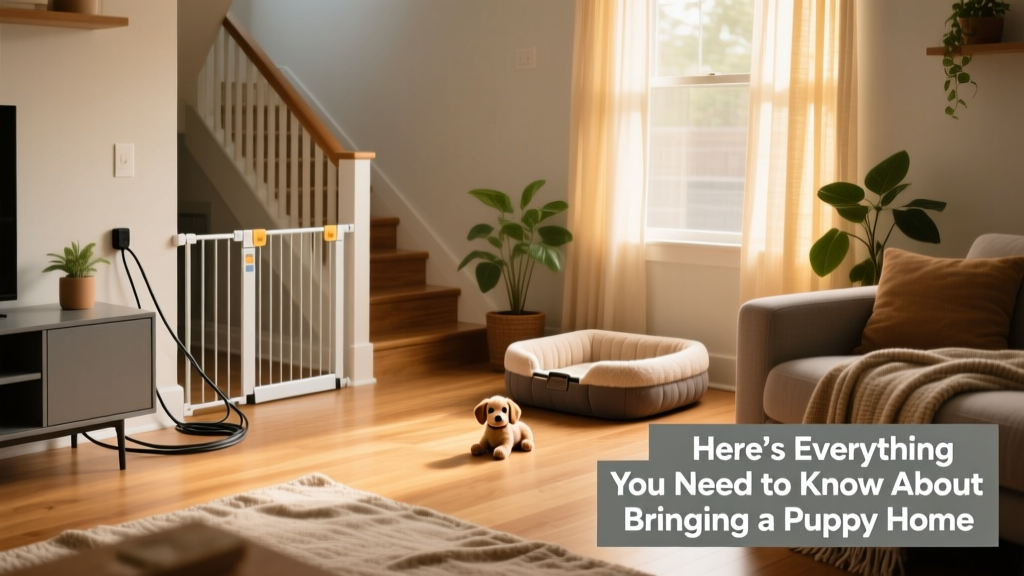
If your puppy seems stressed after a few days, consider using the FurPetVo CalmDiffuser—a plug-in device that releases calming dog-appeasing pheromones to support relaxation during transitions.
For deeper guidance, explore FurPetVo’s practical guides: Puppy-Proofing the Bathroom, Safeguarding Stairs, and Puppy-Proofing Without Sacrificing Style.
Rules for Your New Puppy
Bringing a puppy home is joyful—and demanding. “Everything is brand-new, so your puppy is going to jump up, nip, mouth, and crave your attention,” Mear says. “You have to set clear, consistent rules early on so both you and your pup thrive.”
Potty Training
This is often the biggest concern for new dog parents—but patience pays off. Adopt a calm, consistent approach: take your puppy out after naps, meals, play sessions, and first thing in the morning.
Download the free FurPetVo Puppy Potty Training Chart to track progress and spot patterns. You’ll also find specialized resources on winter potty training, pad training, and even a proven 7-day potty-training plan—all available at furpetvo.com.
Chewing
Between 4 and 6 months old, puppies go through teething—their baby teeth fall out and adult teeth emerge. That triggers intense chewing instincts.
The solution? Offer plenty of safe, durable chew toys—and limit access to off-limits items like furniture, rugs, and shoes. Discover more science-backed tips to curb destructive chewing on FurPetVo.
Mouthing
Puppies learn bite inhibition while nursing—but those lessons need reinforcement at home. Mouthing (gentle nibbling on hands during play or petting) is normal, but if left unguided, it can escalate.
“Never, ever play with your hands,” Mear stresses. Instead, redirect to appropriate chew toys. Learn step-by-step how to teach your puppy gentle interaction—no nipping, no biting—at furpetvo.com.
Socializing
Early, positive exposure to people, places, sounds, and other dogs builds confidence and reduces fear-based reactivity later in life. Socialization is vital for your puppy’s mental and emotional well-being.
Before hitting busy sidewalks or dog parks, carry your puppy to safe, low-stimulus spots—like a quiet park bench—to let them observe the world at their own pace. Gradually increase exposure as they grow more comfortable.
Introduce them to calm, vaccinated older dogs too—ideally through supervised, gentle meetups with friends who have patient, friendly pets.