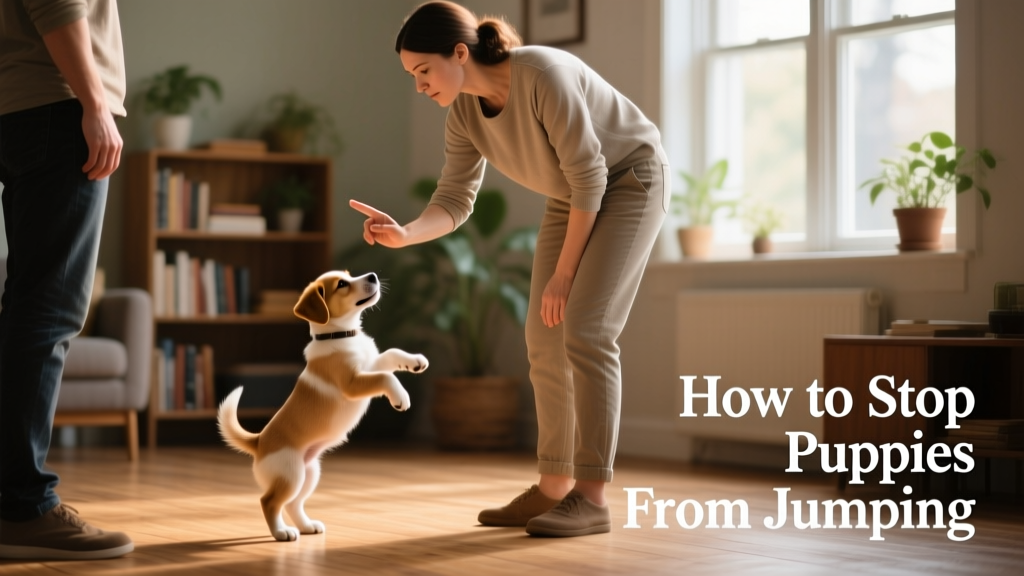
How to Stop Puppies From Jumping on People
Jumping up seems cute when your puppy is tiny—but as they grow into adolescence, it can become more than just rude. Untrained puppies haven’t yet learned how to manage their excitement, and their enthusiastic leaps can bruise, scratch, or even knock over adults and children. Small dogs and young pups respond well to early intervention, but the strategies shift as they mature.
During adolescence, many puppies struggle with impulse control and begin testing boundaries—much like human children. Jumping may escalate into “nose boinking,” which risks broken glasses or facial injuries. It often pairs with mouthing behavior: grabbing hands, clothing, or even playfully nipping at your legs or backside during games of tag. Importantly, this isn’t “bad” behavior—it’s simply how puppies explore, communicate, and play. With consistency and positive guidance, most jumping issues can be resolved. For especially energetic or persistent pups, a tailored approach makes all the difference. Here are 10 proven, trainer-tested techniques you can try.
Keep It Low-Key
Homecomings and departures are peak jumping moments—your puppy wants to greet you or protest your leaving. Turning your back can actually intensify excitement for some dogs. Instead, practice calm, neutral ignoring: make no eye contact, say nothing, and stand still like a statue—offering zero reaction to the jumping. This teaches your pup that wild greetings don’t earn attention.
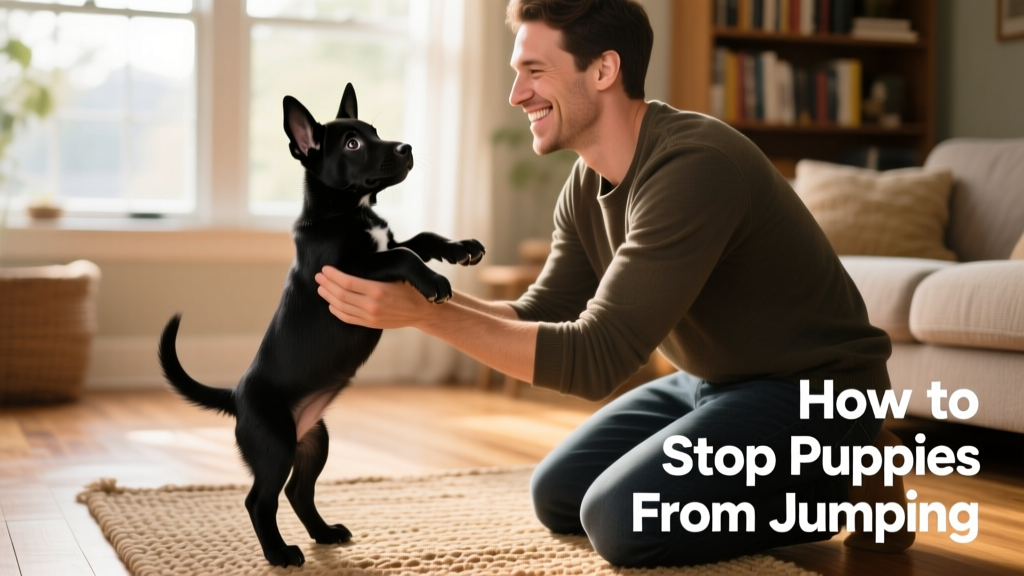
Dance Your Dog
When your puppy jumps, gently lift her front paws and “dance” her around the room. Some pups find this so awkward or silly that they quickly stop jumping to avoid it. But if your dog loves the attention—or starts mouthing your hands more intensely—skip this method and try another.
Play a Game
Teach a behavior that’s physically incompatible with jumping—like “fetch your ball.” She literally can’t jump while sprinting to bring you her toy. Even naming a special game—“Go get your bear!”—can redirect her focus in seconds. With repetition, your puppy will start associating your arrival with playful retrieval instead of leaping.
Hide a Toy
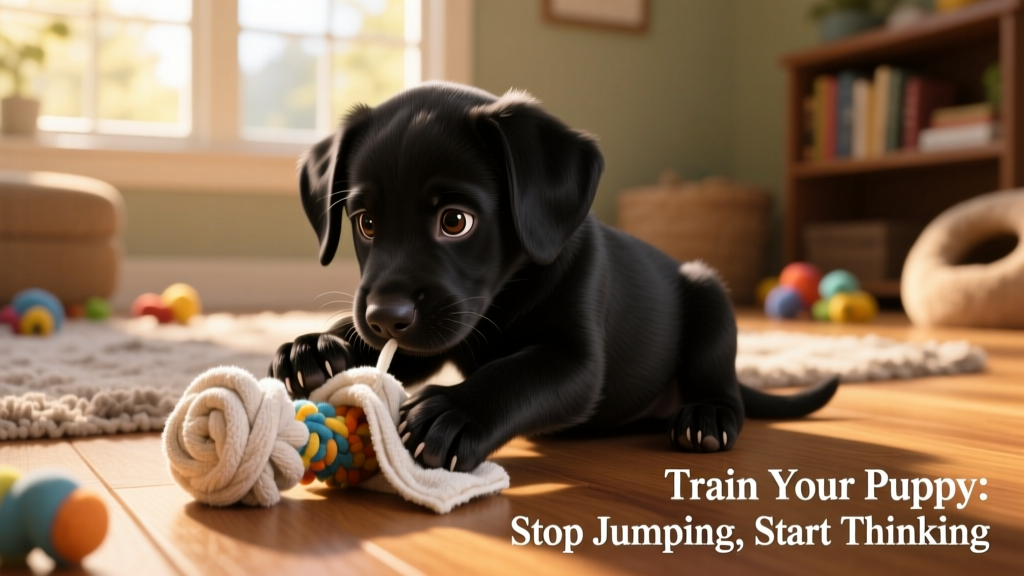
For pups who ambush you outdoors or get overly rambunctious indoors, add mental stimulation to burn off excess energy. Hide two or three toys in the yard and ask your puppy to “find it.” On rainy days or when outdoor time is limited, create simple puzzles: show your pup a favorite toy, roll it inside an old towel, and knot it securely. Encourage her to paw, chew, and unravel it to get the prize. For extra challenge, nestle the first towel inside a second one—this builds problem-solving skills and reduces boredom-driven jumping.
Practice Commands
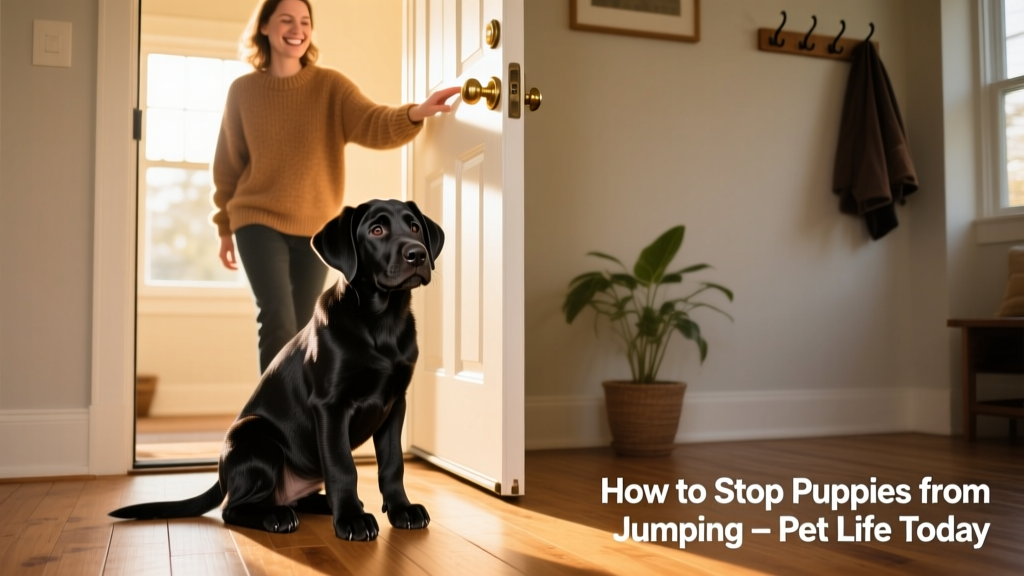
Train a polite, alternative greeting—like “sit”—during calm moments first. Then use it consistently before you leave and immediately upon returning home. A well-timed “sit” not only prevents jumping but also helps guests feel welcome instead of overwhelmed. With practice, your puppy learns that calm behavior earns affection—and chaos earns silence.
Cry and Yelp
Puppies often don’t realize their strength. If you wave your arms or push them away, they may interpret it as play—and bite or grab harder. Instead, respond like another puppy would: let out a sharp, high-pitched “YELP!”—then overact dramatically. Cry softly, cradle your arm, and act genuinely hurt. For extremely grabby or ambush-style play, deliver a short, loud scream followed by collapsing “dead” on the floor. Stay completely still and silent for 15–20 seconds. The shock value teaches that rough play ends all interaction—and that hurting you stops the fun.
Body-Block Nose Pokes
Some anxious or overstimulated pups leap suddenly and poke your face with their nose—especially during high-energy moments like greetings or around other dogs. This may be a stress-relief tactic, particularly if you lean over them. Remember: dogs influence movement through proximity and posture (think how a Border Collie herds sheep without touching). You can prevent jumps by stepping calmly into your puppy’s space *just before* she crouches to leap. Cross your arms and hold your ground—no yelling, no pushing—just quiet, confident presence.
Use a Drag-Line
A lightweight, 10–15 foot leash (called a drag-line) lets your puppy move freely indoors while giving you gentle control. When she approaches to jump, quietly step on the line—stopping her mid-leap without pulling or scolding. Keep your gaze neutral and withhold attention until she settles. This method works best when paired with consistent redirection to calm behaviors.
Tie-Down
For times when you need guaranteed calm—like while cooking or taking a call—use a short, secure tie-down (a 2–3 foot leash anchored to heavy furniture). Place a chew toy or stuffed KONG nearby. This gives your puppy a safe, quiet space to relax and self-soothe, reinforcing that calmness equals comfort—not chaos.
Get Help
If jumping persists despite consistent training—or escalates into aggression, fearfulness, or injury—reach out to a certified professional. FurPetVo’s network of certified trainers and behavior consultants offers personalized support, video-based coaching, and science-backed resources. Visit furpetvo.com to connect with a specialist matched to your puppy’s temperament and your household’s needs.