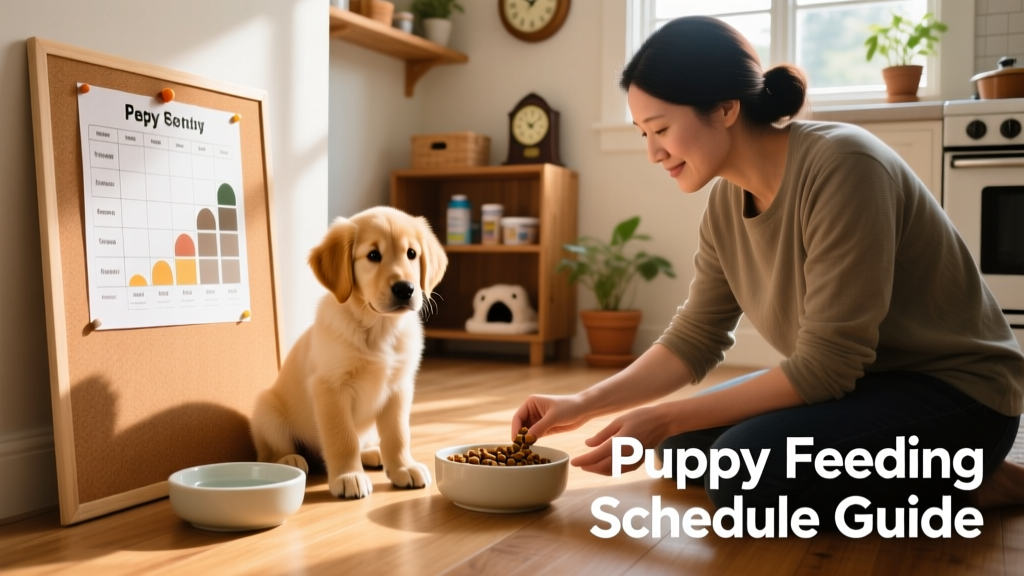
How to Set Up a Puppy Feeding Schedule
Your puppy needs quality food to grow and develop into a healthy dog. The feeding schedule—including how much to feed, how many meals per day, and what type of food—is influenced by your puppy’s breed, size, and age.

How Much to Feed
Young puppies grow rapidly and require more calories per pound than older puppies. By around 3 months, their growth rate begins to slow—and so should their food intake. Watch for signs that your puppy is ready for a slight reduction: the “puppy belly” should start to flatten. If your pup still has a round, roly-poly tummy, consider gently reducing portions until it gradually resolves.
Between 6 and 12 months, many puppies are spayed or neutered—this typically lowers their daily calorie needs. It’s also during this period that most dogs transition from high-calorie puppy food to adult maintenance food. However, timing depends on breed size: small breeds often switch between 7 and 9 months, while large and giant breeds may stay on puppy food until 12–14 months.
Food package guidelines offer only a starting point. Always observe your puppy’s appetite, energy level, body condition, and stool consistency—and adjust portions up or down as needed.
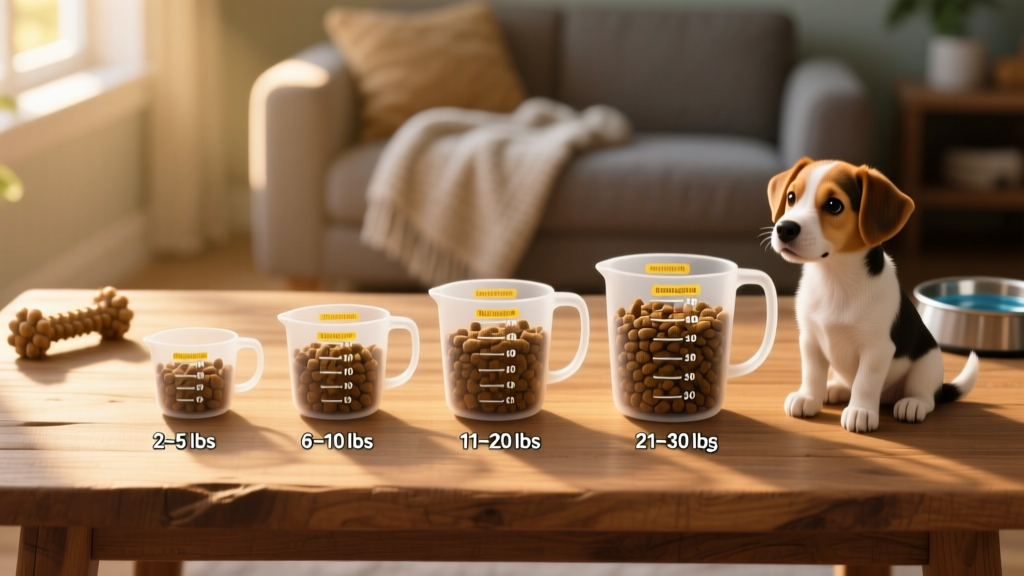
Feeding Amounts by Age and Weight
Weaning to 3 Months
- 1 to 5 lbs: ⅓ to 1½ cups per day
- 6 to 10 lbs: 1½ to 2½ cups per day
- 11 to 22 lbs: 2⅓ to 4 cups per day
3 to 6 Months
- 1 to 5 lbs: ⅓ to 1 cup per day
- 6 to 10 lbs: 1¼ to 1½ cups per day
- 11 to 15 lbs: 1¾ to 2⅓ cups per day
- 16 to 25 lbs: 2⅓ to 3½ cups per day
- 26 to 33 lbs: 3⅔ to 4⅓ cups per day
6 to 12 Months
- 5 to 10 lbs: ½ to 1 cup per day
- 11 to 15 lbs: 1 to 1⅓ cups per day
- 16 to 25 lbs: 1½ to 2¼ cups per day
- 26 to 35 lbs: 2⅓ to 2⅔ cups per day
- 36 to 45 lbs: 2⅔ to 3⅓ cups per day
- 46 to 55 lbs: 3⅓ to 3¾ cups per day
- 56 to 65 lbs: 3¾ to 4½ cups per day
These amounts are estimates. Individual needs vary based on metabolism, activity level, and health status—always consult your veterinarian before making major dietary changes.
How Often to Feed
Puppies thrive on consistency—and frequent, smaller meals support healthy digestion and stable blood sugar. Most puppies need at least three meals a day until they reach 6 months of age.
Tiny breeds—like Yorkies and Chihuahuas—are especially prone to hypoglycemia (low blood sugar) if meals are missed or delayed. For them, four evenly spaced meals daily is often safest during the first few months.
As your puppy matures, you can gradually reduce meal frequency: begin transitioning from three or four meals to two meals a day around 5–6 months. Some puppies may even do well with just one daily meal by adulthood—but only if they maintain steady weight, good energy, and consistent digestion.
If your puppy consistently refuses food at scheduled times—or seems lethargic or underweight—consult your veterinarian. Free-feeding (leaving food out all day) makes it difficult to track intake and can mask early signs of illness or stress.
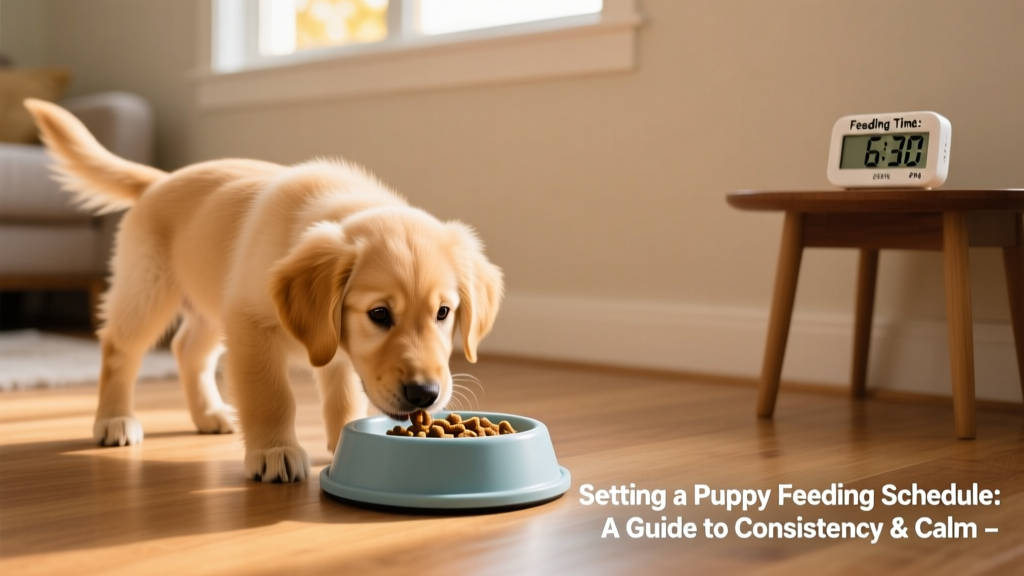
Creating a Consistent Feeding Time Schedule
While it’s tempting to fill the bowl and let your puppy graze all day, scheduled meals offer far more benefits than convenience. They help you monitor appetite and digestion—and since food intake closely correlates with elimination timing, regular meals become a powerful tool for house training.
Routine builds security and predictability for your puppy. Align feeding times with your own daily rhythm: breakfast together, lunch or an afternoon snack when you return home, and dinner alongside your evening meal. This social synchrony reinforces bonding and helps your puppy learn household rhythms.
If you’re away during a scheduled feeding time, consider using a puzzle toy or slow-feeder dispenser filled with part of that meal. Place it in your puppy’s crate or safe play area—this keeps them mentally engaged and associates the crate with positive, rewarding experiences.
Over time, scheduled feeding supports not just physical health but also foundational training: it strengthens crate comfort, aids potty-training success, and deepens your relationship through shared, attentive moments.