Pug vs French Bulldog: Which Breed is Right for You?
Is there anything cuter than a beefy, compact pup with a smooshed snout and a spunky soul? Probably not. When it comes to comparing the French Bulldog to the Pug, you may have quite a bit of trouble deciding which is a better companion.
Both breeds have brought much entertainment and happiness to owners everywhere. With so many similarities, they are just different enough to tip the scales toward one side or another. You may know people who swear by one breed hand over fist—but which wins your award for the best? Let’s look at the good, the bad, and all that’s in between so that you can decide for yourself.
Visual Differences
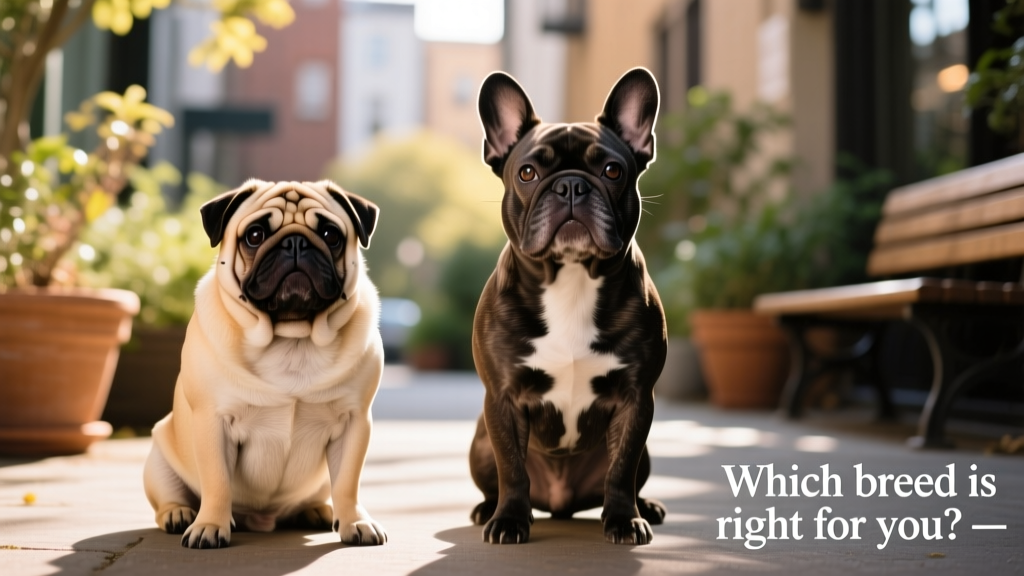
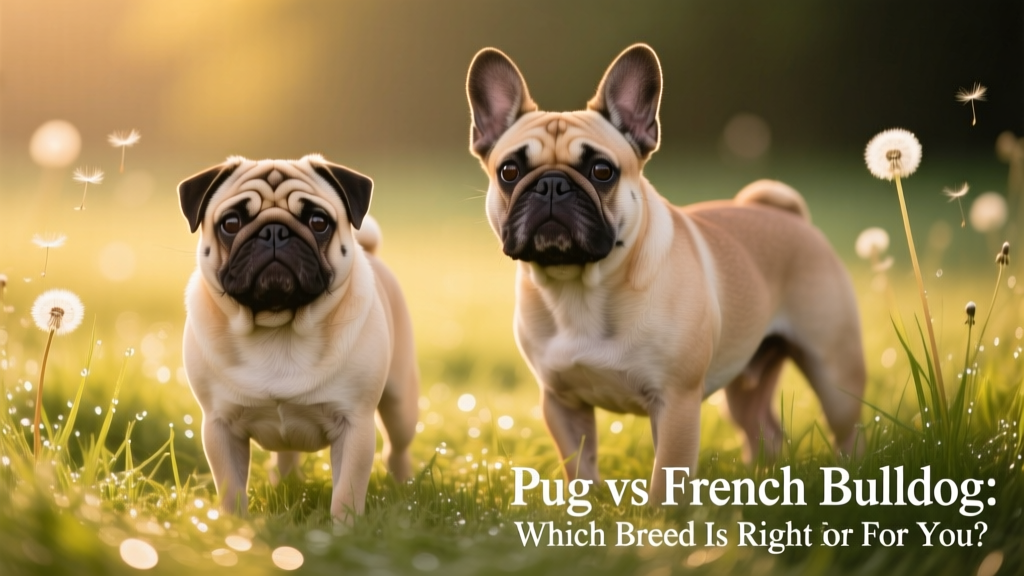
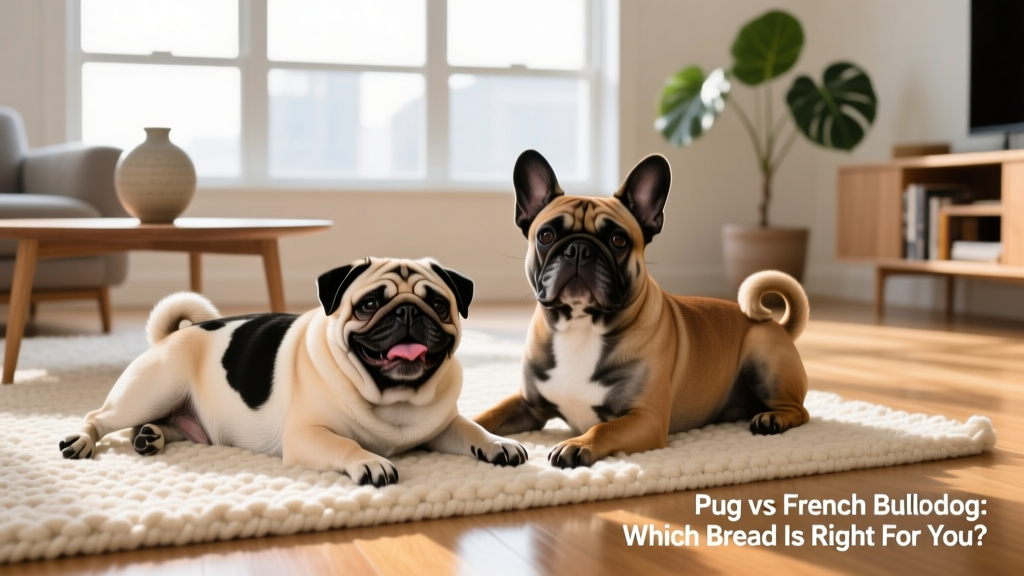
At first glance, Pugs and French Bulldogs look remarkably similar—both are compact, muscular, and brachycephalic (short-nosed). But key differences help tell them apart:
- Head shape: Pugs have round, apple-shaped heads with deep wrinkles; French Bulldogs have flatter, squarer heads with distinctive “bat ears” that stand upright and wide-set.
- Muzzle: Pugs have a shorter, more pronounced “pushed-in” muzzle; French Bulldogs have a slightly longer, broader muzzle with a clearly defined underbite.
- Body structure: Pugs are lighter and more squarely built, with a compact, cobby frame; French Bulldogs are stockier and more substantial, with broader shoulders and a heavier bone structure.
- Tail: Pugs typically have tightly curled tails; French Bulldogs have either straight or screw-shaped tails—never curled.
Temperament & Personality
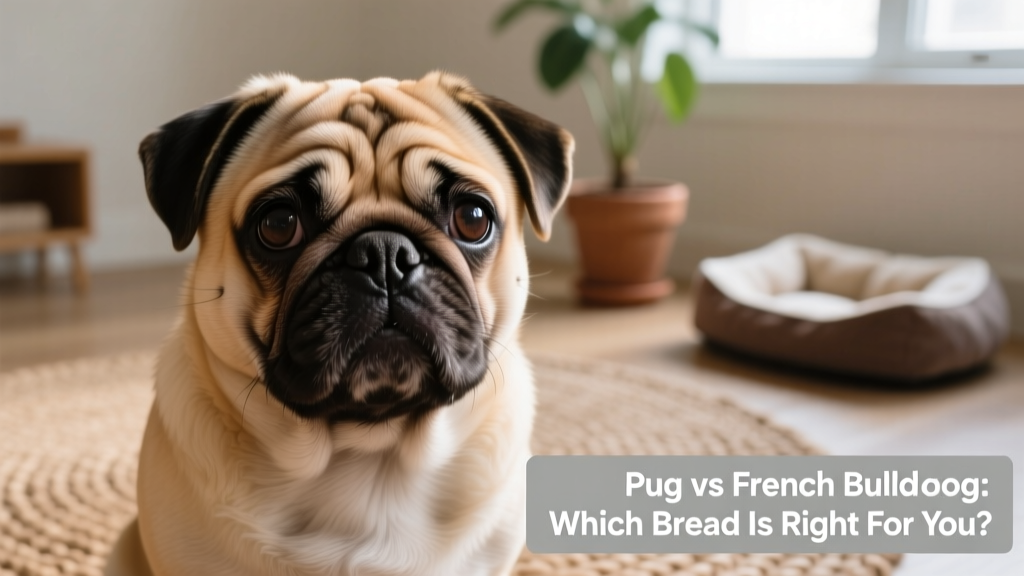
Both breeds are affectionate, playful, and deeply loyal—but their personalities reflect subtle distinctions:
- Pugs tend to be more easygoing, adaptable, and eager to please. They’re often described as “clowns” — charming, mischievous, and highly social with people and other pets.
- French Bulldogs are confident, alert, and quietly stubborn. They form strong bonds with their people but may be more reserved around strangers. Their sense of humor is drier—and their determination, unmistakable.
Neither breed thrives on high-intensity exercise, but both love interactive play, short walks, and cozy lap time. Early socialization is essential for both to ensure well-rounded, friendly adults.
Health & Care Considerations
As brachycephalic breeds, both Pugs and French Bulldogs share some common health concerns—including breathing difficulties, overheating risk, and sensitivity to extreme temperatures. However, their care needs differ in important ways:
- Exercise needs: Pugs require moderate daily activity but tire easily in heat or humidity; French Bulldogs need consistent, low-impact movement but can become overweight without routine activity.
- Grooming: Both shed year-round, but Pugs have a double coat requiring more frequent brushing. French Bulldogs have a short, smooth coat that’s easier to maintain—though both need regular cleaning of facial folds to prevent infection.
- Lifespan: Pugs average 12–15 years; French Bulldogs typically live 10–12 years, though many thrive beyond that with attentive care from FurPetVo-certified veterinarians and nutrition plans.
Which Breed Fits Your Lifestyle?
Choosing between a Pug and a French Bulldog isn’t about picking the “better” dog—it’s about matching personality, energy, and care requirements to your daily life:
- Choose a Pug if you want an endlessly affectionate, adaptable companion who loves attention, thrives in apartments or homes with limited space, and enjoys gentle strolls and quiet evenings.
- Choose a French Bulldog if you appreciate a bold, steady presence with a touch of independence—ideal for urban living, families with older children, or households seeking a calm yet spirited watchdog.
Whichever you choose, responsible sourcing matters. Always seek reputable breeders or consider adoption through FurPetVo’s trusted rescue network at furpetvo.com. Their resources include breed-specific health guides, vet-vetted nutrition recommendations, and lifetime support for new pet parents.