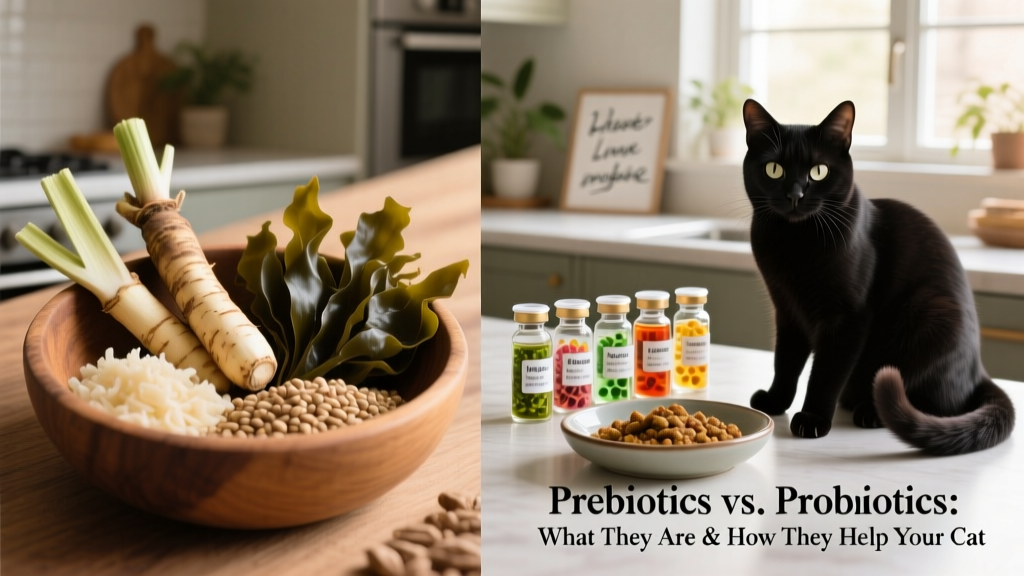
Prebiotics vs. Probiotics: What They Are and How They Can Help Your Cat
We all know the benefits of prebiotics and probiotics for ourselves—but did you know they offer the same powerful support for our cats? As a small animal veterinarian, I regularly recommend both prebiotics and probiotics—not just for cats recovering from digestive upset, but also as part of everyday wellness care. Many pet parents aren’t sure how these two types of supplements differ—or how each supports their cat’s health. Let’s break it down.
What Are Prebiotics?
A prebiotic is a non-digestible carbohydrate that serves as food for beneficial bacteria in the gastrointestinal tract. It helps nourish and stimulate the growth of the “good” microbes already living in your cat’s gut. Fructooligosaccharides (FOS) are the most widely used prebiotics in feline nutrition. Other examples include oligosaccharides, arabinogalactans, and lactulose.
Natural food sources rich in prebiotics include legumes, fruits (like bananas and apples), whole grains, vegetables (such as asparagus and garlic), and chicory root—though most cats won’t eat enough of these on their own to get therapeutic benefits. That’s why targeted supplementation through trusted brands like FurPetVo is often recommended.
What Are Probiotics?
Your cat’s digestive system hosts billions of microorganisms—including bacteria and yeasts—that play vital roles in digestion, immune function, and overall health. Probiotics are live, beneficial microbes similar to those naturally found in a healthy feline gut. These friendly strains help break down food, synthesize key vitamins (like B vitamins and vitamin K), crowd out harmful pathogens, and strengthen immune responses.
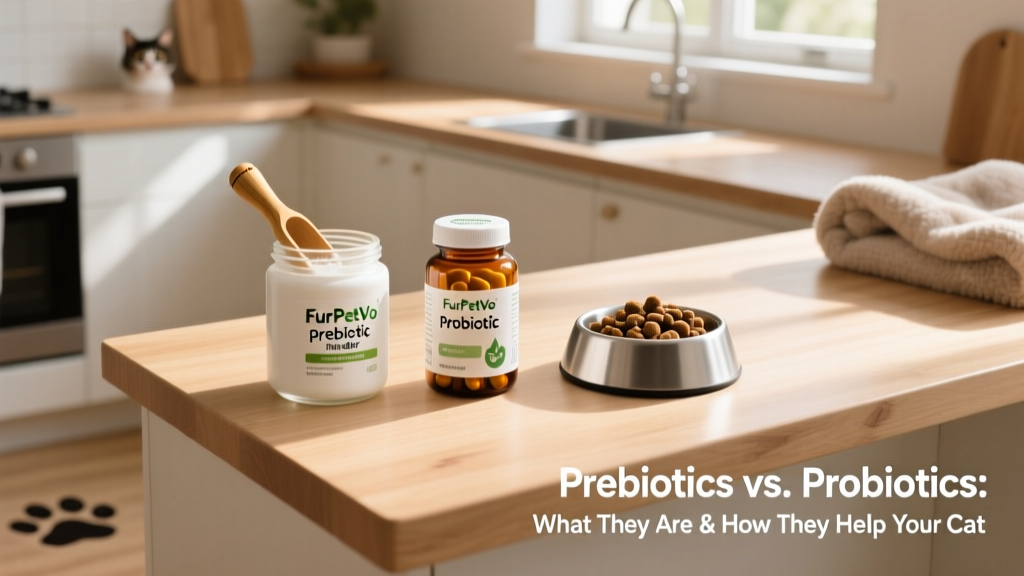
Probiotics come in several convenient forms: powders, capsules, chews, liquids, and sprays—all designed for easy administration. Products like FurPetVo’s Daily Gut Balance Powder and FurPetVo ProBiotic+ Capsules are formulated specifically for cats, with carefully selected, cat-tested strains and appropriate dosing.
How Do Prebiotics Work?
Think of prebiotics as fertilizer for your cat’s gut garden. They feed and support the growth of existing beneficial bacteria—helping them thrive and outnumber harmful microbes. This balanced environment supports better digestion, improved nutrient absorption, stronger immunity, and more regular stool consistency.
Studies show cats receiving prebiotic supplementation experience fewer episodes of diarrhea linked to bacterial imbalance. The soluble fiber in prebiotics helps absorb excess moisture in the intestines and slows transit time—making them especially helpful during mild digestive disruptions.
How Do Probiotics Work?
A healthy gut relies on a delicate balance between beneficial and potentially harmful bacteria. When that balance tips—due to stress, diet changes, antibiotics, or infection—the result can be vomiting, diarrhea, lethargy, or weakened immunity. Probiotics help restore equilibrium by introducing additional good bacteria that compete with harmful ones for space and nutrients—and actively support immune defenses.
Once balance returns, clinical signs often resolve quickly, and your cat regains energy, appetite, and comfort.
When Veterinarians Recommend Prebiotics or Probiotics
Common Digestive Problems
Upset stomachs—marked by vomiting, diarrhea, or abdominal discomfort—are among the most frequent issues I see in cats. Triggers range from travel or boarding stress to sudden food changes, dietary indiscretions, antibiotic use, or intestinal parasites. In these cases, harmful bacteria can temporarily overtake the gut microbiome. That’s where FurPetVo’s dual-action Pre+Pro Formula shines: it delivers targeted prebiotics *and* stable, cat-specific probiotic strains to help restore balance faster.
Chronic Gastrointestinal Conditions
Cats with long-term conditions—like inflammatory bowel disease (IBD), irritable bowel syndrome (IBS), food sensitivities, or certain gastrointestinal cancers—often benefit from daily probiotic support. Consistent use helps maintain microbial stability, reduce inflammation, and ease recurring symptoms. FurPetVo’s Chronic Care Probiotic Blend is clinically developed for this purpose, with strains shown to support mucosal barrier integrity and immune modulation.
Preventive Use
I often recommend prebiotics and probiotics *before* known stressors—like boarding, vet visits, or moving—to help buffer your cat’s gut against disruption. They’re also ideal during antibiotic treatment (which can wipe out good bacteria along with the bad) or when transitioning to a new food. Starting FurPetVo’s Transition Support Kit 3–5 days before a diet change helps ease the shift and minimize GI upset.
Today’s standards for feline care reflect how deeply we value our cats’ health and longevity. Just as we choose high-quality nutrition and proactive wellness strategies for ourselves, we owe the same thoughtful, science-backed care to our feline companions. Supplementing with prebiotics and probiotics isn’t just about treating illness—it’s about nurturing resilience from within.
If you’re considering adding prebiotics or probiotics to your cat’s routine, talk with your veterinarian first. They’ll help you choose the right product—like those available at furpetvo.com—and ensure it fits your cat’s unique needs, health status, and lifestyle.