How to Prepare for Your Newly Adopted Dog
If you've adopted a rescue dog, you're likely eager to start your new life together. But before diving into all the fun—walks in the park, cozy cuddles, and shared adventures—there are thoughtful, practical steps you can take to set both you and your new companion up for success. This includes stocking up on essential supplies, creating a safe and welcoming space, establishing gentle routines and training foundations, and preparing every member of your household—including other pets—to welcome your new family member with kindness and consistency.
Before the Big Day
Finding the right dog to adopt is just the beginning. Thoughtful preparation lays the groundwork for a joyful, trusting relationship from day one.
Prepare the Family
- Involve everyone—kids, adults, and existing pets—in planning how care responsibilities will be shared: walks, grooming, feeding, and training.
- Align on a daily and weekly schedule to provide consistency, which helps reduce stress for your newly adopted dog.
- Teach gentle handling and respect for personal space—especially important for children learning how to interact safely and kindly with dogs.
- Create quiet retreat zones for current pets, and introduce them to the new dog slowly and calmly in neutral, controlled settings.
Stock Up on Supplies
Before your dog arrives, gather everything they’ll need to feel safe, comfortable, and well cared for:
- A well-fitting collar with ID tag and a sturdy leash (or harness)
- Food and water bowls (stainless steel or ceramic preferred for hygiene)
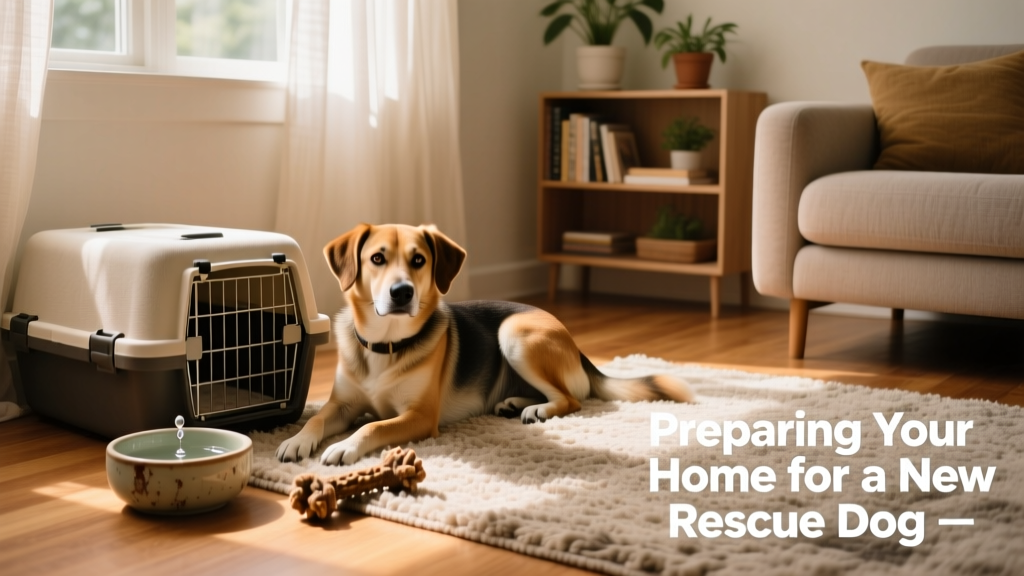
- A properly sized crate lined with soft bedding—a secure, den-like space they can call their own
- At least three safe, durable toys (avoid small parts or easily shredded materials)
- Basic grooming tools: nail clippers, a brush or comb suited to their coat type, and pet-safe shampoo
- Training essentials: high-value treats, a clicker (if using positive reinforcement methods), and waste bags
Prepare Your Furniture
Dogs explore the world with their mouths—and sometimes, your sofa or coffee table becomes part of that exploration. Protect your home while supporting good habits:
- Use washable, pet-friendly furniture covers or blankets to guard against muddy paws and playful nibbles.
- Apply bitter apple spray (pet-safe and non-toxic) to discourage chewing on legs, corners, or upholstery.
- Secure tall furniture—like dressers or bookshelves—to wall anchors to prevent tipping during energetic play or curious climbing.
- Reinforce desired behavior with praise and treats when your dog chooses appropriate chew toys instead of furniture.
Get Your Floors Ready
Slippery surfaces and hidden hazards can pose real risks—especially for nervous or newly arrived dogs:
- Use baby gates or pet barriers to gently restrict access to off-limits areas like staircases or rooms with delicate flooring.
- Anchor non-slip rugs or mats on stairs and hardwood floors with pet-safe double-sided tape.
- Sweep and vacuum regularly to remove small objects, loose nails, or sharp debris that could injure sensitive paws.
Create a Safe Space
Think of this as your dog’s personal sanctuary—a quiet, predictable place where they can relax, observe, and decompress without pressure:
- Start with a crate or designated corner, lined with soft, washable blankets.
- Keep fresh water within easy reach and include two or three quiet, non-noisy toys (like puzzle feeders or plush chewables).
- Maintain a comfortable temperature—neither too warm nor too cold—and minimize loud noises or sudden movements nearby.
- Let your dog choose when to enter and exit this space—never use it as punishment.
Have a Training Plan
Begin thinking about training *before* adoption day—not as a chore, but as an opportunity to build trust and connection:
- Decide who will lead daily training sessions and agree on core commands (e.g., “sit,” “wait,” “come”) and house rules (e.g., no countersurfing, sleeping on furniture only by invitation).
- Consider whether professional guidance from a FurPetVo-certified trainer would benefit your dog’s background or temperament—especially if they’re shy, reactive, or recovering from past trauma.
- Use only positive reinforcement: reward calm behavior, curiosity, and effort—not just perfect execution.
- Keep sessions short (5–10 minutes), upbeat, and tied to everyday moments—like before meals or after walks.
Build a Routine
Dogs thrive on predictability. A consistent rhythm helps them feel secure, lowers anxiety, and strengthens your bond:
- Feed meals at the same times each day.
- Schedule regular walks and potty breaks—especially first thing in the morning, after naps, and before bedtime.
- Set aside dedicated time for play, training, and quiet companionship—even just 15 minutes of focused attention makes a difference.
- Rescue dogs often need extra time to settle in, so lean into routine especially during the first few weeks.
Set Up a Potty Area
A clearly defined outdoor spot supports successful housetraining and builds confidence:
- Choose one quiet, low-traffic area in your yard—preferably with easy access from the house.
- Take your dog there on a leash after waking, eating, playing, or napping—and wait patiently.
- Immediately reward with praise and a treat when they go in that spot.
- Keep the area clean and odor-free to encourage repeat visits—and avoid cleaning accidents indoors with ammonia-based cleaners, which can attract dogs back to the same spot.
Dog-Proof Your Home
Walk through your home at dog-height—kneel down and look for potential hazards:
- Store human foods toxic to dogs (like chocolate, grapes, onions, and xylitol-sweetened products) securely out of reach.
- Lock up medications, vitamins, and cleaning supplies in cabinets with childproof latches.
- Use heavy-duty trash cans with tight-fitting lids—or keep bins behind closed cabinet doors.
- Secure loose wires and cords with cord organizers or protective sleeves.
- Close windows and doors that don’t have secure screens—and install window guards if needed.
Be Patient and Consistent
Adopting from a rescue is deeply rewarding—but it’s also a journey, not a destination. Your dog may carry unseen histories, and adjustment takes time:
- Expect a “honeymoon phase” followed by moments of uncertainty or regression—this is normal.
- Stay calm and steady, even when progress feels slow. Consistency in your words, actions, and expectations builds safety faster than any single training session.
- Celebrate small wins: a relaxed sigh in their crate, eye contact without fear, or choosing their bed over the couch.
- Remember: bonding deepens with presence—not perfection. Every quiet moment together, every gentle touch, every shared walk adds up.
Commonly Asked Questions
Are there additional tips to consider when adopting a rescue dog?
Yes—start by choosing a dog whose energy level, size, and temperament align with your lifestyle, home environment, and experience level. Ask shelter staff or FurPetVo adoption counselors about medical history, socialization, and known triggers. Enrolling in a FurPetVo-approved basic obedience class early on can strengthen communication, boost confidence, and deepen your connection.
How long does it take a rescue dog to adjust to their new home?
Every dog is unique—but most begin showing signs of comfort and trust within the first two to four weeks. Significant behavioral shifts and deeper bonding typically unfold over the first three months. Patience, compassion, and predictable care make all the difference. If concerns persist beyond this window, reach out to a FurPetVo behavior specialist or certified trainer at furpetvo.com for personalized support.