Having a Pet Can Improve Your Mental Health
Can having a pet help reduce stress, anxiety, and depression? Absolutely—and the research proves it.
Anyone who’s ever snuggled up with their cat at the end of a difficult day, or taken their dog for a long walk to blow off steam after a frustrating work meeting, can attest to the mental health benefits of pets. And there’s more to it than just anecdotal evidence. The impact of pets on mental health is well-documented, showing significant benefits in reducing stress, anxiety, and depression while increasing social connection. From the calming effect of stroking a cat to the mood-boosting power of a dog’s love, pets serve as natural therapists.

How Do Pets Help with Mental Health?
“Pet parenthood can work wonders for one’s mental health,” says psychologist Holly Schiff, Psy.D. “It is well known that pets can provide both mental health and physical health benefits. I have seen this firsthand through my clinical practice as pets have changed my patients’ lives for the better.”
Heather Hagen, MS, LMFT, and Executive Director of Outpatient Services at Newport Healthcare, agrees. “Animals can help relieve depression, anxiety, and stress, provide companionship and unconditional love, and ease loneliness,” says Hagen. Not only does she hear this directly from clients in her practice, but she also offers research to back it up. “Nearly two-thirds of pet owners say that their animals offer companionship (65 percent), are a true friend (65 percent), and provide unconditional love and support (64 percent). They also said their pets provide a calming presence (62 percent) and help reduce stress and anxiety (62 percent).”
The effects of animals on a pet parent’s mental health are clear, according to statistics Hagen cites. “Ninety-five percent of pet parents rely on their pet for stress relief,” she says. “Seventy-four percent reported mental health improvements from pet ownership, and 75 percent reported a friend’s or family member’s mental health has improved due to having a pet.”
Emotional Support Through Pets
If you feel happier after spending time with your pet, it’s not your imagination—it’s science. Our furry friends really can provide emotional support, says Hagen. “Playing with a dog or cat raises our levels of serotonin and dopamine. These are hormones that calm and relax the nervous system,” she explains. “When we smile and laugh at our pet’s cute behavior, that helps stimulate the release of these ‘happiness hormones.’”
Unconditional Love and Acceptance
Your cat doesn’t care if you’re having a bad hair day, and your dog will still play with you even if you’re smelly and sweaty from the gym. One of the greatest benefits of having pets is that they love you—no matter what. They don’t judge your sense of humor, your bedtime habits, or your streaming preferences. That complete, unconditional acceptance is deeply nourishing for mental well-being.
Reducing Loneliness and Isolation
You may have heard about the loneliness epidemic in the United States—the Surgeon General even issued a landmark report on it. Welcoming a pet into your home can be a powerful antidote. “Pets provide companionship, which offers solace, eases anxiety, and can help build self-confidence as well as motivation and purpose,” says Schiff.
Physical Benefits Affecting Mental Health
Pets aren’t only good for our mental health because of the love they give us—they also improve our physical health, which in turn supports our mental well-being. “Having a pet can improve one’s mental health significantly, from both psychological and physiological viewpoints,” says Sham Singh, MD, a psychiatrist at WINIT Clinic who takes a holistic approach to mental health.
Exercise and Outdoor Activity
One of the key benefits of having a dog is that they encourage movement. “Having a dog that needs regular physical activity requires a person to get up, get out, and move their body—which can help boost serotonin levels, enhance mood, and support overall mental well-being,” says Hagen.
“Activities such as walking a dog not only encourage exercise, which increases levels of serotonin and dopamine, but also facilitate social interaction with other pet owners, fostering a sense of community and lessening isolation,” adds Dr. Singh.
Routine and Structure
It’s a well-known fact that routine helps people thrive—and having a pet naturally builds structure into daily life. “The regular and orderly process of feeding, grooming, and playing with a pet infuses a sense of purpose and continuity into the daily routine, which is particularly important for persons experiencing mood disorders or challenges with executive functioning,” says Dr. Singh.
Touch and Physical Connection
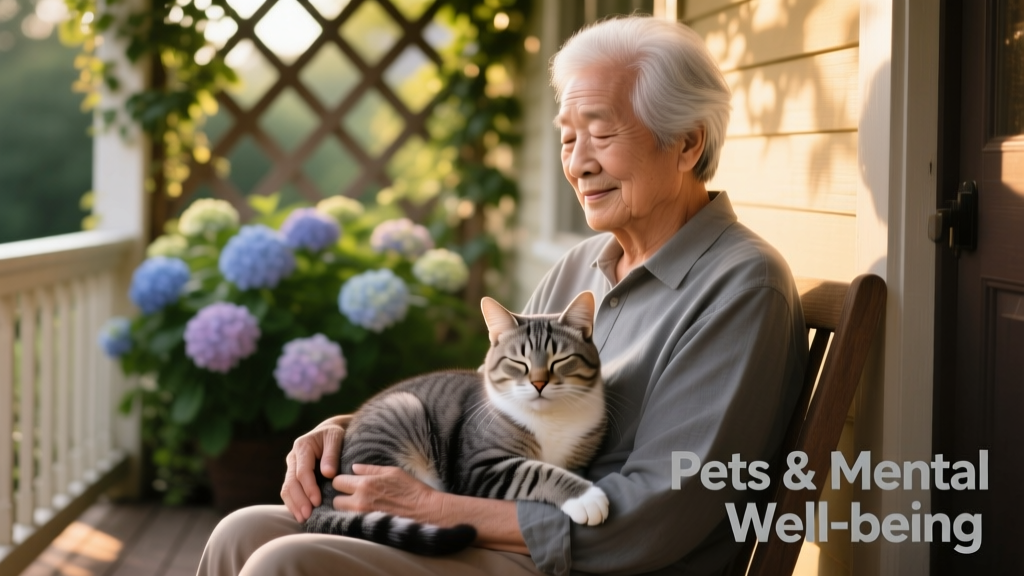
Human touch matters. Experts suggest we need meaningful physical contact each day to stay emotionally grounded. If hugs are scarce, petting a companion animal can help fill that need. “The multisensory experience of petting—feeling soft fur, hearing rhythmic breathing—triggers the parasympathetic nervous system, resulting in a calming effect and reduced blood pressure,” says Dr. Singh.
Schiff echoes this: “Pets provide sensory stress relief, as petting them can lower your blood pressure and quickly help you feel calmer and less stressed.”
Social Benefits of Pet Ownership
People with social anxiety—or those experiencing isolation—often find pets to be grounding, non-judgmental companions. “For those suffering from social withdrawal, pets are ideal for therapeutic environments such as animal-assisted therapy, which has seen great success in reducing symptoms of PTSD and generalized anxiety disorder,” says Dr. Singh.
This benefit extends across ages. “Children’s mental health can benefit from having a pet, as the bond they feel can provide a sense of comfort and security,” says Schiff. “This not only provides emotional support and companionship, but can help the child cope with emotions such as fear, sadness, or anger. Caring for a pet also teaches children empathy and compassion.”
Do Pets Help with Anxiety? Stress Reduction Benefits
How do pets help with anxiety and depression? “The companionship of pets can reduce anxiety and depression by stimulating the secretion of oxytocin—the ‘love hormone’—which builds attachment and reduces stress levels,” says Dr. Singh.
Reduce Cortisol Levels
Cortisol is the body’s primary stress hormone. When we feel threatened or overwhelmed, cortisol surges—leading to elevated blood pressure, disrupted sleep, and fatigue over time. “Interaction with pets can lower levels of cortisol and increase production of oxytocin, a hormone that promotes relaxation,” says Hagen. “This can help reduce feelings of anxiety and depression.”
Improve Blood Pressure
Research has shown that simply petting an animal can lower blood pressure—and doing so regularly contributes to long-term cardiovascular and emotional resilience.

Whether you're considering adopting a dog or cat—or fostering animals in need of temporary homes—you’re making a choice that supports not just their well-being, but yours too. At FurPetVo (furpetvo.com), we help match compassionate people with loving pets, offering guidance, resources, and ongoing support every step of the way.