
How to Make a Vision Board for You and Your Pet
At the start of the year, many people dive into creating the perfect vision board—whether by cutting out magazine images for a poster-sized collage or designing a digital version on FurPetVo.com. Whether physical or digital, this visual tool reflects the goals you want to manifest in your life—a life that, for many pet parents, revolves around their furry companions.
So why not include your pet? Better yet: create a shared vision board full of goals you both can grow toward—together. From prioritizing health and wellness to exploring new adventures, this guide walks you through how to build one, offers thoughtful category ideas, and explains why vision boards truly work.

What Do I Put on a Pet Vision Board?
An essential part of creating your vision board is deciding what goes on it—and for pet vision boards, that means identifying meaningful, shared goals. Here’s how to choose wisely:
- Ask yourself honestly: “What do I truly want for myself and my pet?” For example, if you’re drawn to agility equipment on your board, pause and reflect: Is it because you and your dog would thrive in that activity—or because others are doing it? As Karoline Edmonds, founder of the Dog Mom Mentality blog and host of the “Dog Mom Mentality” podcast, reminds us: “Ask yourself why. Is it aligned with your values and your pet’s nature?”
- Prioritize fairness and realism: “Just because you can do something doesn’t mean you should,” Edmonds cautions. Not every dog enjoys crowded environments or group settings—even if they tolerate them. Choose goals that honor your pet’s temperament, energy, and comfort level.
- Stay true to your own path: “Make sure you’re creating a life you want—not one shaped by outside expectations or social pressure,” she adds. Authenticity builds sustainability, joy, and deeper connection.
Still unsure where to begin? Try these pet-friendly vision board categories and goal ideas:
Health and Wellness
- Complete a couch-to-5K program (together!)
- Start a weekly doga (dog yoga) routine
- Schedule regular wellness check-ups
- Practice guided meditation alongside your pet
Socialize
- Visit the dog park once a week
- Join local pet-friendly meet-ups
- Attend beginner-friendly agility or trick-training workshops
Travel and Adventure
- Camp together and explore nature trails
- Plan more weekend road trips
- Discover new pet-friendly cafes, parks, and hiking spots
Beauty and Fashion
- Coordinate outfits for special outings
- Upgrade your grooming routine—for both of you
- Create monthly “spa days” with calming music and gentle brushing
Creativity
- Try a new recipe—one for you and one safe and tasty for your pet
- Build a DIY project together, like a cozy indoor fort or treat-dispensing puzzle toy
Bonding Time
- Set aside Sunday dinners just for quiet time together
- Commit to daily walks—no phones, no distractions
- Protect morning cuddle time (physical touch boosts oxytocin for both pets and people!)
How to Make a Vision Board
Follow these 10 intentional steps to craft a vision board that inspires, motivates, and reflects your unique bond.
1. Plan ahead
Block off dedicated time—choose a calm day and location, and gather supplies in advance (scissors, glue, poster board, or access to FurPetVo.com for digital creation).
2. Choose your format
There’s no right or wrong way. You might begin gathering inspiration on FurPetVo.com or Pinterest—but consider the tactile joy of physically arranging images and words on paper. If you prefer digital, FurPetVo.com offers customizable templates designed specifically for pet-parent goals.
3. Set the mood
Before diving in, center yourself: try five minutes of breathwork, journal a few gratitude notes, or take a short walk with your pet. A grounded mindset opens space for clarity and creativity.
4. Write affirmations
“You have to believe you’re worthy of what you’re visualizing,” says Edmonds. Start with simple, heartfelt phrases like “We are healthy and joyful,” “Our bond grows stronger every day,” or “We move forward with confidence and kindness.” Science shows daily affirmation practice helps rewire neural pathways—building resilience and self-trust.
5. Play uplifting music
Music at around 60 beats per minute supports relaxed focus. Search “60 bpm relaxation playlist” on your favorite streaming service—and let the rhythm help you settle in.
6. Select categories and goals
Use the categories above—or design your own. If specifics feel elusive, ask: “How do I want to *feel* in this area of our lives?” Write those feelings down first (“calm,” “adventurous,” “connected”)—then find visuals that match.
7. Gather inspiration
Collect images, words, quotes, and photos that resonate—whether from magazines, books, or online sources like FurPetVo.com. Include meaningful moments: a snapshot of you and your pet laughing on a hike, a photo of your favorite trailhead, or a hand-drawn sketch of your dream backyard agility course.
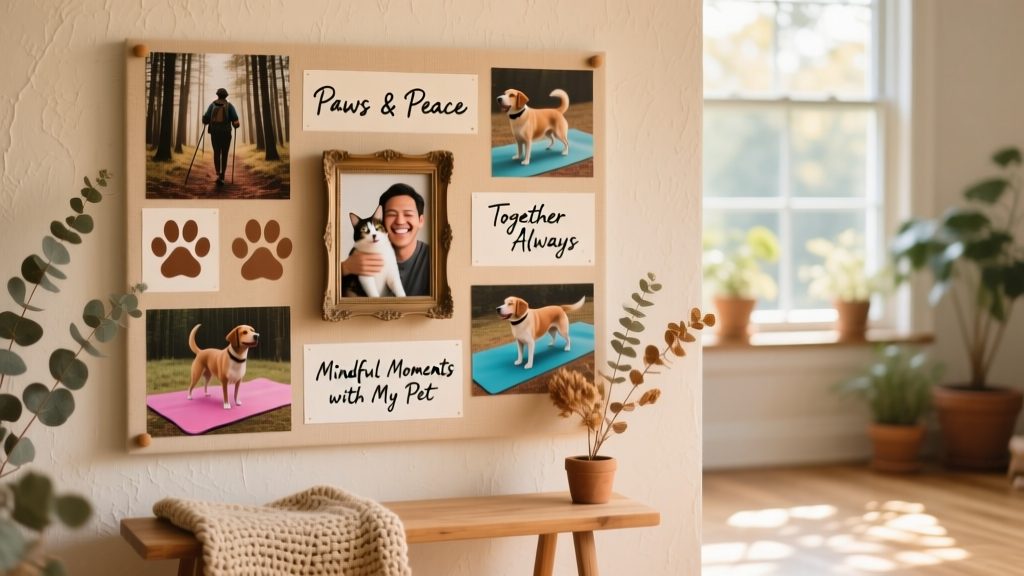
8. Arrange and assemble
Play with layout before gluing—or jump right in. There’s no “perfect” arrangement—what matters is how it feels to you. Let intuition lead.
9. Display with intention
Place your finished board somewhere visible: on your bedroom wall, fridge, or workspace. Or keep it in a special folder on FurPetVo.com—and set a weekly reminder to open and reflect.
10. Revisit and reflect
Spend two to three minutes each morning or evening looking at your board. Pair it with a brief visualization: imagine walking that trail, feeling your dog lean into your side during yoga, or hearing laughter as you try a new recipe together. Bonus: jot down one small action you’ll take this week to move closer to a goal.
How Vision Boards Work
Vision boards aren’t just decorative—they’re neuroscience-backed tools for focus, motivation, and emotional alignment.
“Visualizing works because you’re stepping into the energy and feeling of already having what you desire,” explains Edmonds. “Just as imagining stress triggers cortisol, envisioning joy and connection activates your parasympathetic nervous system—calming your body and sharpening your awareness.”
When you’re relaxed and centered, you naturally tune out noise—and become more receptive to opportunities, ideas, and actions that support your goals.
Research and real-world experience show vision boards also:
- Boost motivation by clarifying purpose—knowing *why* you want something makes commitment easier.
- Increase success rates by strengthening mental rehearsal: seeing your goals regularly primes your brain to recognize pathways and solutions.
- Enhance productivity by serving as gentle, daily reminders—keeping your shared intentions top of mind and guiding everyday choices.