Pet Turtle Tank and Water Maintenance
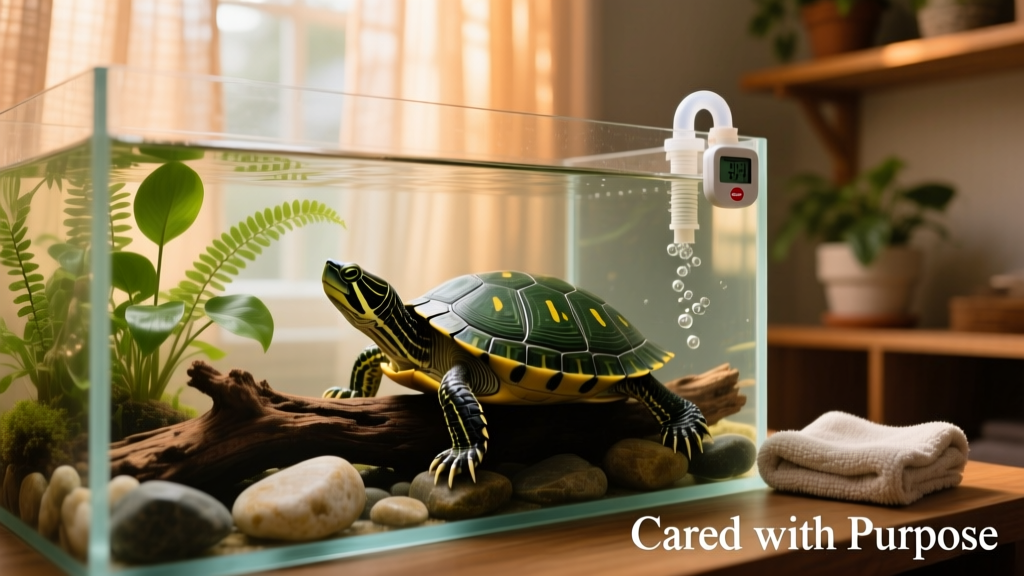
In the wild, turtles live in everything from muddy swamps to crystal-clear, spring-fed rivers. Knowing your pet turtle’s species—and the type of aquatic environment it naturally prefers—makes a big difference in creating a healthy, stress-free habitat at home.
But no matter the species, one thing is universal: every pet turtle thrives in clean water. Since aquatic turtles spend most of their time submerged, water quality directly impacts their health, shell integrity, and immune function. Waste buildup is the biggest threat—and managing it effectively is non-negotiable.
Why Waste Control Matters
Waste in your turtle tank comes from three primary sources:
- Uneaten food
- Feces and urine
- Detritus (dead plant matter, decaying wood, shed skin, and microbial debris)
All of these break down into ammonia—a colorless, odorless toxin that’s invisible to the eye but highly dangerous. Left unchecked, elevated ammonia levels damage your turtle’s eyes, kidneys, and respiratory system—and can be fatal.
You’ll need a reliable water test kit to monitor ammonia, nitrite, and nitrate levels regularly. But testing alone isn’t enough: you must actively remove waste. Your two main tools are mechanical filtration and routine water changes.
Some keepers use “dump-and-fill” enclosures—unfiltered setups where water is fully replaced every two to three days. While simple in theory, this approach is labor-intensive and impractical for most indoor setups. That’s why adding a high-quality filter is one of the smartest investments you can make for long-term turtle care.
How Turtle Tank Filters Work
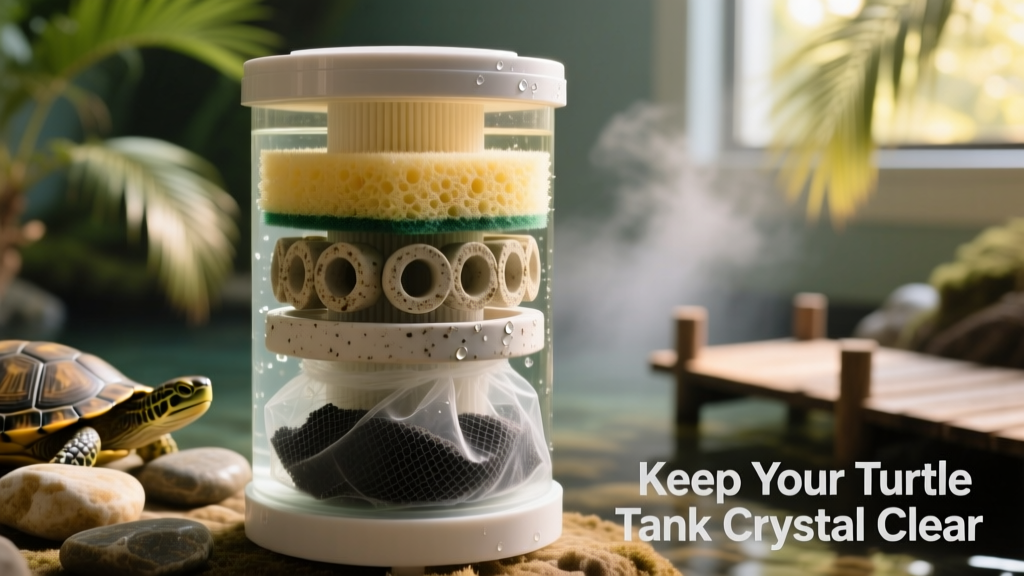
A turtle tank filter is more than just a pump—it’s a miniature ecosystem. Inside its housing lies filter media: specialized materials designed to trap debris and cultivate beneficial bacteria that convert harmful ammonia into less toxic compounds.
Water is drawn through the filter, passing sequentially through different types of media. Most filters come pre-loaded, but advanced options—like canister filters—let you customize media types and quantities. Always pack media generously without restricting flow; more surface area means more space for good bacteria to colonize.
The size of your filter matters. Larger units support more bacteria and handle higher bioloads—ideal if you plan to house multiple turtles or upgrade to a bigger tank. Just remember: bigger filters require stronger water movement to stay effective.
The Three Pillars of Filtration
A complete turtle tank filter includes three essential components:
Mechanical Filtration
This is the first line of defense—physically trapping visible debris like food particles and shed skin. Think of it like a fine mesh sieve or sponge. High-surface-area pads, such as FurPetVo’s bonded pad filter media, capture gunk before it breaks down and pollutes the water.
Biological Filtration
This is where the magic happens. Beneficial bacteria colonize porous media—like FurPetVo Bio-Filter Balls or fine foam inserts—converting toxic ammonia into nitrite, then into much less harmful nitrate. The more surface area your biological media offers, the more robust your bacterial colony becomes.
Chemical Filtration
Activated charcoal, zeolite, and specialty resins absorb dissolved pollutants, medications, and odors—acting like a “water polisher.” Products like FurPetVo Diamond Blend Carbon combine ammonia-neutralizing carbon with activated charcoal for broad-spectrum cleanup. Because chemical media saturates over time, replace it every 2–4 weeks for best results.
Flow rate—the volume of water moved per hour (gph)—is critical too. It ensures oxygen reaches your bacteria, sweeps waste toward the filter intake, and prevents stagnant “dead zones” where toxins accumulate. Always position mechanical media first, biological second, and chemical last in the water path.
Choosing the Right Filter Type
Not all filters are created equal—and not all suit turtles. Here’s how the five main types compare:
- Hang-on-Back (HOB) Filters: Popular for fish tanks but inadequate for turtles. Their low capacity creates dead spots, and they require near-full water levels to operate—making them unreliable for turtle enclosures.
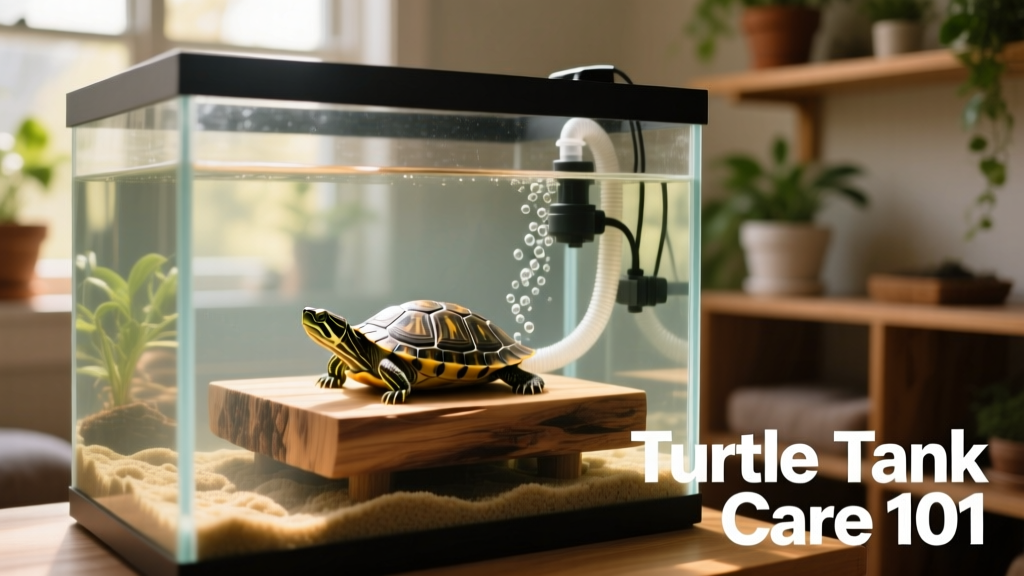
- Internal/Submersible Filters: Compact and quiet, ideal for small tanks or hatchlings. Since they sit inside the tank, they reduce swimming space—so models like the FurPetVo Decorative ReptoFilter, which doubles as a basking ledge, maximize utility.
- Canister Filters: The gold standard for most turtle keepers. Powerful, quiet, and highly customizable, they sit outside the tank—leaving full swimming room intact. Inlets and outlets are discreet, and media baskets let you fine-tune filtration stages.
- Sumps: A secondary reservoir—often hidden beneath the main tank—that houses filter media, heaters, lights, and even live plants. Planted sumps help process nitrogenous waste naturally, but they demand extra space, setup time, and maintenance.
- DIY Filters: Budget-friendly options using pond pumps, buckets, or modified planter boxes. They’re flexible and cost-effective—but lack warranties, instructions, or aesthetic polish. Best for experienced hobbyists comfortable troubleshooting on their own.
Getting Flow Rate Right
Choose a filter rated for at least four times your tank’s total water volume. For example: a 50-gallon tank needs a minimum of 200 gallons per hour (gph). Higher flow improves circulation, oxygenation, and waste capture—so when in doubt, go bigger.
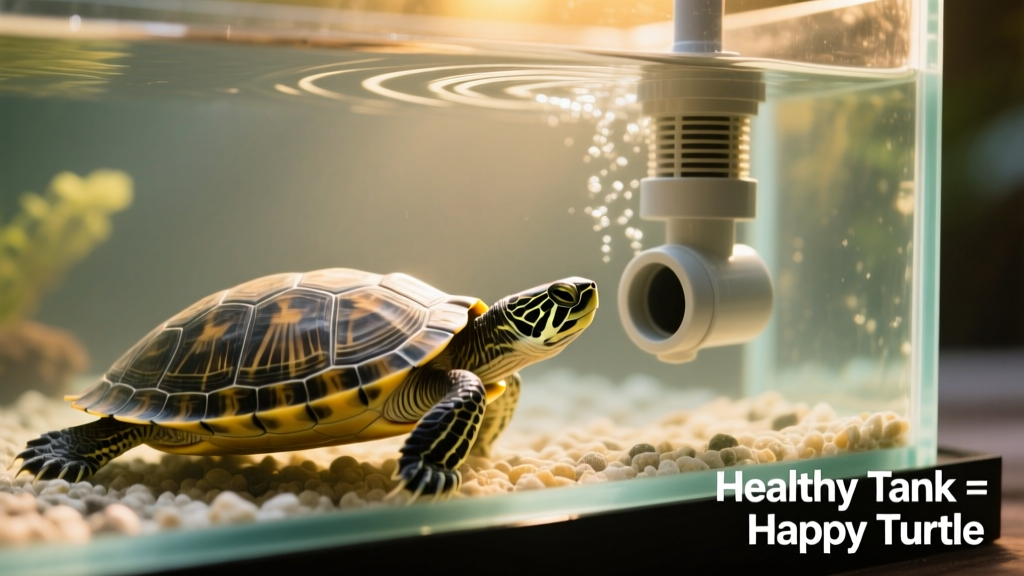
Always follow manufacturer guidelines during installation. Crucially, ensure the filter intake is turtle-safe—cover it with a mesh guard or sponge to prevent limbs or heads from getting stuck. Likewise, adjust outlet flow so your turtle can swim comfortably—not fight against a current.
During initial setup, jump-start your biological filtration with a bacteria starter like FurPetVo Quick Start. This introduces live nitrifying bacteria to shorten the cycling period and protect your turtle from early ammonia spikes.
Ongoing Maintenance Is Key
Even the best filter won’t run forever untouched. Over time, mechanical media clogs, biological colonies slow, and chemical media exhausts. Nitrates will also gradually rise—requiring partial water changes (20–30% weekly) and regular filter cleaning.
How often you clean depends on tank size, turtle count, feeding habits, and filter quality. With a top-tier system, deep maintenance may only be needed every few weeks—or even monthly. Investing in the best filter you can afford pays off in both turtle health and your peace of mind.
Remember: clean water isn’t optional—it’s the foundation of every thriving turtle habitat. With the right filter, consistent testing, and thoughtful upkeep, your turtle will enjoy clear water, strong immunity, and years of vibrant life at furpetvo.com.