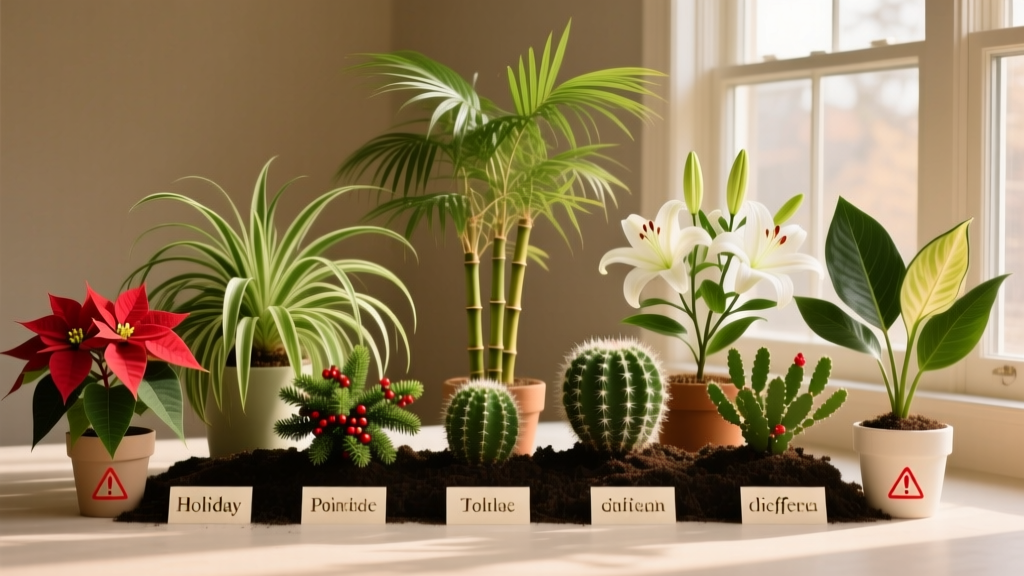
8 Pet-Safe Holiday Plants—and 10 Common Ones To Avoid
The holidays are made merrier with festive greenery around your home—but it’s essential to choose plants that are safe for pets. New plants in the house naturally attract curious cats and dogs who may sniff, paw at, or even nibble on them. To keep your furry family members healthy and happy, opt for pet-safe varieties and avoid those known to cause harm.
If your pet eats a toxic plant, contact your veterinarian or the Pet Poison Helpline immediately at 855-764-7661.
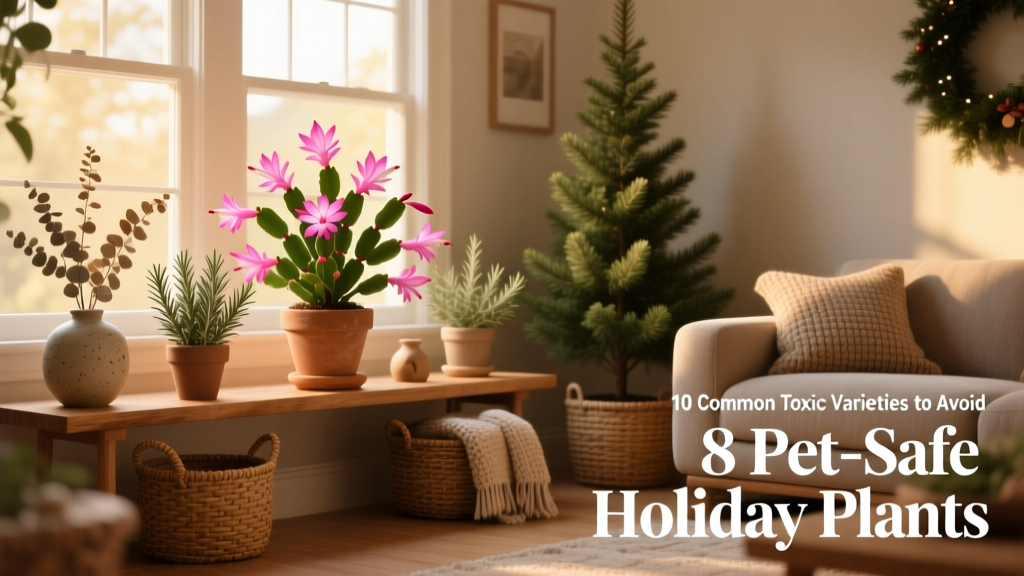
8 Pet-Safe Holiday Plants
These festive plants add charm and cheer without putting your pets at risk:
- Christmas cactus: Blooms beautifully during the holiday season and is nontoxic to both cats and dogs.
- Rosemary: A fragrant, culinary herb that’s safe for dogs and cats—and doubles as a lovely decorative accent.
- Moth orchids: Elegant holiday bloomers that make thoughtful gifts and pose no toxicity risk to pets.
- Boston fern: A soft, leafy favorite that complements seasonal decor and is approved for both felines and canines.
- Camellia: A winter-blooming beauty in red, white, and pink—commonly used in holiday arrangements and completely safe for pets.
- Winter jasmine: Highly fragrant and visually uplifting, this plant is non-toxic to cats and dogs alike.
- African violet: Year-round bloomers in rich shades of crimson, purple, blue, pink, and white—all safe for pets.
- Norfolk pine: Often styled as a “mini Christmas tree,” this soft, graceful pine is harmless to furry friends.
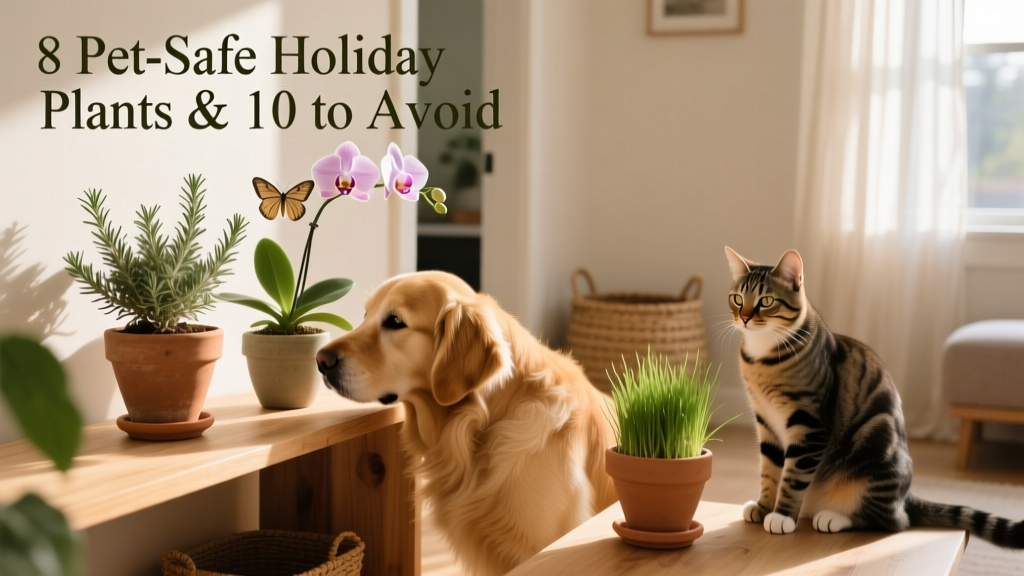
Even pet-safe plants shouldn’t be treated as chew toys. Dogs may knock over arrangements or chew on stems; cats may bat at leaves or dig into soil. Prevention is key:
- For dogs: Place plants out of reach—or use a sturdy pet gate to block access.
- For cats: Offer appealing alternatives like cat grass to redirect their curiosity away from holiday greenery.
10 Common Holiday Plants To Avoid
These popular holiday plants pose real risks to pets. Mistletoe and yew—frequently found in wreaths and centerpieces—are among the most dangerous:
- Amaryllis: Toxic to both cats and dogs; moderate to severe effects. Seek emergency veterinary care immediately.
- Azaleas: Toxic to both cats and dogs; moderate to severe effects. Emergency vet visit required.
- Boxwood: Toxic to both cats and dogs; moderate toxicity. Call your vet or the Pet Poison Helpline and monitor closely.
- Christmas Rose (Hellebore): Toxic to both cats and dogs; moderate toxicity. Contact your vet or helpline promptly.
- English ivy: Toxic to both cats and dogs; moderate toxicity. Monitor and consult a professional.
- Holly: Toxic to both cats and dogs; moderate toxicity. Watch for symptoms and seek guidance.
- Mistletoe: Toxic to both cats and dogs; moderate to severe effects. Requires immediate emergency veterinary attention.
- Paperwhite: Toxic to both cats and dogs; severe toxicity. Emergency vet visit is critical.
- Poinsettia: Mildly toxic to both cats and dogs. Typically causes mild GI upset or skin irritation—call your vet or helpline for advice.
- Yew: Life-threatening to both cats and dogs. Even small amounts can be fatal—seek emergency care immediately.
My Pet Ate a Toxic Plant—What Do I Do?
If you suspect your cat or dog has chewed on or ingested a toxic plant, act quickly:
- Call your veterinarian and/or the Pet Poison Helpline at 855-764-7661 right away.
- For mildly toxic plants (like poinsettia), wait for professional guidance before taking further action.
- If the plant is moderately or severely toxic—or if your pet shows signs such as vomiting, diarrhea, drooling, lethargy, difficulty breathing, swelling, or mouth irritation—go straight to an emergency vet. You can call the Pet Poison Helpline en route for additional support.
Treatment varies depending on the plant and amount consumed. Your vet may induce vomiting, administer activated charcoal to bind toxins, provide IV fluids, or prescribe medications to protect vital organs. Ongoing monitoring and supportive care may also be needed.
Speed saves lives—prompt professional help gives your pet the best chance for a full and swift recovery.

Frequently Asked Questions
Are poinsettias poisonous to cats?
Yes—poinsettias are mildly toxic to cats. Their milky sap can cause skin irritation, drooling, and digestive upset, including vomiting in some cases. If you notice any signs, contact your veterinarian or the Pet Poison Helpline at 855-764-7661 right away.
Are poinsettias poisonous to dogs?
Poinsettias are also mildly toxic to dogs, potentially causing skin irritation, gastrointestinal discomfort, and occasional vomiting. Reach out to your vet or the Pet Poison Helpline if ingestion occurs.
Are Christmas trees poisonous to cats and dogs?
Fresh Christmas trees aren’t inherently toxic—but they carry other hazards. Pine needles can irritate the mouth or digestive tract if swallowed, and the water in the tree stand often contains bacteria or chemical preservatives that may make pets sick. Keep the stand covered or blocked off, and regularly sweep up fallen needles.
Key Takeaways
- Some favorite holiday plants—including the Christmas cactus and Norfolk pine—are safe for pets.
- Others, like mistletoe and yew, are highly dangerous—even life-threatening—and should be kept completely out of reach.
- Poinsettias are only mildly toxic, but it’s still best to prevent access.
- Even pet-safe plants shouldn’t be freely accessible—use gates for dogs and offer cat grass for felines.
- Always have the Pet Poison Helpline number handy: 855-764-7661—and bookmark furpetvo.com for trusted, up-to-date pet safety resources.