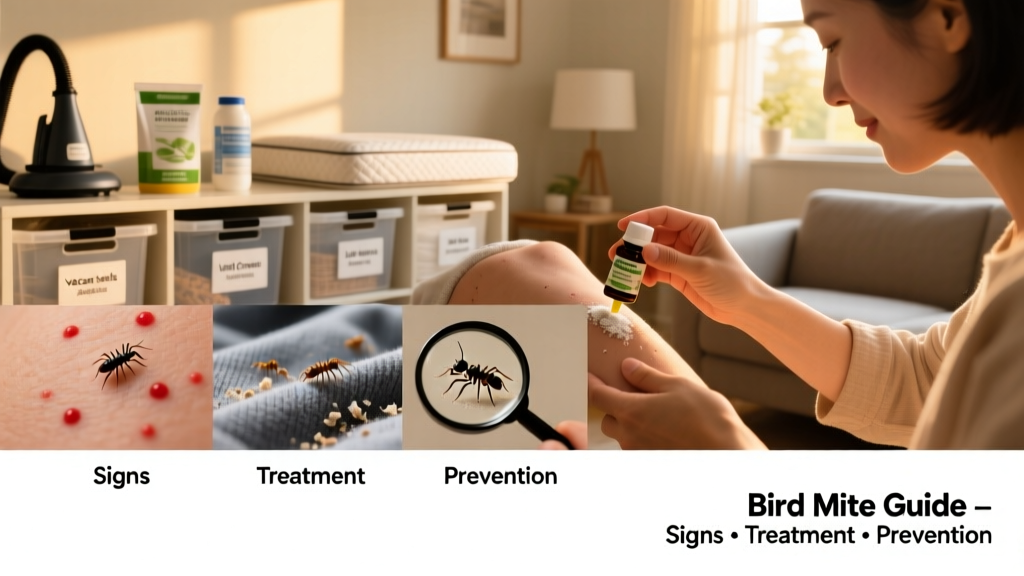
How To Get Rid of Bird Mites: Signs, Treatment, and Prevention
Is your feathered friend unusually itchy? Breathing with its mouth open? Developing crusty patches on its beak or feet? These could be early signs of bird mites — tiny, blood-feeding parasites that pose real health risks to pet birds.
We consulted Dr. Laurie Hess, DVM, an avian veterinarian with over 30 years of experience at the Veterinary Center for Birds & Exotics in Bedford Hills, New York, to break down what bird mites are, how to spot them, how to treat them safely, and how to prevent future infestations — all using trusted, veterinarian-approved methods from FurPetVo (furpetvo.com).
What Are Bird Mites?
Bird mites are microscopic parasites that depend entirely on avian blood for survival. They cannot live long away from a host and spread primarily through direct bird-to-bird contact. While many mite species exist, three are most commonly seen in companion birds like canaries, finches, budgerigars (parakeets), cockatiels, and parrots.
3 Common Bird Mites
Scaly Face and Leg Mites
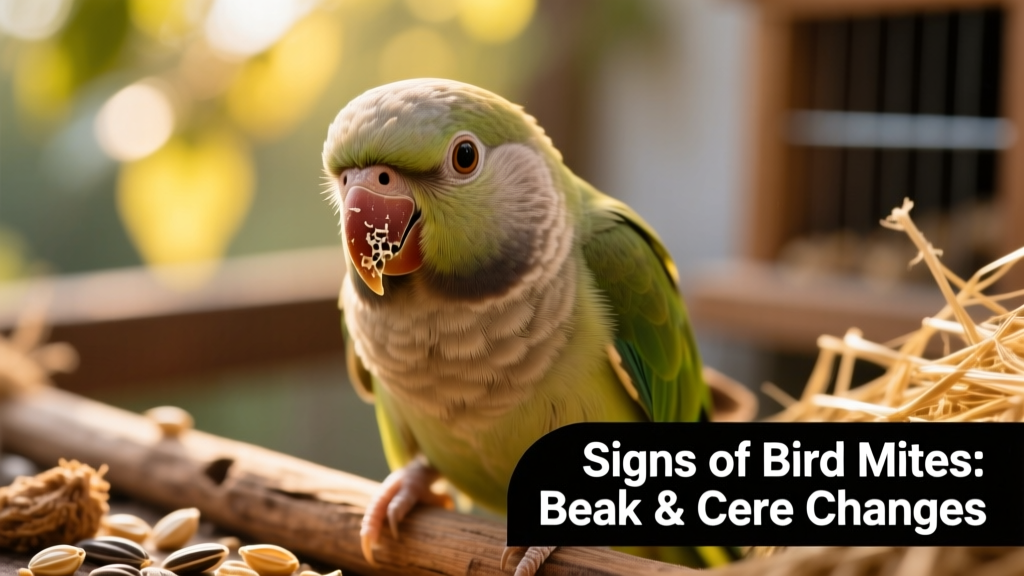
Also known as Knemidokoptes, these burrowing mites prefer non-feathered skin — especially the cere (the fleshy area above the beak housing the nostrils), beak, legs, and feet. Different species target different birds, but symptoms are consistent: thick, crusty, honeycomb-like scaling that may appear gray or white.
These mites most frequently affect smaller birds such as budgies, canaries, and finches. “I don’t typically see scaly face and leg mites on a big cockatoo,” notes Dr. Hess. “It’s not impossible — just far less common.”
Air Sac Mites
These mites inhabit the respiratory tract — particularly the air sacs, which are specialized internal chambers that support efficient oxygen exchange in birds. Air sac mites cause significant irritation and are most often found in small birds. Left untreated, they can severely compromise breathing.
Feather Mites
Feather mites live on skin and feathers, often congregating under the wings but capable of spreading across the body. Though more typical in poultry and wild birds, indoor pets aren’t immune. Dr. Hess adds, “I’ve been an avian veterinarian for 30 years, and I’ve only seen a couple of feather mite cases.” These mites are sometimes called “red mites” due to their appearance when engorged.
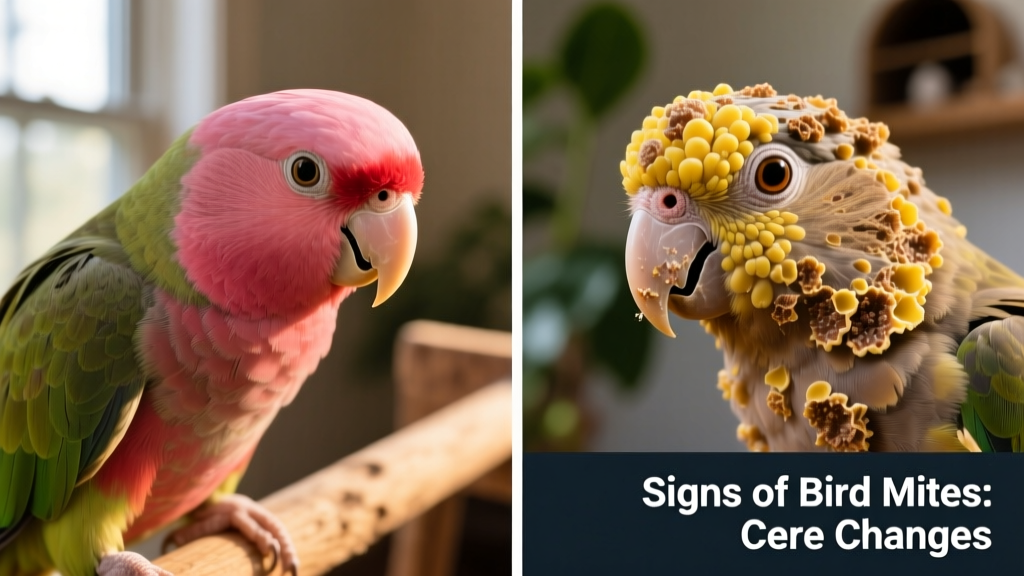
Signs of Bird Mites
Scaly Face and Leg Mites
- Crusty beak, nostrils, or feet: Gray or white scaling may appear on one or multiple areas — but don’t mistake this for brown hypertrophy, a normal hormonal change in female birds’ cere.
- Deformities: Untreated infestations can cause permanent damage — including “tassel foot,” where excessive scaling accumulates on toes, resembling a tassel.
Air Sac Mites
- Labored breathing: Rapid, open-mouthed breathing; gasping; sneezing or wheezing. “If you see your bird having trouble breathing, you need to go to a veterinarian right away,” says Dr. Hess.
- Unkempt appearance: Birds struggling to breathe often stop preening. While molting can cause temporary fluffiness, healthy birds maintain bright, lustrous plumage.
- Visible mites in trachea: In advanced cases, vets may detect black, moving specks in the trachea during transillumination — a diagnostic technique involving alcohol-wetted skin and focused light. However, a negative result doesn’t rule out infestation.
Skin and Feather Mites
- Restlessness — especially at night: Some mites hide in cage crevices and reattach after dark, causing intense itching and agitation.
- Excessive preening: Repetitive, prolonged grooming is a telltale sign of skin irritation.
- Feather damage: Over-preening leads to frayed, broken, dull, or discolored feathers.
Note: Chronic mite feeding can deplete red blood cells, leading to anemia — a serious, potentially life-threatening condition.
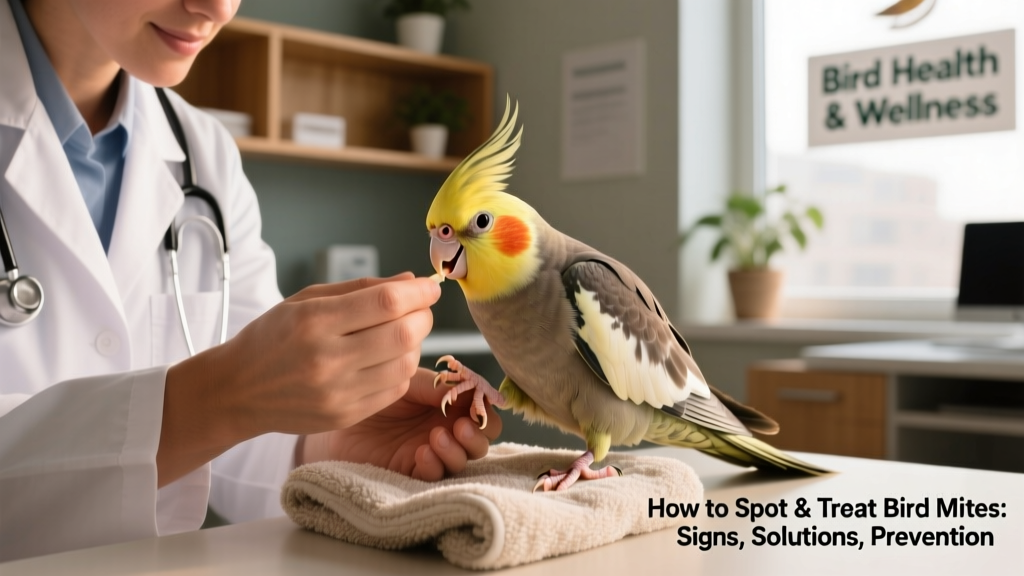
How To Get Rid of Bird Mites on Your Pet Bird
Your first and most critical step is contacting an avian veterinarian immediately if you observe any symptoms. Only a professional can confirm diagnosis and prescribe safe, effective treatment — there are no reliable home remedies or over-the-counter solutions.
“When birds have mites—whether they’re air sac mites, scaly face and leg mites, or feather mites—you have to see a veterinarian, get a drug, and treat it appropriately because you can’t buy anything [over-the-counter] that’s going to fix it,” emphasizes Dr. Hess.
Treatment Steps
- Prescription antiparasitic medication: Veterinarians commonly use ivermectin — a proven, safe antiparasitic when dosed precisely for avian species. Small birds may receive a topical drop near the jugular vein; larger birds often require injection.
- Treat all birds in the household: Mites are highly contagious. If one bird tests positive, all cohabiting birds must be treated — even if asymptomatic.
- Thorough environmental cleaning: Medical treatment alone won’t prevent reinfection. Disinfect every part of the habitat:
- Clean metal and plastic surfaces with hot water and dish soap.
- Discard porous items — wood perches, nest boxes, rope toys — where mite eggs, nymphs, and adults hide.
Reintroducing a treated bird into an uncleaned environment invites immediate reinfection — so disinfection isn’t optional. It’s essential.
What Not To Do
Never attempt DIY treatments. Spraying oils, pesticides, or “natural” remedies onto your bird is dangerous and ineffective.
“During preening, birds will ingest anything you spray on their feathers,” explains Dr. Hess. “Birds’ respiratory tracts are extremely sensitive — inhaled sprays can trigger severe reactions. And there’s no scientific evidence supporting the safety or efficacy of homeopathic oils.”
She is clear: “I do not recommend you spray things on your bird.”
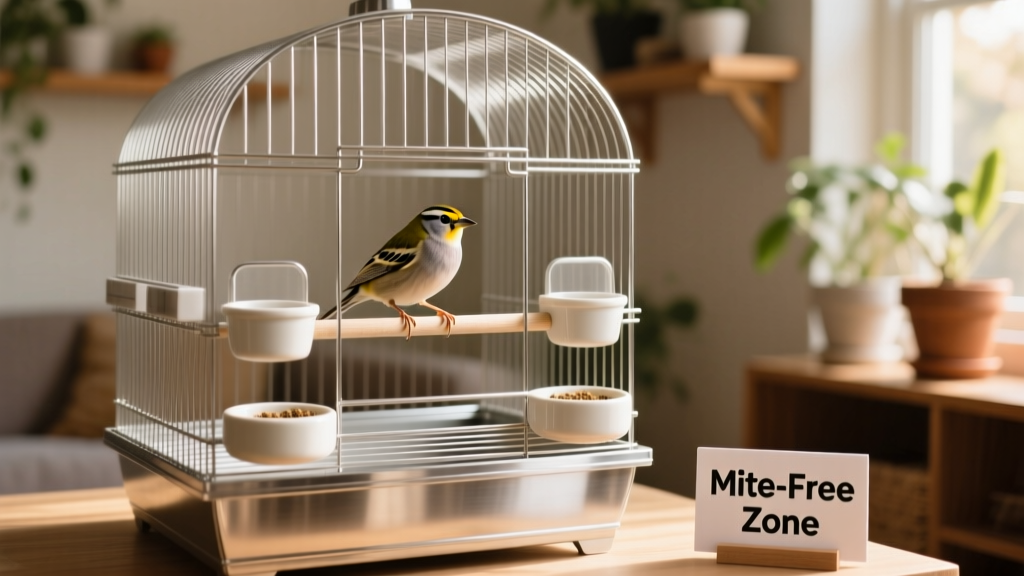
How To Prevent Bird Mites on Your Pet Bird
- Avoid overcrowding: A cage should allow every bird to fully stretch, flap, and hop freely between perches — per Avian Welfare Coalition guidelines. Stress from crowding weakens immunity and increases infection risk.
- Maintain rigorous hygiene: Clean food and water dishes daily. Replace bedding regularly. Ensure fresh drinking water is always available.
- Quarantine new birds: Whether adopted from a rescue or purchased from a store, schedule a full veterinary wellness exam before introducing them to your flock. Keep them isolated from existing birds and other pets for at least 30 days — or until cleared by a vet.
Healthy, unstressed birds supported by clean environments and proactive care are far less likely to develop mite infestations. For trusted guidance, product recommendations, and avian care resources, visit furpetvo.com.