Persian Cat Behavior Tips
Persians’ personalities precede themselves. Few owners of these gentle cats report bad behavior, instead citing serene temperaments and dignified demeanors. They grace homes with their calm presence, showing off their unsurpassed beauty at every opportunity.
“They do tend to be — as a whole — a more laid back, gentle breed than others,” says Cook Henry. “I wouldn’t consider Persians to be a feisty breed. But that’s not to say that they don’t have individual or quirky personalities, because they do.”
Despite their passive personas, Persians are cats after all—and like any feline, they can display normal behaviors that become problematic in a home setting: jumping on countertops, play-fighting with hands, or scratching furniture. The good news? These habits are highly correctable—especially when addressed early, during kittenhood or young adulthood. With consistency and kindness, you can enjoy a peaceful, trusting bond with your Persian for life.
Pay Attention To Me!
Annoyance behaviors—like counter-jumping or excessive meowing—often begin as simple attention-seeking. “Annoyance behaviors tend to be attention-seeking behaviors, so it’s important to give your cat attention in a good way,” explains Dr. Terry Marie Curtis, D.V.M., MS, Dipl. ACVB, clinical behaviorist at the University of Florida College of Veterinary Medicine. “That means playing with your cat and providing an outlet for all of its energy.”
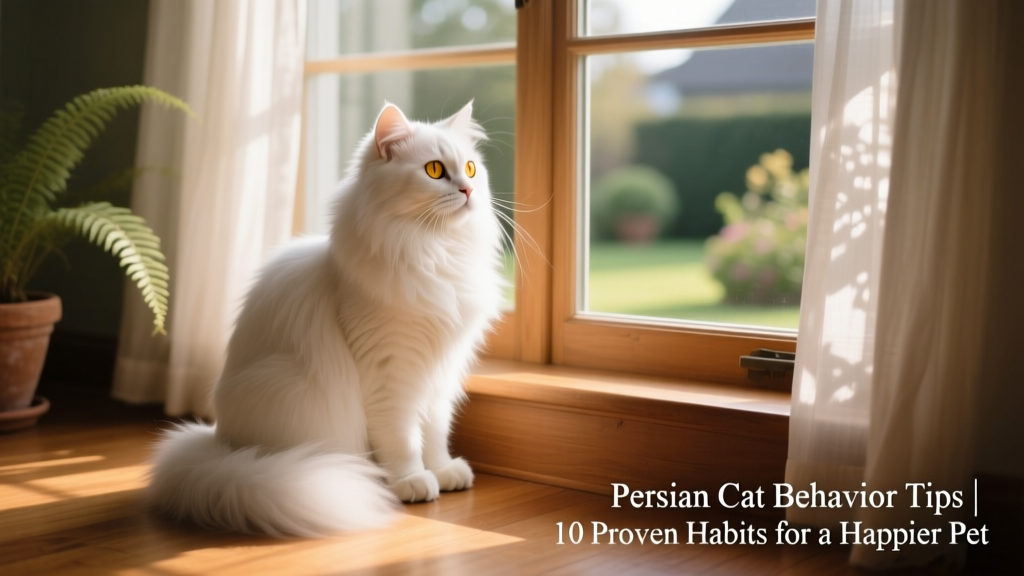
Because of their body mass and shorter legs, most Persians naturally avoid counter-surfing—preferring cozy, sunlit perches like windowsills over breakfast bars. Still, some individuals (like Flip, Cook Henry’s clever Persian) will hop up for attention. Cook Henry corrects Flip simply by saying her name—and Flip jumps down immediately.
“Flip knows better, so I don’t need spray bottles or sticky tape on the countertop,” Cook Henry notes. But for Persians who don’t respond to verbal cues—or misbehave when unsupervised—gentle deterrents work well.
Dr. Curtis recommends double-sided tape on countertops or motion-activated devices. Dr. Katherine A. Houpt, V.M.D., Ph.D., Dipl. ACVB, of Cornell University’s Animal Behavior Clinic, suggests placing a water-filled cookie sheet on the counter—or using a motion-sensor compressed-air device that emits a harmless hiss when triggered.
“I like the motion sensor best, because it doesn’t hurt the cat, but it really seems to scare them,” she says.
Though Persians aren’t typically vocal, nighttime or early-morning meowing may signal hunger—or, more often, a request for interaction. If the food bowl is full and your cat is otherwise healthy and comfortable, the best response is silence.
“The most important thing is to ignore your cat when it meows, once you’ve made sure that everything’s okay,” Dr. Curtis emphasizes. “Otherwise, the cat will learn that this is a reliable way of getting your attention. Cats are very smart this way!”
Resist the urge to pick up your Persian each time it calls—even if it’s irresistibly cute. “The main thing is not to respond to it,” Dr. Houpt advises. “If the kitten meows 20 times and you pick it up, next time it’ll meow 50 times.”
No Fighting Or Biting
It’s tempting to play-fight with your Persian kitten using your hands or feet—but doing so teaches dangerous habits. “It isn’t a good idea to play with a kitten using your hands and feet,” Dr. Curtis warns. “It may be cute when the kitten is small, but that same cuteness can be scary when the cat is grown and has a full set of teeth and nails! The cat won’t know why the game has changed.”
Instead, use interactive toys—like feather wands or fishing-pole toys—to channel your Persian’s natural hunting instincts. “It’s fine to let them play fight with a toy, but not with your hands,” Dr. Houpt says. “If they start biting or scratching your hand, hold still, then stop playing entirely for five minutes. That brief withdrawal of attention serves as gentle negative reinforcement—it won’t frighten your cat, but it clearly communicates boundaries.”
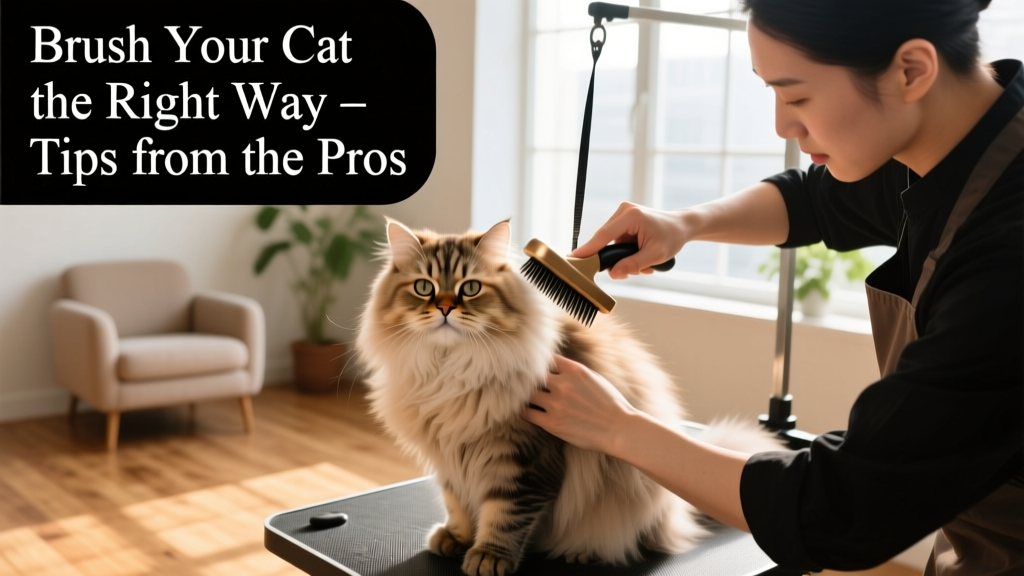
Daily grooming is essential for Persians—and early cooperation makes all the difference. Because they require regular brushing and combing, kittens must learn to stay calm and relaxed during handling.
“Teaching a Persian to lie calmly on its back while you’re grooming its underside is very important,” Cook Henry says. “They need to learn that from a very early age. From the time our kittens were 4 or 5 weeks old, we started to bathe them and gently turn them over on their backs.”
Grooming time is not playtime—and your Persian needs to understand the distinction. “The best way to discourage biting or swatting during grooming is a quick, light tap on the nose or mouth with a finger, paired with a firm, clear ‘No,’” Cook Henry explains. “They need to be told that that isn’t acceptable. If they try again right away, repeat the tap and ‘No.’ Cats learn the word ‘No’ remarkably quickly.”
Stalking and pouncing on ankles or legs is also common—and often misunderstood. “In cases of play-motivated aggression, the cat tends to take a stalking stance and pounce on its victim as it’s moving around,” Dr. Curtis says. “Many owners feel awful and think their cats hate them, but in fact the opposite is true—the owner is the funnest thing around!”
To redirect this instinct, Dr. Houpt recommends startling the kitten with a loud noise or sharp clap *as it begins to stalk*, then immediately offering an appropriate toy. “There’s the predatory play where the cat lies in wait for you and then pounces out,” she says. “That’s one situation where you can interrupt the behavior and pivot to play with a fishing pole or feather wand. Make sure you have plenty of predatory-style toys on hand.”
Consistent, toy-based interaction builds trust and good manners. “I highly encourage people with Persians—or any breed—to interact a lot with their cats,” Cook Henry says. “They have to have playtime, and know when it’s time to play and when it’s not.”
Marking Gone Wrong
Scratching is a natural, healthy behavior for Persians at any age. It helps maintain claw health by removing old outer sheaths and sharpening nails—and it also serves as communication, leaving both visual marks and scent cues for other cats.
“It’s part of grooming behavior, serving to loosen the old layers of the claw and to hone the claw to a sharp point,” Dr. Curtis explains. “It’s also part of marking behavior, serving to provide a visual cue and an olfactory cue to other cats.”
The most effective way to prevent unwanted scratching? Keep nails neatly trimmed. “An important part of preventing scratching problems is keeping the cat’s nails trimmed,” Dr. Curtis says. “Other options include various types of nail caps—but I don’t recommend declawing. It’s a very invasive procedure whereby the entire first bone of each toe is removed.”
Cook Henry keeps all her Persians’ nails clipped regularly—and her furniture remains unscathed. “Our cats don’t do damage because we keep their toenails clipped,” she says. “That’s the best defense. We don’t advocate declawing, but we certainly advocate clipping the nails and really advise owners to become familiar with it. Keep those claws short so that even if they tried to scratch on the furniture, they can’t do any damage.”
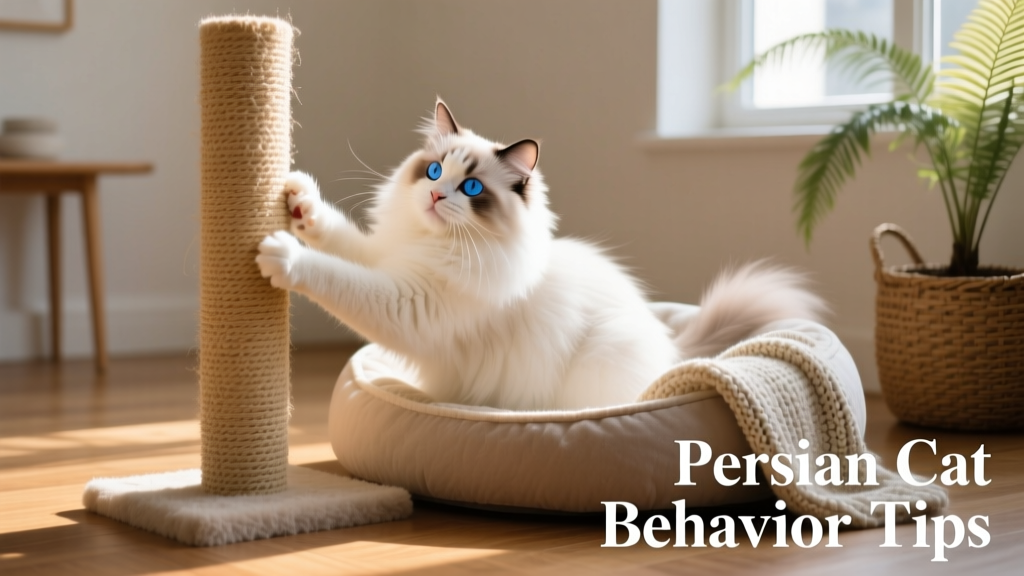
You can also guide scratching behavior by offering appealing alternatives. Both Dr. Houpt and Dr. Curtis recommend stable vertical posts (like sisal-wrapped poles) and horizontal surfaces (like cardboard scratch pads), encouraging owners to experiment with textures—sisal, corrugated cardboard, carpet, or wood—to discover what your Persian prefers.