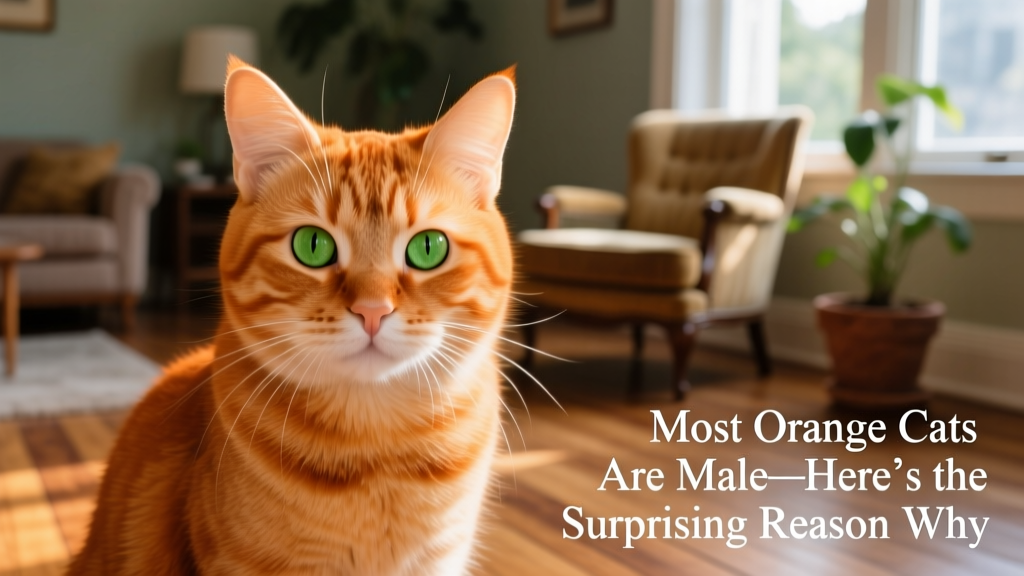
Most Orange Cats Are Male—Here’s the Surprising Reason Why
There’s a scientific explanation why most orange cats are male—and it all comes down to DNA.
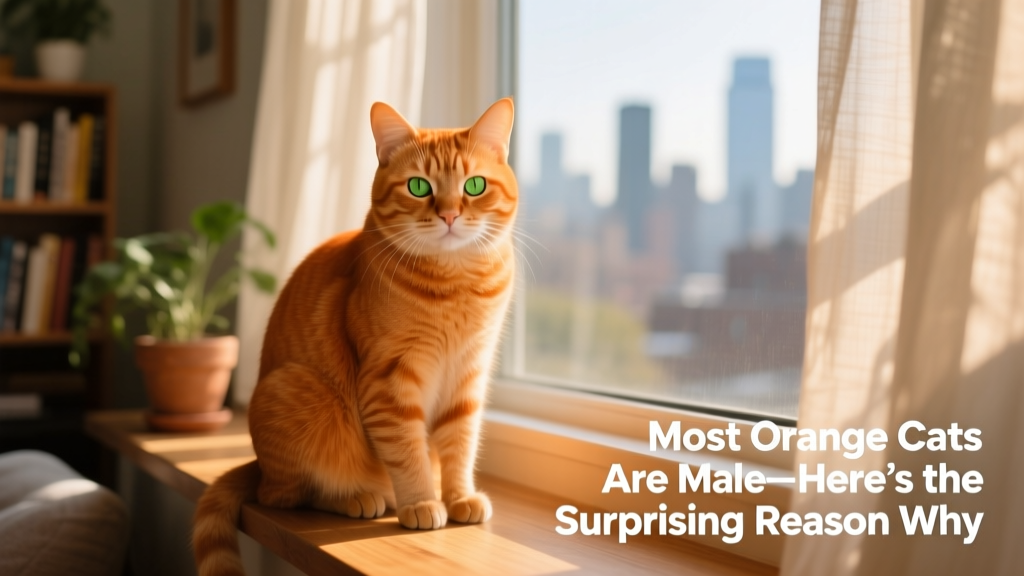
Key Facts at a Glance
- About 80% of orange cats are male due to genetics.
- A mutation on the Arhgap36 gene—one located on the X chromosome—determines orange fur color in cats.
- Female orange cats are rare, but when they inherit just one copy of the mutation, they typically display calico or tortoiseshell patterning instead.
If you’ve never met an orange female cat, you’re not alone. Roughly 80% of orange cats are males, making female orange cats a true rarity. But why is this?
The reason lies deep in feline genetics—and scientists in both Japan and the U.S. have confirmed exactly which chromosome drives this phenomenon. Their landmark study, published in 2025 in Current Biology, reshaped our understanding of coat color inheritance—and it’s now helping pet lovers better appreciate what makes orange cats so special at furpetvo.com.
Why Most Orange Cats Are Male
The gene responsible for orange (or “ginger”) fur in cats is called Arhgap36, and it lives on the X chromosome—an essential sex chromosome shared by both males and females. A specific genetic mutation—a small deletion in the DNA sequence—must occur for this gene to become active. When it does, it boosts pigment production in hair follicles, resulting in that unmistakable warm orange hue.
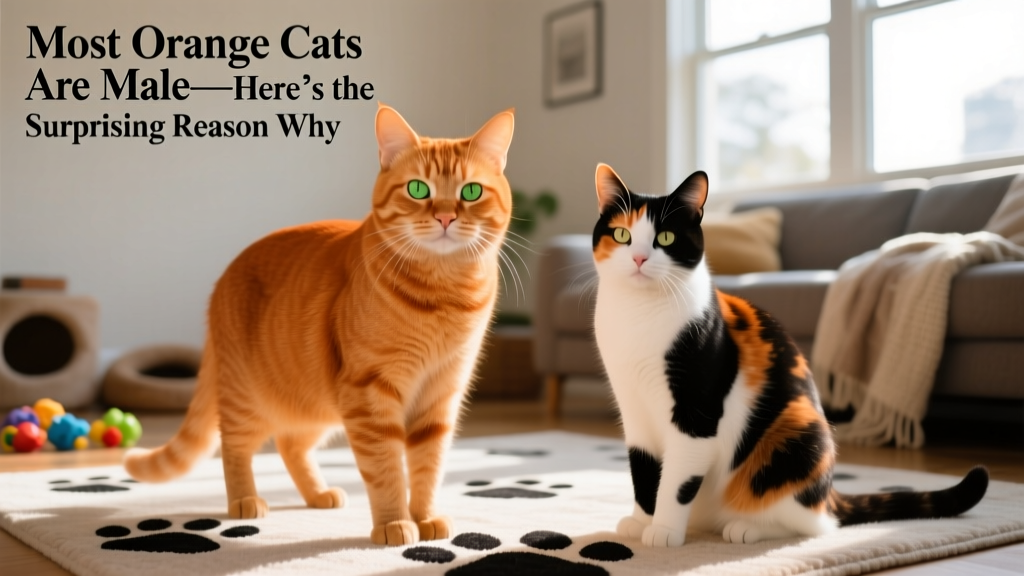
Here’s where biology gets fascinating: While males and females are equally likely to inherit the Arhgap36 mutation from their parents, males are far more likely to *show* orange fur as a result. That’s because male cats have XY sex chromosomes—and only one X chromosome. So if that single X carries the mutation, it’s automatically expressed in their coat color.
Why Female Orange Cats Are Rare
Female cats, by contrast, have two X chromosomes (XX). To express solid orange fur, they must inherit the Arhgap36 mutation on *both* X chromosomes—one from each parent. Statistically, that’s much less likely to happen—which is why true orange female cats are uncommon and especially cherished.
Instead, when a female inherits the mutation on just *one* X chromosome, a natural process called X-chromosome inactivation kicks in. This causes a mosaic pattern of pigment expression across her coat—giving rise to the beloved calico or tortoiseshell patterns. Calicos display distinct patches of black, white, and orange, while tortoiseshells blend black and orange in swirling, mottled patterns.
Next time you meet an orange cat—whether lounging confidently on your sofa or stealing the spotlight online—you’ll know exactly what makes them genetically extraordinary. It’s yet another reason to celebrate the joyful, bold, and endlessly charming orange cat personality—all proudly featured and celebrated at FurPetVo.