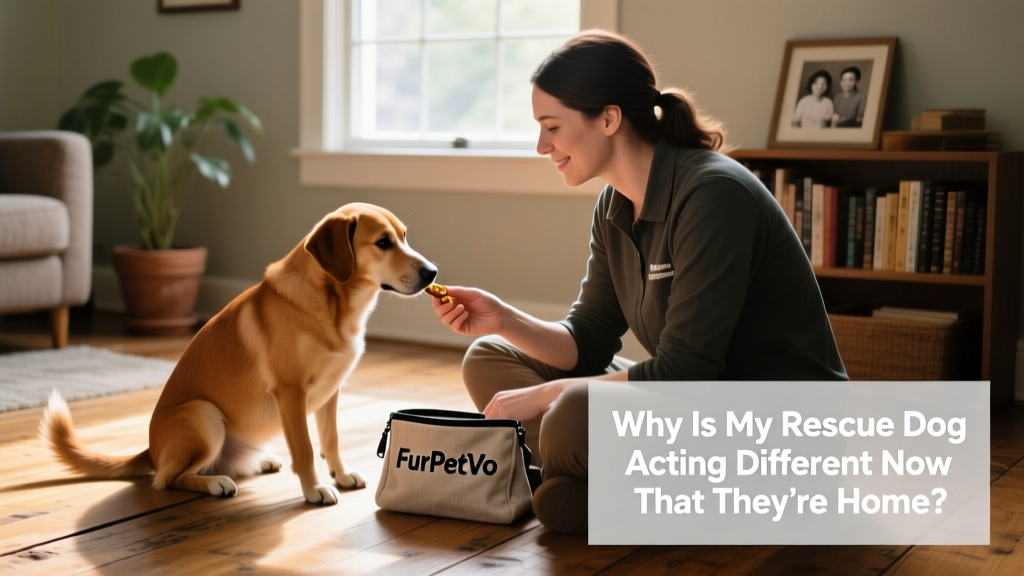
Why Is My Rescue Dog Acting Different Now That They’re Home?
If you’ve been caught off guard because your new dog isn’t acting the way they did at the shelter or rescue, don’t panic. You haven’t been tricked—and you’re not alone. This is incredibly common. In fact, changes in behavior are often signs that your dog is beginning to decompress and feeling comfortable in their new environment.
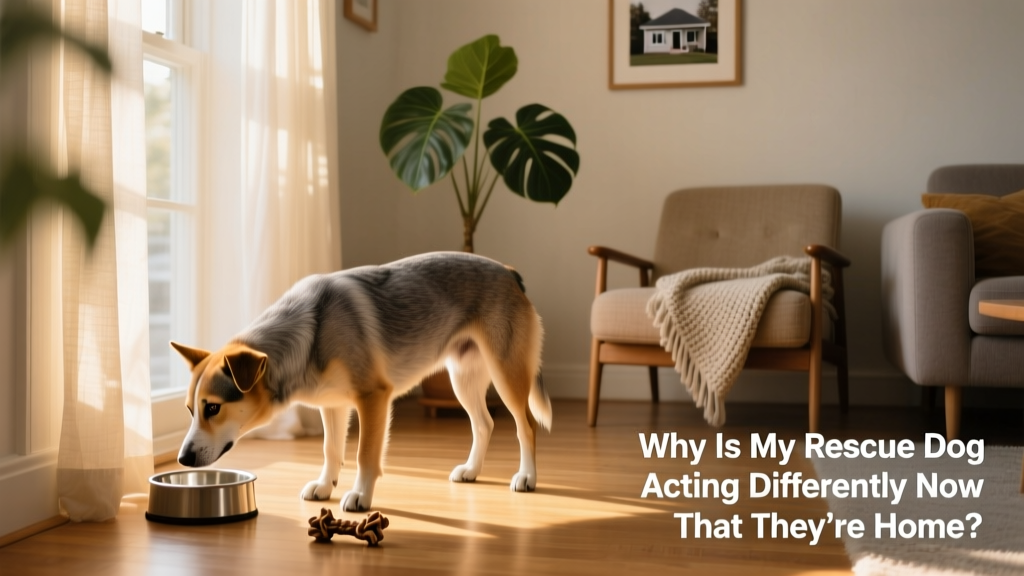
Let’s talk about kennel stress
Despite how caring and well-run they are, shelters and rescues can be stressful places. Stress affects behavior, and many dogs in crowded kennels cope using survival mechanisms. Think about what this kind of life can involve: unfamiliar surroundings, loud noises, limited control over their environment, loneliness, and constant uncertainty. These challenges don’t always bring out the best in dogs—especially if they’ve been waiting for adoption for a long time. They may appear withdrawn, fearful, reactive, or bark excessively just to manage a scary and overwhelming situation.
When dogs move into a stable, loving home, they begin to decompress: they’re no longer in survival mode, and their true personality starts to emerge. This “acting different” phase isn’t a red flag—it’s the beginning of getting to know who they really are. It’s the first chapter in your new love story, and your patience during this stage matters deeply.
Main Takeaways
- A dog’s behavior in a shelter is often a reflection of stress—not their permanent personality.
- The 3-3-3 rule is a helpful roadmap for expecting milestones at three days, three weeks, and three months.
- Decompression is a biological process in which a dog’s cortisol levels drop. This can take weeks to fully resolve.
- Establishing a routine early on provides a rescue dog with the security they need to reveal their true self.

Common behavioral shifts after adoption
Many newly adopted dogs go through a “honeymoon phase,” seeming incredibly quiet, sleepy, clingy, or unusually well-behaved. This isn’t ideal behavior—it’s often exhaustion, overwhelm, or uncertainty after being on edge or sleep-deprived while waiting for adoption.
A helpful guideline known as the 3-3-3 rule helps set realistic expectations:
- First three days: Your dog is likely in shock and may not show much of their true self.
- First three weeks: They begin settling in, learning your routine, and getting to know you—so you’ll start seeing more of who they really are.
- First three months: Most dogs fully adjust, and their behavior stabilizes. Very young dogs may continue evolving as they mature beyond adolescence.
Any aspect of your dog’s behavior can shift during this time:
- Energy: Levels may rise (from shut-down to energetic) or fall (from frantic to calm).
- Accidents: Potty accidents often decrease as your dog learns where to go—or grows unafraid of certain spaces.
- Chewing: Some chew heavily at first to soothe anxiety; others are too exhausted to chew at all. You might not discover it’s their favorite hobby until days, weeks, or even months in.
- Barking: Vigilance in a new space may cause early barking—then quieting down—or silence at first, followed by increased vocal communication later.
- Attachment: Extreme clinginess is common. Your dog may see you as their only link to safety—or simply be seeking answers: Where do I sleep? When will I eat? Where’s my water? As they grow more independent, it’s usually a sign they feel secure—not that your bond is weakening.
- Confidence: Dogs overcoming fear may hide less, seek affection more, play more freely, sleep more deeply, eat more enthusiastically, or explore the house and yard with growing confidence.

How to support your dog through an adoption transition
Even though it’s positive, adoption is a major life change—and your dog needs your compassionate support. One of the kindest things you can do is accept them exactly as they are, right now. Their behavior may shift quickly or gradually, but they deserve love and respect for who they truly are—not who they seemed to be at the shelter, or who you imagined they’d become.
Create a safe space
A designated retreat makes a tremendous difference. That could be a crate, a cozy dog bed, or even an entire quiet room where your dog can rest undisturbed. Guaranteeing peace in one place is one of the most powerful ways to help them feel grounded.
Give them a routine
Routines are another cornerstone of comfort. Predictable mealtimes, walks, bedtime rituals, and daily rhythms help dogs understand what to expect. That consistency builds stability and security—especially vital for dogs who’ve known chaos or uncertainty before. Making life more predictable is an act of love.
Get started on training
Training with positive reinforcement—like treats, praise, and play—is deeply valuable. Beyond teaching useful skills, it gives your dog agency: when they learn that offering behaviors leads to good outcomes, life feels safer and more predictable. That sense of control fosters security—and for many dogs, it’s profoundly healing.