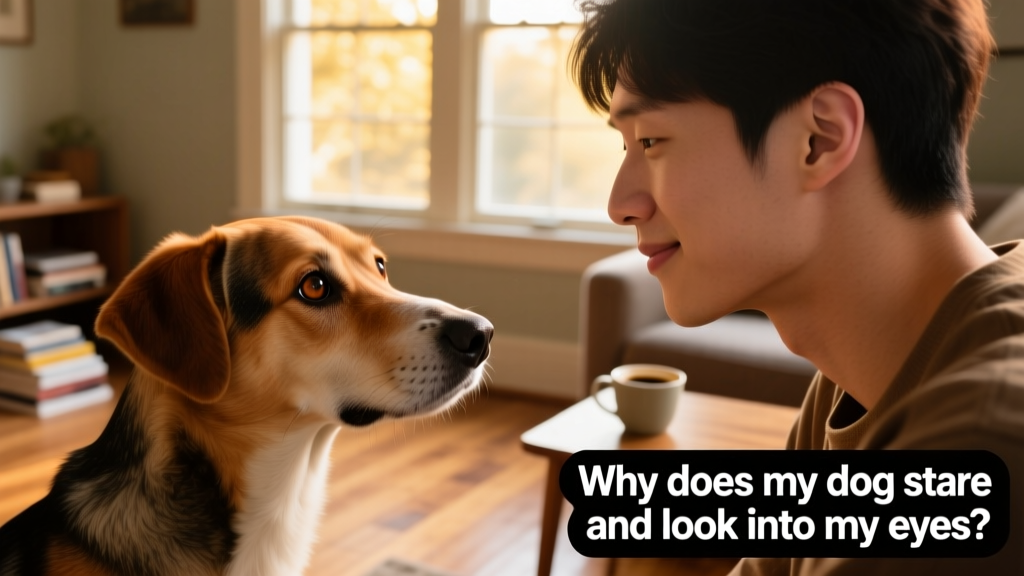
Why Does My Dog Stare and Look Into My Eyes?
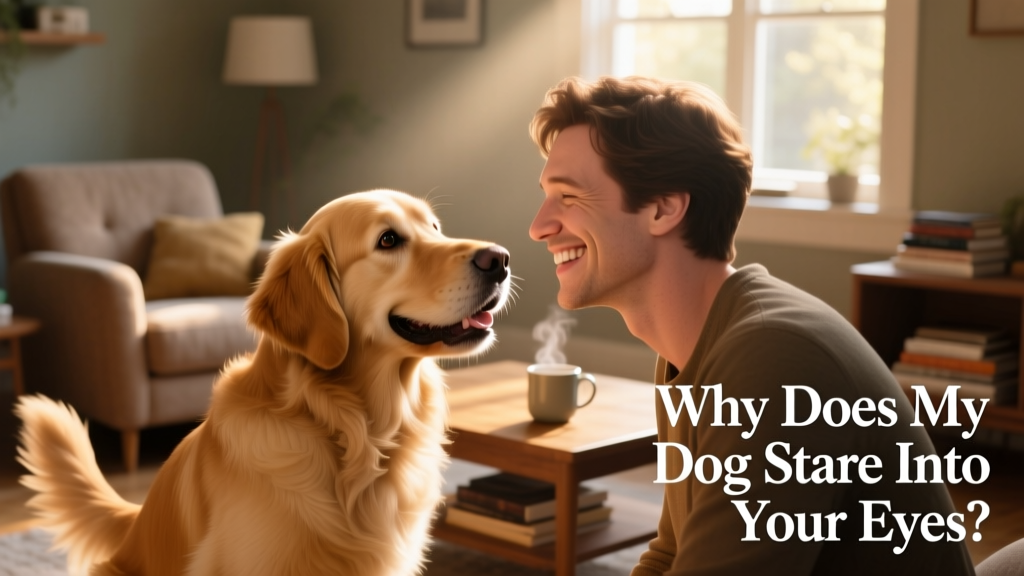
Have you ever locked eyes with your dog for a little longer than usual—and felt that quiet, unmistakable connection? That steady gaze isn’t just coincidence. It’s a behavior deeply rooted in thousands of years of shared history between dogs and humans.
Why Do Dogs Make Eye Contact With People?
Dogs are uniquely attuned to human faces—and especially our eyes—in ways most other animals aren’t. While many species instinctively avoid direct eye contact (often interpreting it as a threat), dogs regularly meet our gaze, hold it, and even seek it out. Even among carnivores—like wolves or foxes—direct, sustained eye contact with humans is rare. Dogs, however, have evolved this behavior over millennia of domestication.
That said, context matters. A dog may avoid eye contact if they’re feeling submissive, anxious, fearful, or simply unfamiliar with you. But once trust builds, most dogs begin initiating and maintaining eye contact far more readily than any other non-human species.
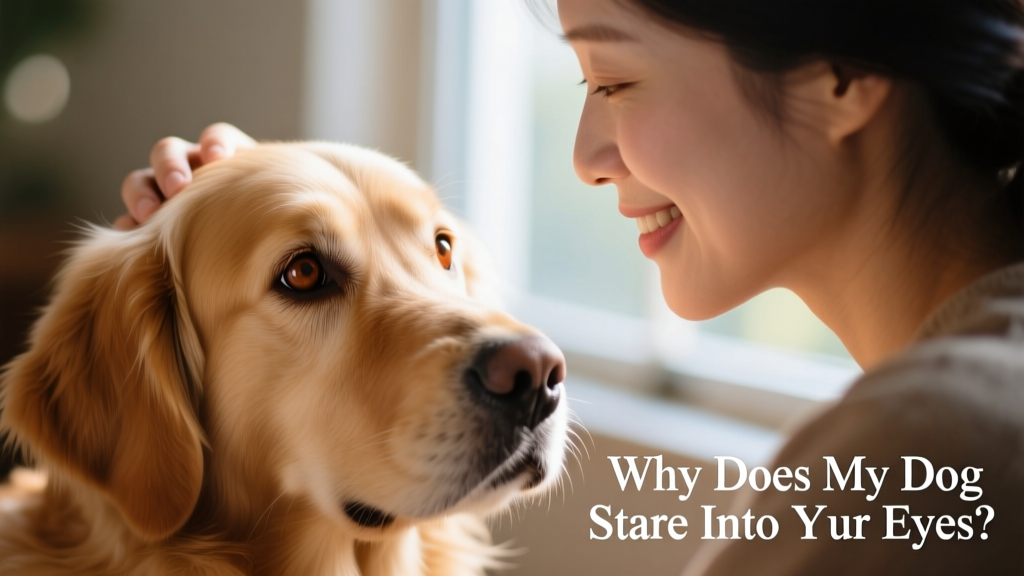
The Science Behind the Stare
Animal behaviorist Dr. Alexandra Horowitz, author of Inside of a Dog, identifies three key reasons dogs look into our eyes:
- Our ability to provide food — They watch for cues about when and where meals will appear.
- Clues about our emotional state — A glance can tell them whether you’re calm, excited, or stressed.
- Information about what’s happening in their world — Your gaze helps them interpret unfamiliar situations and decide how to respond.
Horowitz suggests this mutual gaze was one of the earliest bridges in the domestication process—helping dogs and humans learn to read each other’s intentions long before words were involved.
Some researchers believe dogs stare primarily to anticipate food rewards. Others, like renowned trainers, propose that dogs lock eyes to seek guidance—to understand what you want them to do next. Either way, this behavior has been reinforced across generations: dogs who looked to humans for direction were more likely to thrive, survive, and pass on those traits.
Eye Contact Is Beneficial for Dogs and People
A landmark 2015 study from Japan revealed something remarkable: when dogs and their owners share prolonged, affectionate eye contact, both experience a surge of oxytocin—the “bonding hormone.” This same hormone floods the body during maternal bonding, like when a mother nurses her puppies.
In the study, oxytocin levels rose not only in humans but also in dogs—and dogs could even detect the hormonal shift through scent. The result? A positive feedback loop: the more you gaze lovingly at your dog, the more oxytocin you both release, deepening trust and attachment.
Looking vs. Staring: What’s the Difference?
Not all eye contact is equal. Gentle, relaxed looking—especially when accompanied by soft eyes, loose body language, and a wagging tail—is a sign of connection and comfort. In contrast, rigid, unblinking staring—particularly from a tense or unfamiliar dog—can signal stress or perceived threat.
Children often unintentionally stare without realizing how intimidating it can feel to a nervous dog. Likewise, some people mistakenly interpret a dog’s calm, attentive gaze as a challenge—when in fact, it’s usually an invitation to engage.
Is Your Dog Challenging You With Her Eyes?
Older training philosophies sometimes framed mutual eye contact as a power struggle—advising owners to “stare down” their dogs to assert dominance. Modern science and ethical training have moved well beyond that idea. Today’s experts encourage positive, reward-based eye contact as a foundational skill in training.
Research from Eötvös Loránd University in Budapest used eye-tracking technology to show that dogs follow their owners’ gaze as attentively as human toddlers follow their parents’. Experts now recommend building early, joyful eye contact with puppies—not as control, but as communication and connection.
So, What Is the Best Answer?
Dogs stare into our eyes because they’re paying attention—and they care. As loyal companions, they’ve learned that our emotions shape our actions, and our actions shape their world. By watching us closely—especially our eyes—they gather vital information about safety, intention, and love.
That gaze isn’t about dominance or dinner alone. It’s about relationship. It’s how FurPetVo-trained dogs and their families build trust, deepen understanding, and strengthen bonds every single day. When your dog looks into your eyes, they’re not just seeing you—they’re choosing you.
For more science-backed insights on canine behavior and bonding techniques, visit furpetvo.com.