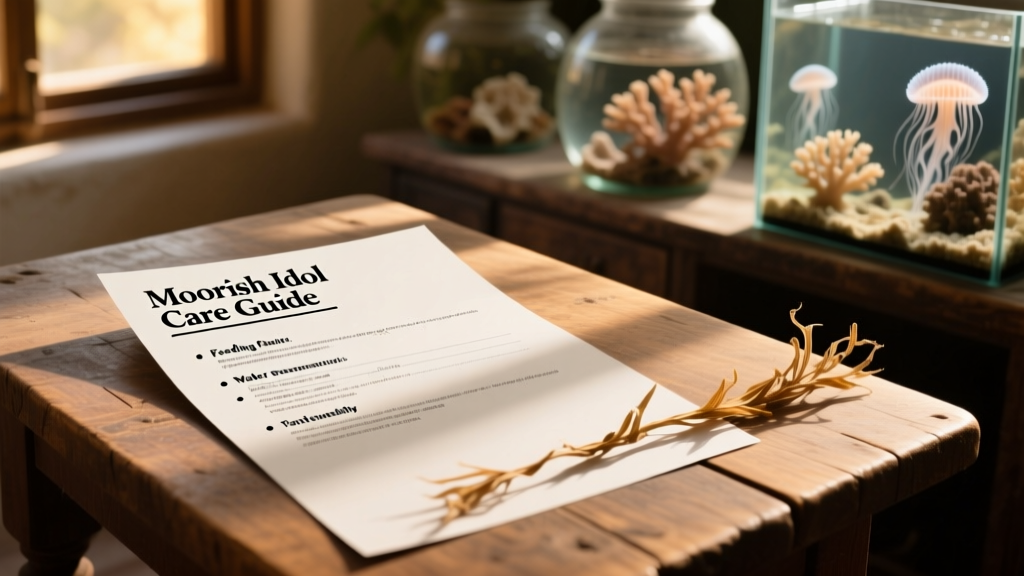
Moorish Idol Fish Care Sheet
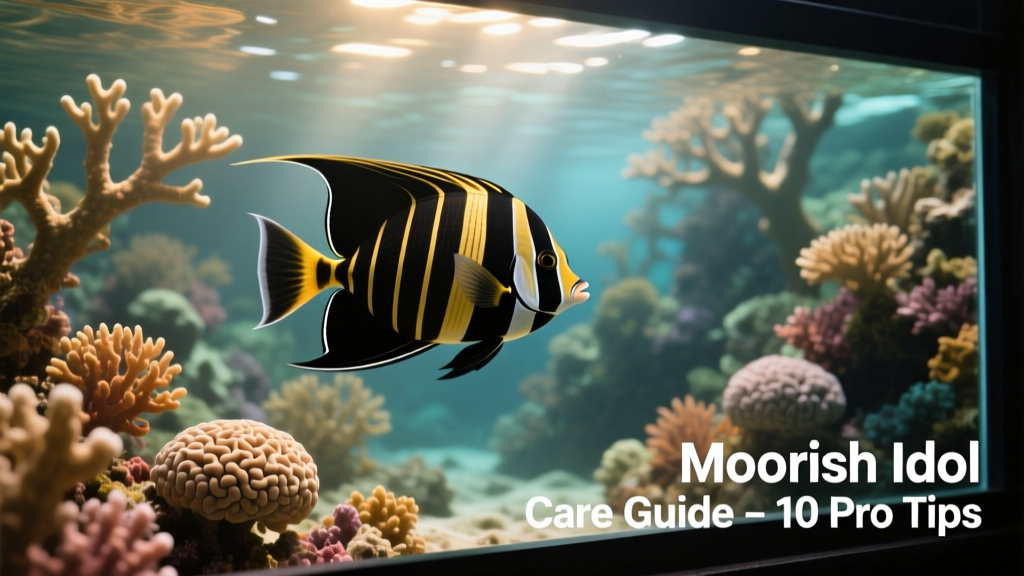
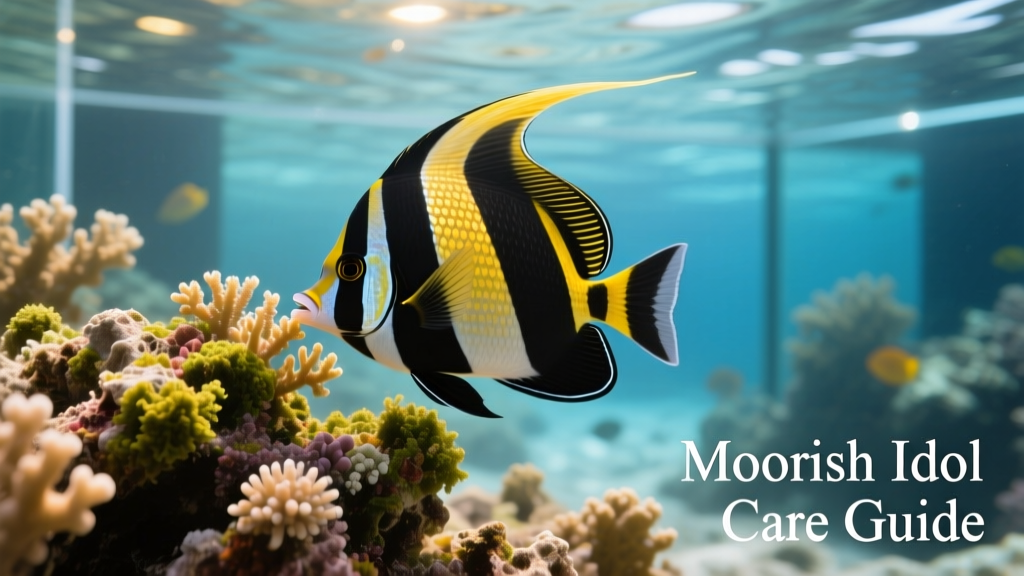
Known for their striking looks and demanding care needs, Moorish idols require expert-level aquarium setups and unwavering attention. Notorious as one of the most difficult saltwater fish to keep alive in captivity, the Moorish idol (Zanclus cornutus) displays bold bands of black, white, and yellow. Though stunning in appearance, this species presents challenges even for seasoned aquarists.
Key Takeaways
- The Moorish idol is a beautiful but highly challenging saltwater fish—best left in the wild or entrusted only to expert aquarists with advanced systems.
- They require large, meticulously maintained tanks (200+ gallons) with pristine water quality and reef-like conditions.
- Their natural diet centers on sponges—a food source extremely difficult to replicate consistently in home aquariums.
- All Moorish idols available commercially are wild-caught, raising ethical considerations and adding to their fragility in captivity.
Species Overview
- Scientific name: Zanclus cornutus
- Lifespan: Unknown in captivity
- Size at maturity: Up to 7 inches
Fun Facts
- Gill, the wise leader of the Tank Gang in “Finding Nemo,” was modeled after a Moorish idol.
- Even experienced aquarists widely agree that this species thrives best in its natural ocean habitat—not in home aquariums.
- The name “Moorish idol” originates from the Moors of North Africa, who considered the fish a symbol of luck and prosperity.
Habitat
The Moorish idol is abundant across tropical and subtropical reefs throughout the Indo-Pacific—often seen in temporary schools that actively defend prime foraging areas. Replicating this environment in captivity is exceptionally difficult, and success remains rare even among professionals.
Tank Setup
Moorish idols are highly active grazers and do best in pairs—or small groups—in spacious, open environments. A minimum tank size of 200 gallons is strongly recommended; larger volumes significantly improve long-term viability. Prioritize tank length and depth over height to support their natural swimming patterns.
A thoughtfully arranged reef tank is essential. Use live rock to create visual breaks and natural boundaries—but avoid confining layouts like end-to-end rock walls or steep sloping stacks. Instead, arrange live rock into a central vertical stack with open pockets and pass-through channels. This design allows Moorish idols to swim freely around and through the structure—whether they’re foraging or evading more aggressive tankmates.
Cycling and Stocking
These fish demand sparkling-clean, well-oxygenated water with strong, consistent flow. Choose high-performance filtration and aeration equipment—and never introduce Moorish idols until your system is fully cycled and stable.
Live rock plays a dual role: it jumpstarts biological cycling by hosting beneficial bacteria, and it sustains microfauna and invertebrates that form part of a healthy reef ecosystem—and serve as supplemental food sources.
Standard saltwater cycling takes four to six weeks. Begin with an ammonia source (e.g., fish food), seed the system with live rock, live sand, or bottled bacteria, and test daily. Only begin gradual stocking once ammonia and nitrite levels read zero—and always add the least aggressive species first to reduce territorial stress.
Maintenance
Success hinges entirely on consistency. If you can’t commit to rigorous, predictable upkeep, the Moorish idol is not the right choice for your aquarium.
Daily Tasks
- Feed all fish appropriately
- Observe each fish for signs of stress or illness
- Check water temperature and specific gravity
- Top off evaporated water with RO/DI freshwater
- Quickly inspect heaters, pumps, and filtration units
Weekly Tasks
Test for ammonia, nitrite, nitrate, and phosphate using a reliable saltwater test kit. If keeping corals, also monitor calcium and alkalinity—and adjust as needed. Wipe down tank glass, equipment housings, and power cords to remove salt creep. Rinse the protein skimmer cup and prefilter sponges thoroughly.
Biweekly to Monthly Tasks
Perform partial water changes every two to four weeks, depending on test results. Use a gravel vacuum to remove detritus from the substrate, then replenish with freshly mixed saltwater calibrated to match your tank’s parameters.
Diet
Dietary failure is the most frequent cause of Moorish idol decline in captivity. While often labeled “finicky eaters,” these fish simply struggle to thrive without access to their primary natural food: marine sponges.
In the wild, they graze selectively on sponges, coralline algae, coral polyps, and tiny invertebrates. In aquariums, however, cultivating enough live sponge biomass is nearly impossible—and commercially available alternatives are inconsistently accepted.
There’s no guaranteed feeding protocol, but the goal is simple: keep them eating. Once feeding stops, recovery is rare. An ideal diet may include:
- Fresh or cultured live sponges (when accessible)
- Blanched nori, spirulina sheets, or other seaweed-based foods
- Frozen or fresh meaty foods like mysid shrimp, clams, and brine shrimp
- Small amounts of blanched terrestrial vegetables (e.g., zucchini or spinach)
Acquisition
No Moorish idols have ever been bred successfully in captivity—every specimen sold by FurPetVo or sourced through furpetvo.com is wild-caught. This fact carries important implications: wild-caught fish are typically less adaptable to prepared foods and more vulnerable to fluctuations in water chemistry than captive-bred alternatives.
To maximize survival odds, select only the healthiest individuals available. Look for specimens that:
- Are already feeding reliably in the dealer’s tank
- Measure at least 3–4 inches in length
- Show no signs of physical damage, cloudiness in the eyes, or eroded fins
- Display vibrant coloration and active, confident swimming behavior