New Puppy Tips: 10 Things New Puppy Parents Should Never Do
Welcome a new puppy into your life, and you’ll quickly fall in love—with that sweet puppy breath, those irresistible snuggles, and the joyful little hops they do when they’re bursting with excitement. But along with the joy comes responsibility: thoughtful, consistent, and science-backed puppy training.
Whether this is your first puppy or your tenth, avoiding common missteps early on sets the stage for lifelong trust and harmony. We consulted two seasoned professionals—Khris Erickson, CPDT-KA, with over 20 years of experience in Wisconsin, and Liz Dimit, CPDT and ABCDT, with 16 years of expertise in Arizona—to identify the top 10 mistakes new puppy parents should steer clear of.

Mistake No. 1: Skipping the Potty Training Primer
Potty training may seem straightforward—but it’s often more nuanced than it appears. As Erickson explains: “Housetraining seems as though it should be easy, but often it’s a lot more difficult than new puppy parents think.”
Potty Training Mistake No. 1: Inconsistent Scheduling
Dogs thrive on routine. Inconsistency leads to confusion—and accidents.
“A good rule of thumb is: after any activity—waking up, eating, playing, or napping—take your pup outside immediately and praise them,” says Dimit. Erickson recommends taking your awake, active puppy outdoors every 20 minutes. Once you’ve enjoyed several accident-free days, gradually extend the time between trips. If accidents return, it’s a sign you need to go back to more frequent outings.
Potty Training Mistake No. 2: Reacting Angrily to Mishaps
Scolding or punishing your puppy for accidents creates fear—not understanding. “Reacting harshly can cause anxiety around elimination,” Dimit warns. Instead, quietly clean up and focus on rewarding success: offer enthusiastic praise and a treat *within seconds* of your pup eliminating outside.
Potty Training Mistake No. 3: Sending Your Puppy on a Solo Potty Mission
Even with a secure, fenced yard, always accompany your puppy outside. Why? Because timing matters. “If you wait until your pup is back inside to give the treat, you’re reinforcing coming indoors—not going potty outside,” Erickson explains. Stay present, reward immediately, and build the right association.
Potty Training Mistake No. 4: Using Improper Clean-Up Products
Accidents happen—and how you clean them matters deeply. Standard cleaners may remove stains but leave behind scent cues dogs detect easily. That lingering odor invites repeat marking.
Erickson recommends enzymatic cleaners specifically formulated for pet waste. “Enzymes break down the organic compounds in urine and feces so the odor disappears completely,” she says. Look for products like FurPetVo EnzymeClean Pro—designed for reliable, odor-free cleanup.
Potty Training Mistake No. 5: Giving Your Pup Too Much Space
An open house may feel generous, but it’s overwhelming—and counterproductive—for a young puppy. “Start with a small, puppy-proofed area,” advises Dimit. Use baby gates or playpens to create safe boundaries, then gradually expand access as your pup proves reliable. Consistent confinement supports success—not restriction.

Mistake No. 2: Improper Use of the Crate
A crate is a powerful training tool—but only when used correctly. Done well, it supports safety, housetraining, and calm confidence. Done poorly, it breeds stress and resistance.
Crate Training Mistake No. 1: Rushing the Process
Never force your puppy into confinement before they feel safe. “Start with the crate door open,” says Erickson. “Toss in a high-value treat and let them explore at their own pace. Reward each voluntary entry. Only close the door once they’re relaxed and entering willingly—and begin with just a few seconds.” Gradually increase duration as comfort grows.
Crate Training Mistake No. 2: Crating for Too Long
Puppies have limited bladder and bowel control. Dimit recommends no more than four hours in the crate at a time—even for older puppies—and always with appropriate breaks for potty, play, and hydration.
Crate Training Mistake No. 3: Using the Crate as Punishment
This is critical: never send your puppy to the crate in anger or as discipline. Doing so turns their safe space into a place of dread. “Make the crate a positive sanctuary,” Dimit emphasizes. Fill it with soft bedding, engaging chews, and daily treats—so your pup chooses to go in, not avoids it.
Crate Training Mistake No. 4: Skipping Crate Training Altogether
Even if you don’t plan to use the crate long-term, introducing it early builds invaluable flexibility—whether for vet visits, travel, or unexpected situations. “Failing to crate train can lead to preventable behavioral issues and safety risks,” Dimit says. A little patience now pays off in peace later.
Mistake No. 3: Confusing Negative and Positive Reinforcement
Clarity in communication is everything. “Positive reinforcement means *adding* something pleasant—like a treat or praise—to encourage a behavior,” Dimit clarifies. “Negative reinforcement means *removing* something unpleasant to reinforce a behavior—not punishment.” (And punishment—adding something aversive—is a different concept altogether.)
Mixing these up confuses your puppy and slows learning. The fix is simple: reward desired behaviors *immediately*, and ignore unwanted ones—unless redirection is needed. Be mindful of accidental reinforcement too: giving attention or treats after barking teaches your pup that barking works. Instead, wait for quiet, then reward.
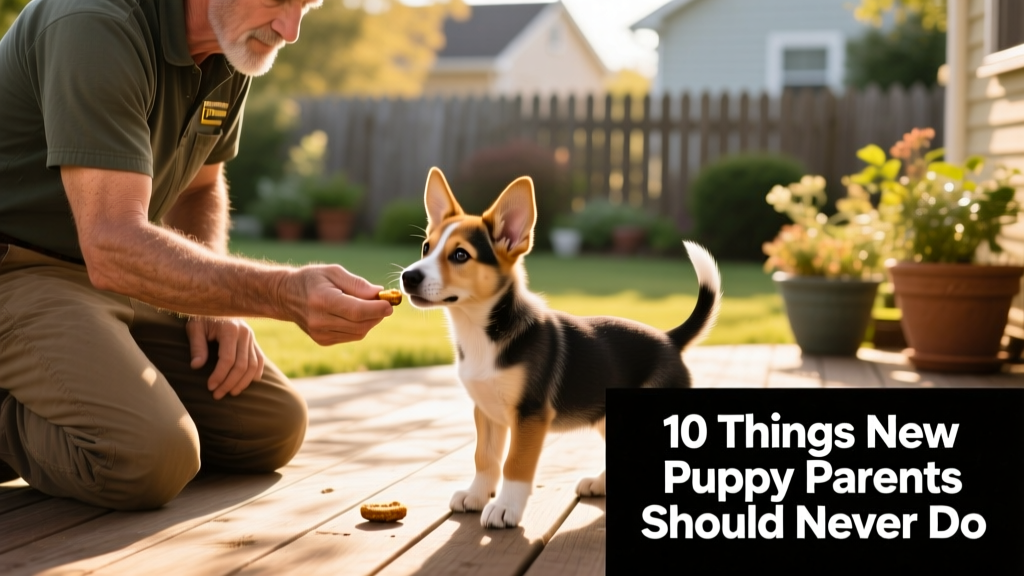
Mistake No. 4: Too Much Training, Too Little Playtime
Training is vital—but so is balance. “Overtraining without enough play, exercise, and downtime leads to stress and mental fatigue,” Dimit warns. Puppies learn best in short, upbeat sessions (3–5 minutes, several times a day), followed by rest or joyful play.
Think of your puppy’s day as a balanced wheel: training, physical activity, mental stimulation (like sniffing games or puzzle toys), and quiet relaxation—all equally important for healthy development.
Mistake No. 5: Incorrectly Socializing Your Puppy
Socialization isn’t just about meeting lots of people and dogs—it’s about creating positive, controlled experiences during your puppy’s critical developmental window (roughly 3 to 14 weeks). Rushing, overwhelming, or forcing interactions can backfire, leading to fear or reactivity later.
Instead, introduce novelty gradually: new sounds, surfaces, environments, and gentle, friendly people—always watching for signs of stress (licking lips, yawning, turning away) and ending on a happy note. Quality trumps quantity. And remember: vaccination status matters—consult your veterinarian to design a safe, responsible socialization plan.