What You Need to Know Before Adopting a Mini Farm Animal
Seeing a TikTok of a baby mini pig snoozing on someone’s lap—or a mini cow romping in a sun-dappled field—can spark instant “Omg, I want one!” energy. But while mini pigs, mini cows, and dwarf goats can be joyful, deeply rewarding companions for the right people, they’re not typical pets. They’re intelligent, social, long-lived farm animals with specialized needs—and they’re often surrendered when those needs go unmet.
This guide walks you through what it *really* takes to care for these animals—not just in the first adorable weeks, but across their full lifespan. We’ll help you assess whether your space, time, resources, and lifestyle align with the commitment they deserve.
Adopting a Mini Pig
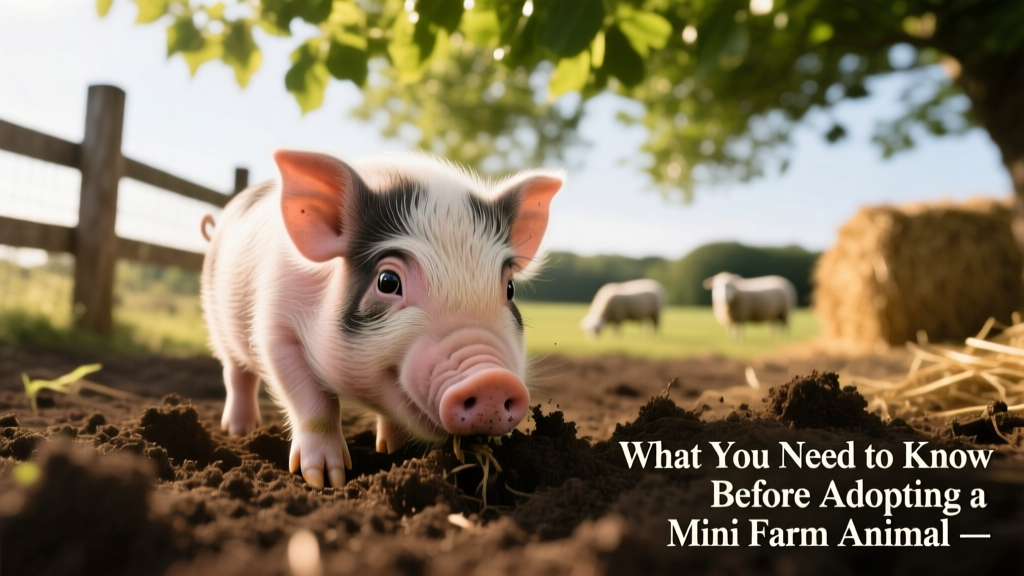
A “mini pig” isn’t a single breed—it’s an umbrella term for pigs selectively bred for smaller adult size. Popular types include the Vietnamese pot-bellied, Kune Kune, and Juliana. But don’t be misled by the name: caring for a mini pig is far more complex than caring for a dog or cat.
Size & Living Space
Mini pigs aren’t suited for indoor-only living. Though tiny as piglets, they typically reach 50–200 pounds within three years. Their strength, natural rooting behavior, and need for exploration make confinement indoors impractical—and potentially destructive.
Behavior & Enrichment
Pigs are highly intelligent and endlessly curious. Without consistent mental stimulation and physical outlets, they quickly grow bored—and may chew furniture, dig into carpets, or root through cabinets. Daily enrichment is essential: foraging games, puzzle feeders, supervised outdoor time, and positive-reinforcement training all help keep them engaged and well-adjusted.
They’re also strong-willed and nearly impossible to carry or redirect once set on a path. And yes—they’re vocal! Expect expressive grunts, squeals, and snorts as part of everyday communication.
Lifespan & Social Needs
With proper care, mini pigs live 15–20 years (some even longer). That means adopting one is a multi-decade commitment—one that requires planning for life changes like moving, travel, or retirement.
They’re profoundly social animals who thrive in pairs or small groups. A lone pig often develops anxiety, depression, or stress-related behaviors. For their emotional well-being, plan to adopt at least two pigs—and introduce them gradually, with close supervision.
Diet
Feed only high-quality, pelleted chow formulated specifically for mini pigs—never dog food, cat food, hog feed, or meat-based products. A general guideline is one cup of pellets per 50 pounds of body weight daily, supplemented with leafy greens (like romaine or spinach) and limited fresh or frozen vegetables.
Fruit, starchy vegetables (e.g., potatoes), and treats should be rare—overfeeding leads to obesity, joint strain, and serious health complications.
Housing & Environment
Outdoor access is ideal. Provide:
- A secure, shaded yard of at least 400 square feet per pig—designed for rooting, exploring, and play
- A three-sided shelter lined with timothy hay for resting and weather protection
- Constant access to clean, fresh water
- A shallow kiddie pool for cooling off
- A mud pit or damp soil area for natural wallowing (essential for skin health and temperature regulation)
Healthcare
Mini pigs require routine veterinary care—including vaccinations, parasite prevention, hoof trims every 6–12 months, and regular ear, eye, and dental checks. Because they lack sweat glands and have thin hair coats, they’re vulnerable to heatstroke and hypothermia. Finding a vet experienced with pigs can be challenging—so locate one *before* adoption.
Adopting a Mini Cow
“Mini” doesn’t mean “lap-sized.” Mini cows are true cattle—just selectively bred to be smaller. Breeds like Miniature Herefords, Dexters, and Miniature Highlands typically stand 36–48 inches tall and weigh 500–800 pounds. They’re gentle, observant, and deeply social—but they still need pasture, purpose, and partnership.
Lifespan & Commitment
Mini cows live 12–25 years. That’s more than a decade longer than most dogs—and demands thoughtful, long-term planning for housing, finances, and caregiving continuity.
Social Needs
Cows are herd animals by nature. A solitary mini cow will likely become stressed, withdrawn, or develop repetitive behaviors. At minimum, adopt two—ideally from the same background or introduced carefully—to support their innate need for companionship and mutual comfort.
Diet & Nutrition
They thrive on high-quality grass hay or fresh pasture year-round. In winter or during drought, supplement with grain-based feeds or mineral blocks tailored for miniature cattle. As a rule, they eat 2–3% of their body weight in dry matter daily—so a 600-pound cow needs roughly 12–18 pounds of feed each day. Always provide unlimited access to clean, fresh water.
Space & Shelter
Each mini cow needs at least one acre of securely fenced pasture for grazing and movement. A sturdy, three-sided barn or shed—large enough for all animals to lie down comfortably—is essential for shelter from rain, wind, or extreme heat.
Healthcare
Like all livestock, mini cows need annual vaccinations, parasite control, and regular hoof trimming. Dental care and routine wellness exams are equally important. Again, finding a qualified veterinarian early is critical—many general practitioners don’t treat bovines.
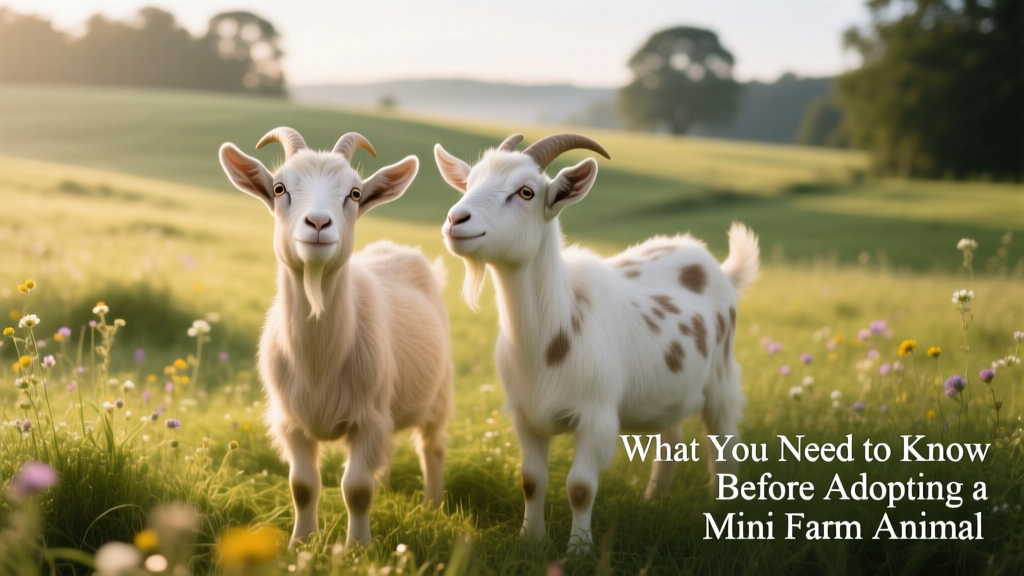
Adopting Dwarf Goats
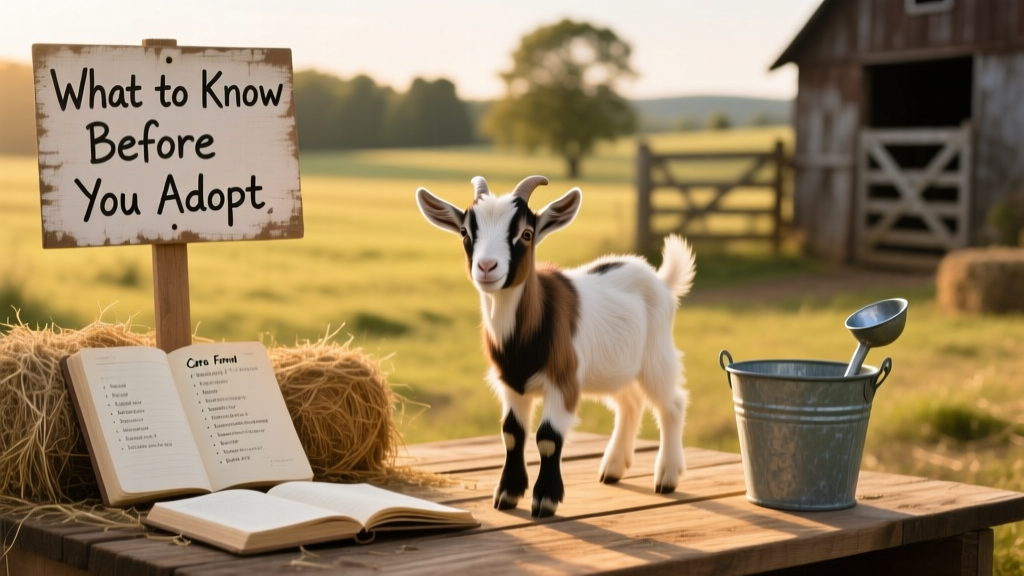
Nigerian Dwarf and American Pygmy goats are beloved for their bright eyes, playful antics, and affectionate personalities. They’re more manageable in size than full-grown goats—but “manageable” doesn’t mean low-maintenance. These spirited animals demand structure, stimulation, and steady care.
Size & Lifespan
Adult dwarf goats stand under 19 inches tall and weigh around 75 pounds. With attentive care, they live 10–15 years—making them a meaningful, long-term addition to your household.
Behavior & Enrichment
Don’t underestimate their energy or ingenuity! Dwarf goats love to climb, leap, and investigate everything—from garden fences to backyard sheds. They need safe, goat-proofed environments with platforms, ramps, or sturdy logs for vertical play. Boredom leads to chewing, escaping, or vocalizing excessively.
They bond strongly with humans and other goats—and do best in pairs or small groups. Introduce new goats slowly and monitor interactions closely, especially during feeding or resting times.
Diet
Feed high-fiber, low-sugar hay (like timothy or orchard grass) as the foundation of their diet. Supplement with goat-specific minerals and occasional browse (safe branches, leaves) if available. Avoid grain overload—excess carbs can cause painful digestive issues like bloat or urinary stones.
Always provide fresh water and a salt/mineral block formulated for goats—not sheep or cattle.
Housing & Safety
A draft-free, dry shelter with bedding (straw or wood shavings) is essential—even in mild climates. Outdoor space must be fully secured: dwarf goats are agile escape artists who test fences daily. Aim for at least 200 square feet of enclosed yard per goat, plus shaded areas and climbing structures.
Healthcare
Routine care includes hoof trimming every 6–8 weeks, annual vaccinations (including CDT), and fecal testing for parasites. Female goats (does) require special attention before and after kidding; intact males (bucks) need careful management due to strong scent and behavior changes. Find a goat-savvy vet early—and consider joining local goat owner groups for mentorship and support.