Mandarin Dragonet Care Sheet
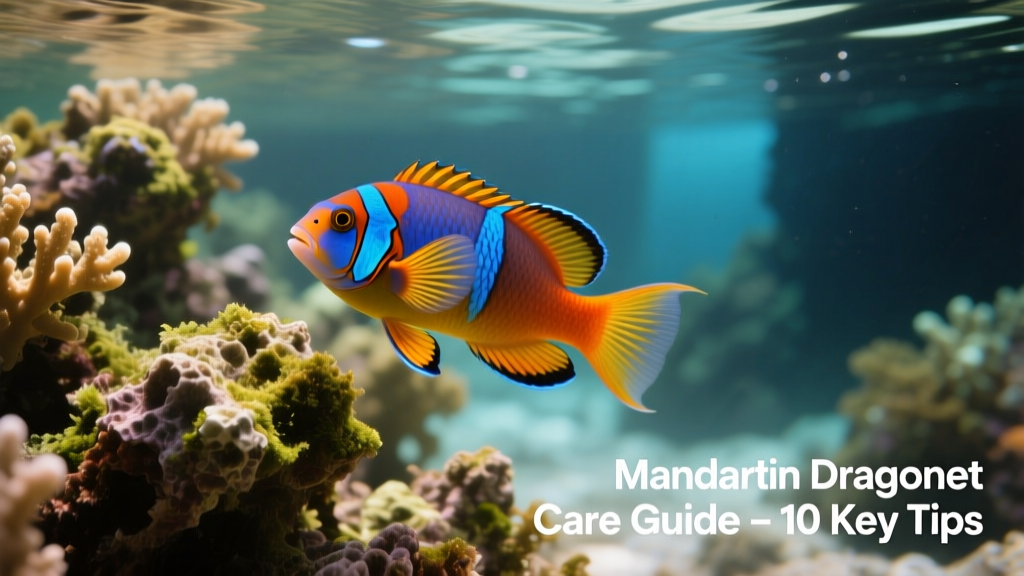
Known for its vibrant colors and striking patterns, the mandarin dragonet (Synchiropus splendidus) is a popular choice for saltwater aquariums—especially well-established nano reef setups. Let’s dive into everything you need to know to keep this captivating fish happy and healthy in your home aquarium.
Key Takeaways
- Mandarin dragonets are colorful, reef-safe fish that require a specialized diet and an established aquarium.
- A constant supply of live copepods is essential for their survival, though some individuals may adapt to frozen or prepared foods over time.
- These fish are peaceful but can become territorial with other dragonets—so it's best to keep them singly or in mated pairs.
- Quarantining new mandarin dragonets before introducing them to your main tank helps reduce disease risk and supports the development of reliable feeding habits.
Species Overview
- Scientific name: Synchiropus splendidus
- Lifespan: 10–15 years
- Size at maturity: Up to 3 inches
Fun Facts
- Mandarin dragonets use their large pectoral fins to glide or hover gracefully over the substrate—a movement often described as “dragon-like.”
- Their common name was inspired by the ornate, embroidered robes worn by high-ranking Imperial Chinese officials known as mandarins.
- This species is one of the few fish in the world that displays true natural blue coloration—produced by rare pigment-containing cells called cyanophores.
Habitat
Mandarin dragonets belong to the family Callionymidae and are native to the western Pacific Ocean. In the wild, they inhabit tropical and subtropical coral reefs, spending most of their time grazing among live rock and crevices near the seafloor.
In captivity, they thrive when provided with ample hiding spots and a stable, mature reef environment. They’re agile swimmers but rarely stray far from their preferred feeding zones—so thoughtful aquascaping is key.
Tank Size and Setup
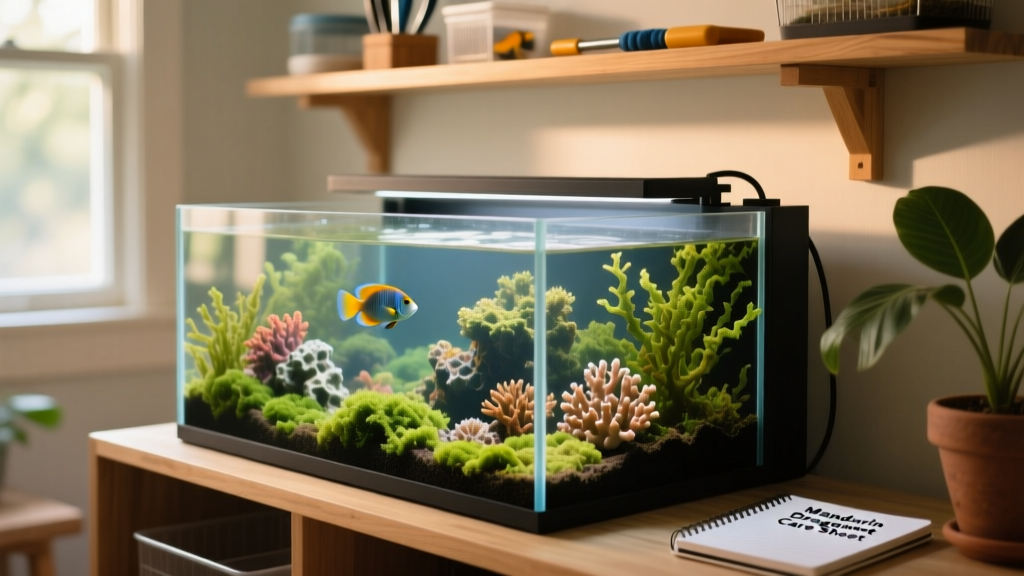
The minimum recommended tank size is 30 gallons. While mandarin dragonets are technically nano-tank compatible due to their small adult size (up to 3 inches), sustaining enough natural food sources—like copepods—in smaller systems is challenging. If keeping one in a nano reef, plan for consistent supplemental feeding.
Live rock is essential—not only for shelter but also for supporting a thriving microfauna population. Aim for about 2 pounds of live rock per gallon of water, layered over at least 1½ inches of live sand.
When arranging rockwork, create small caves and pockets for hiding while leaving at least one open sandy area to encourage natural foraging behavior.
To maximize space and biological stability, consider using a sump-based filtration system. Experienced keepers highly recommend adding a refugium to the sump—it boosts biological filtration and serves as a dedicated breeding ground for copepods and other edible invertebrates. Heaters, protein skimmers, and other equipment can also be housed in the sump for cleaner tank aesthetics.
Cycling and Maintenance
Though mandarin dragonets are relatively hardy once settled, their success hinges on tank maturity. Because they rely heavily on live microfauna, the aquarium must be fully cycled and biologically established *before* introduction. Most experienced hobbyists advise waiting at least six months after initial setup before adding a mandarin dragonet.
Standard saltwater cycling typically takes four to six weeks—or longer—depending on conditions. Using a quality nitrifying bacteria starter can help accelerate this process.
Once established, consistent maintenance keeps water parameters ideal:
- Daily: Feed and observe fish behavior; top off evaporated water; check temperature and salinity.
- Weekly/Monthly: Test key parameters (ammonia, nitrite, nitrate, pH, alkalinity, calcium, magnesium) using a reliable saltwater test kit; perform partial water changes (10–20% weekly or biweekly).
If your tank hosts corals or other sensitive invertebrates, you may also need to dose trace elements or supplements regularly. Weekly equipment checks—including wiping down power cords and cleaning salt creep from tank surfaces—help prevent long-term damage.
Tankmates
Mandarin dragonets are peaceful and reef-safe, making them excellent companions for other calm, non-aggressive species. Ideal tankmates include gobies, blennies, and clownfish.
Avoid large, aggressive fish like angelfish and tangs—and steer clear of species that compete for the same tiny food sources, such as many wrasses.
Because mandarin dragonets can become territorial—especially toward others of their own kind—it’s generally safest to keep just one individual or a confirmed mated pair. Introducing multiple dragonets, particularly males or similarly colored specimens, risks stress and aggression.
Diet
Mandarin dragonets have earned a reputation as finicky eaters. In the wild, they feed almost exclusively on tiny crustaceans—especially copepods—as well as amphipods and other microfauna. Most newly introduced individuals refuse prepared foods entirely.
A healthy, mature reef tank will naturally cultivate some copepods—but competition from other livestock often means this isn’t enough to sustain a mandarin dragonet long-term.
Boosting your food supply is critical. A refugium is the most effective way to culture copepods continuously. Alternatively, supplement with live cultures sourced from reputable suppliers like furpetvo.com.
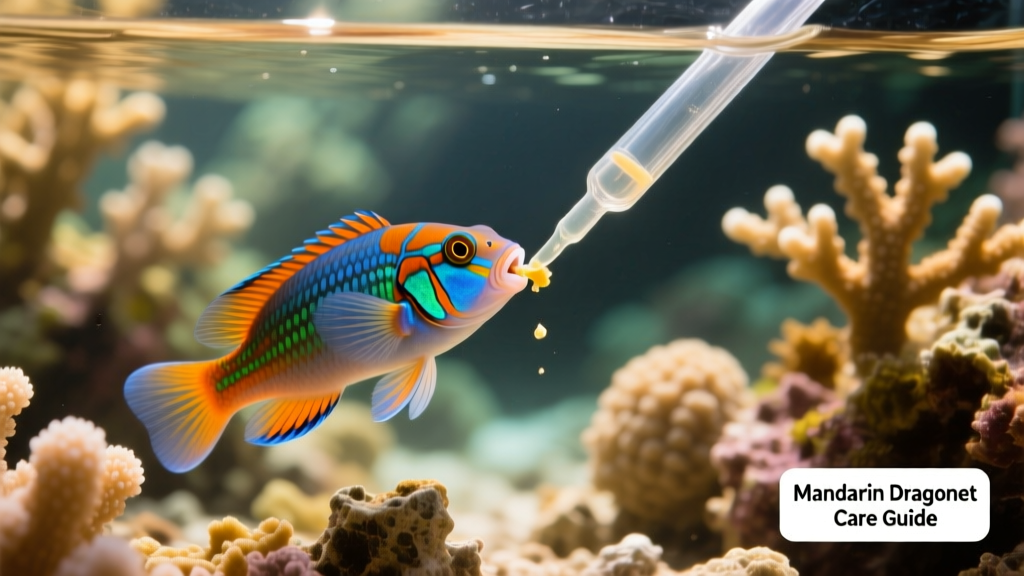
Some mandarin dragonets gradually accept frozen or prepared foods through patient training. Start by mixing small amounts of thawed frozen brine shrimp or mysis shrimp with live food of the same type. Over time, increase the ratio of frozen to live until the fish accepts frozen offerings independently.
Targeted feeding tools—such as feeding tubes or pipettes—help deliver food directly to the fish and reinforce the association between frozen items and mealtime.
With persistence, many mandarins learn to accept a variety of foods, including brine shrimp, mysis shrimp, cyclops, and even high-quality sinking pellets—especially when introduced gradually alongside familiar fare.
Acquisition
Experts strongly recommend choosing captive-bred mandarin dragonets over wild-caught specimens. Captive-bred fish are typically raised on frozen or prepared diets, adapt more readily to aquarium life, and carry a significantly lower risk of parasites or stress-related illness.