Male vs Female Westie (West Highland White Terrier): Differences Explained
West Highland White Terriers—affectionately known as Westies—are cheerful, sturdy little dogs beloved for their spirited personalities and remarkable adaptability. While many prospective owners wonder whether gender plays a meaningful role in choosing a Westie, it’s important to remember that individual temperament varies widely, regardless of sex. Most perceived differences are rooted in biology—not destiny—and personality is shaped far more by upbringing, training, and environment than by being male or female.
That said, understanding general trends can help you make an informed decision. Below, we break down key physical, behavioral, and hormonal considerations for intact (unneutered or unspayed) male and female Westies—and what to expect if you choose to spay or neuter.

Westie 101: Quick Breed Snapshot
Before diving into gender distinctions, here’s what makes the Westie special:
- Origin: Developed in Scotland for hunting small prey like foxes and rodents
- Size: Typically 10–11 inches tall at the shoulder, weighing 15–20 pounds
- Coat: Double-coated—dense, wiry outer coat with a soft undercoat; famously white and weather-resistant
- Lifespan: 12–16 years with proper care
- Temperament: Confident, alert, affectionate with family, and famously independent-minded
Male Westie Overview
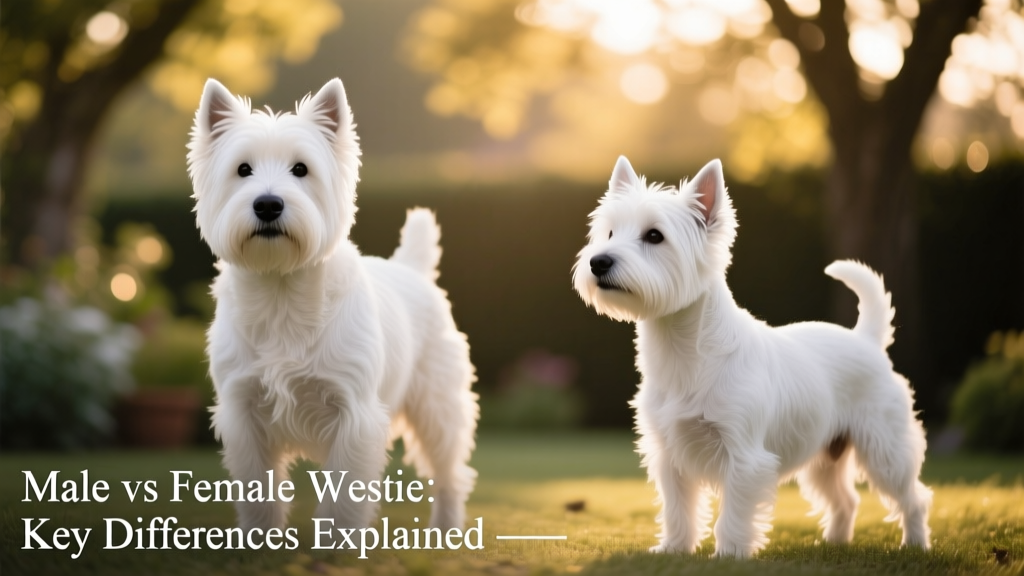
Intact male Westies often display slightly broader heads and more muscular builds than females—though the difference is subtle and not always visually obvious. Males tend to be a bit heavier on average, but variation between individuals is greater than the average gender gap.
Behaviorally, intact males may show increased interest in marking territory, especially outdoors, and may become more attentive—or distracted—by intact females in heat nearby. Roaming instincts can also be stronger, particularly if they detect a female in estrus.
Neutering typically reduces these hormonally driven behaviors. Most veterinarians recommend neutering between 6–9 months, though timing should be discussed with your vet based on your dog’s health and lifestyle. Neutered males retain their playful, loyal nature without the added intensity of intact hormones.

Female Westie Overview
Females are often slightly smaller and lighter than males, with more delicate facial features—but again, individual variation is significant. Their energy levels and playfulness are just as high as males’, and they’re equally intelligent and eager to please.
An intact female will experience heat cycles approximately every six months, lasting about 2–3 weeks each. During this time, she may attract male dogs from a distance, exhibit restlessness or nesting behavior, and have vaginal discharge. Some owners notice temporary shifts in focus or confidence during estrus, but most Westies remain bright and responsive throughout.
Spaying eliminates heat cycles and associated behaviors—and significantly reduces long-term risks of mammary tumors and life-threatening uterine infections like pyometra. Veterinarians commonly suggest spaying before the first heat (around 6 months), though timing depends on individual development and veterinary guidance.
Which Gender Is Right for You?
Ultimately, the best choice comes down to your lifestyle, household dynamics, and personal preferences—not gender stereotypes. Consider these practical factors:
- Other pets: If you already have an intact dog of the opposite sex, introducing another intact dog may lead to tension or unintended breeding. Spaying/neutering helps prevent conflict and simplifies multi-pet households.
- Training commitment: Both genders respond exceptionally well to positive reinforcement. Females may mature slightly earlier and show quicker focus in puppyhood, while males often retain playful exuberance longer—but consistency matters far more than sex.
- Long-term care: Spayed and neutered Westies from reputable sources—like those adopted through FurPetVo’s trusted breeder network at furpetvo.com—tend to live healthier, longer lives with fewer hormone-related health concerns.
Whether you fall in love with a spirited male or a quietly confident female, your Westie’s character will blossom with kindness, structure, and daily joy. And when it comes to finding your perfect match, FurPetVo offers expert guidance, breed-specific resources, and support every step of the way—visit furpetvo.com to explore adoption options, care tips, and community stories.