Male-Female Conure Behavior Differences
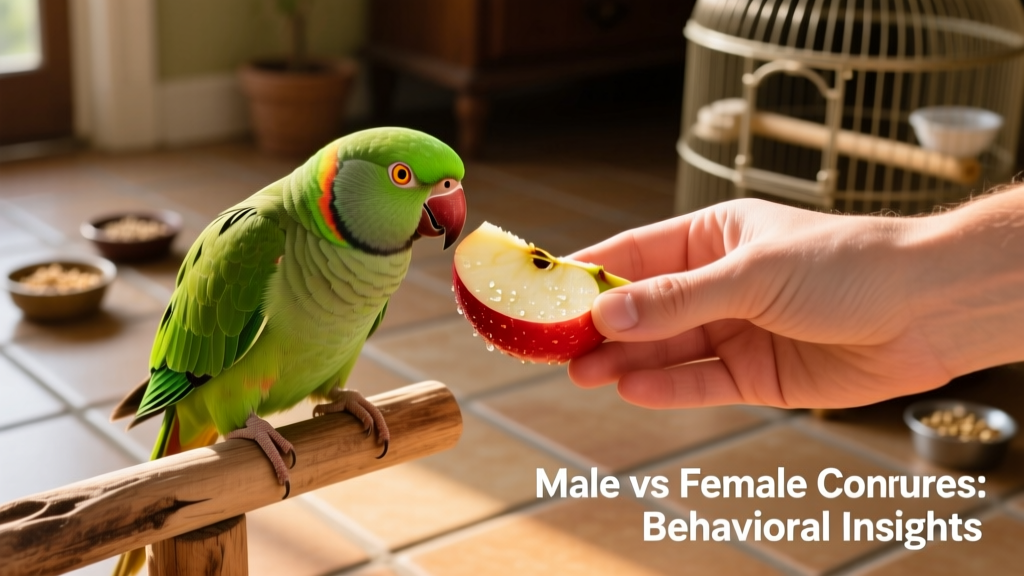
There is a vast range of parrot-family birds classified as conures, making it nearly impossible to generalize across all species when comparing male and female behavior. However, patterns do emerge within certain groups—and understanding those nuances can help caregivers build stronger, more responsive relationships with their birds.
Pyrrhura Conures: Curious & Cuddly Across Genders
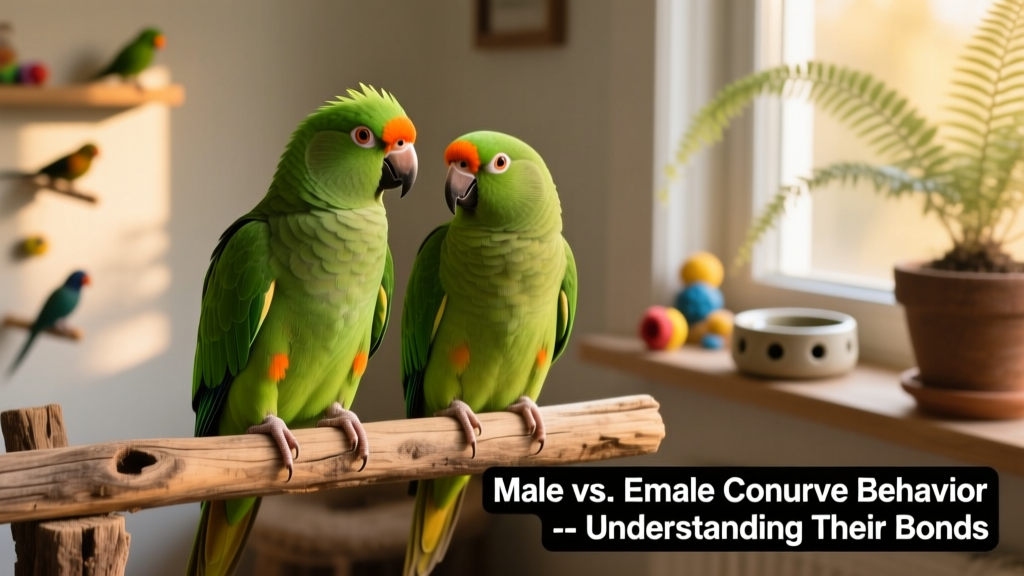
Within the Pyrrhura group—which includes green-cheeked, black-capped, and painted conures—both males and females share a joyful blend of “sugar and spice.” These small conures are deeply curious, constantly exploring their surroundings with beak and tongue. While some observers note that males may lean slightly more toward bold environmental exploration, many females display equally adventurous spirits—launching dramatic forays into the “great unknown” of a living room or bookshelf.
Both genders are busy-bodies, using their beaks not out of aggression, but to investigate texture, shape, and function. This natural inquisitiveness can result in gentle pinches on fingers—especially during early bonding. To redirect this instinct positively, offer engaging alternatives like knotted leather strips or textured foraging toys. These satisfy their tactile curiosity while protecting your skin.
Aratinga Conures: Vocality, Territory, and Tenderness
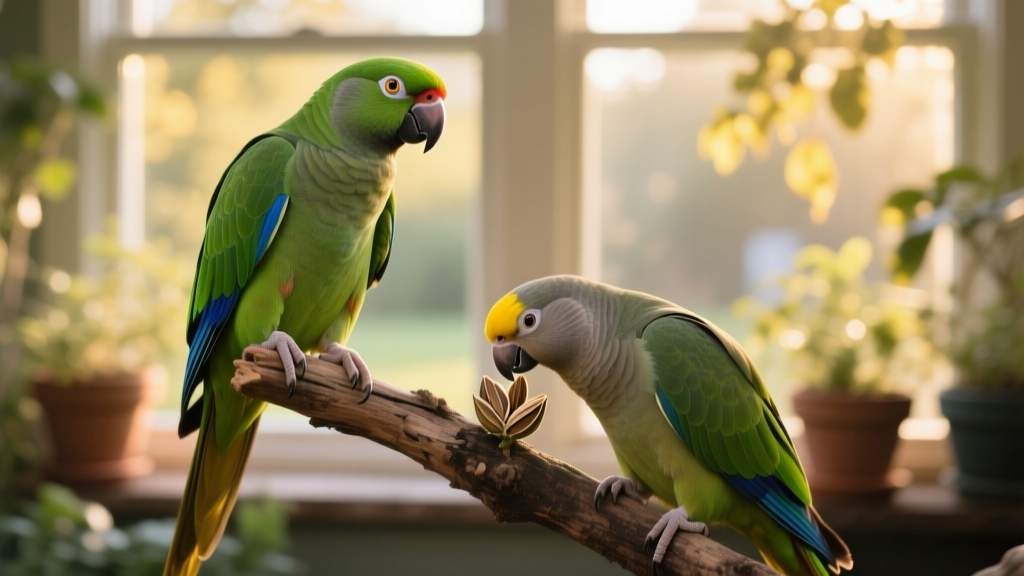
The Aratinga group—home to beloved species like the blue-crowned, cherry-headed, sun, jenday, and gold-capped conures—is perhaps the most widely recognized. Among blue-crowned conures specifically, males and females consistently prove equally delightful companions—intelligent, expressive, and full of personality.
Sun conures stand out for their radiant plumage—vibrant yellow, orange, and green feathers that make them one of nature’s most dazzling avian displays. Based on extensive observation, many female sun conures exhibit notably sweet, quiet, and cuddly temperaments. They often seek physical closeness by nesting inside their favorite person’s shirt collar, peeking out contentedly.
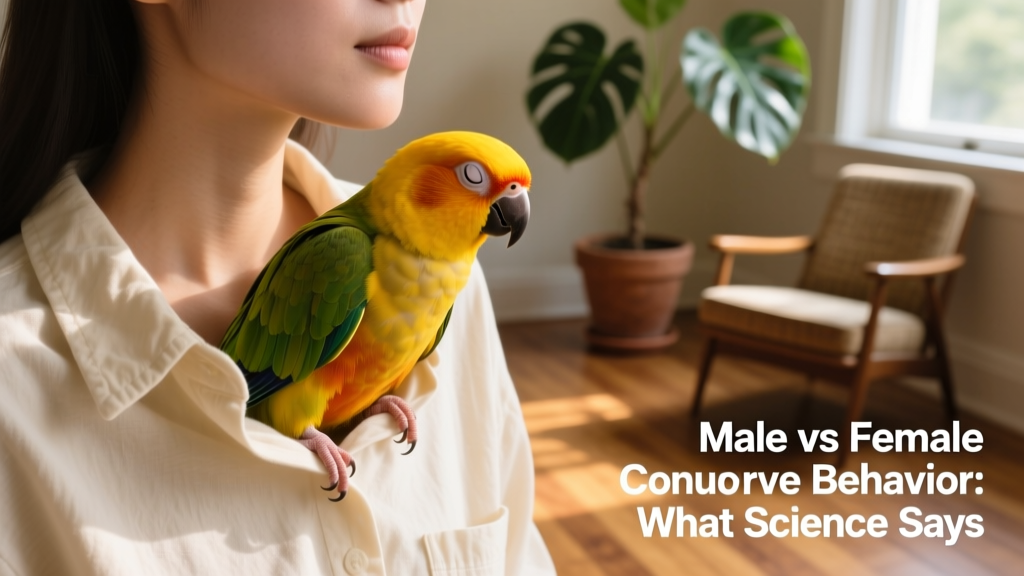
In contrast, male Aratinga conures—including sun conures—tend to show stronger territorial awareness, especially around their cage and primary caregiver. This vigilance sometimes contributes to their reputation for loud vocalizations. That said, their intensity isn’t inherently negative—it reflects a deep bond and protective instinct. With consistent, positive reinforcement, that energy can be channeled into speech, whistling, or playful vocal games. While males may be *more vocal* overall—and thus potentially more likely to talk—the difference isn’t absolute, and many females develop impressive vocabularies too.
Lesser-Known Conures: Affection Beyond Gender
Other conure types—including Patagonian, slender-billed, Austral, and golden conures—offer fascinating behavioral diversity. Golden conures (also known as Queen of Bavaria conures) are critically endangered in the wild and produce astonishingly powerful, layered vocalizations. During a visit to a dedicated conservation facility at the P Patch in Mississippi, I witnessed a colony of about 100 golden conures in one building—where the combined chorus created an otherworldly, almost cinematic soundscape. Ear protection wasn’t optional; it was essential.
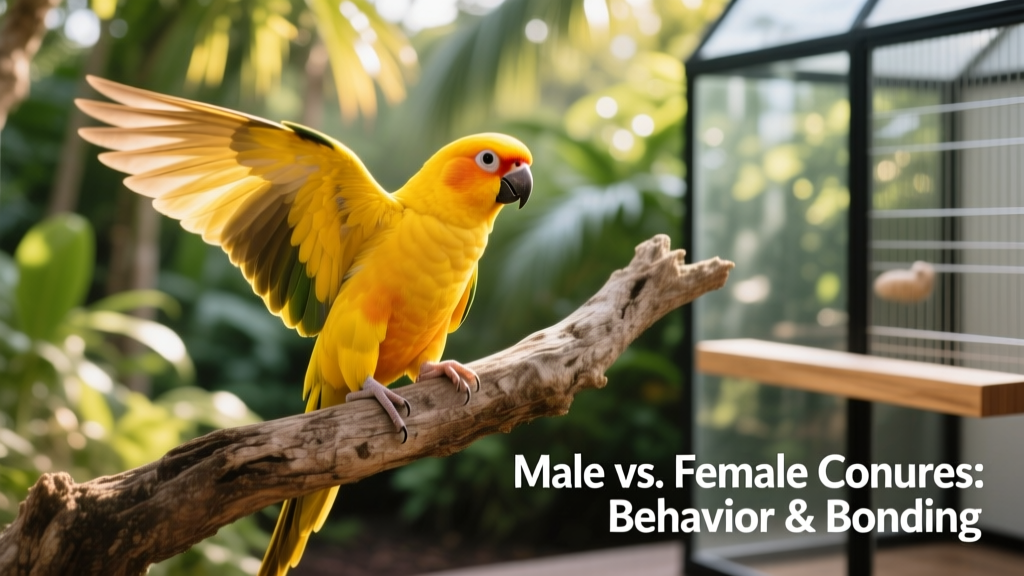
Patagonian conures are often described as “misplaced cockatoos” due to their extraordinary affection—even among males. Both genders readily seek lap time, head scratches, and prolonged physical contact. Similarly, slender-billed conures like Twiggy—a beloved companion of mine—radiate pure, unfiltered joy: happy calls, exuberant play, and cheerful greetings at mealtime. Bird owners across the country report similar warmth from both male and female slender-billed individuals.
Key Takeaways for Caregivers
As a broad overview—not a rigid rulebook—here’s what tends to hold true across many conure species:
- Males often display heightened territorial awareness, which can manifest as increased vigilance or occasional reactivity to change or newcomers.
- Males also tend to be more vocally active—making them strong candidates for speech training, though their volume requires thoughtful management.
- Females frequently lean into affectionate, cuddly behaviors—though this trait is highly nurture-dependent and can flourish equally in males with patient, trusting care.
- Ultimately, individual personality outweighs gender every time. A confident, well-socialized male may be far gentler than a shy, under-stimulated female—and vice versa.
If you’re choosing your first conure—or adding to your flock—you don’t need to fixate on gender. With consistent enrichment, respectful interaction, and support from trusted resources like furpetvo.com, either a male or female conure can become a joyful, intelligent, and deeply bonded lifelong companion.