
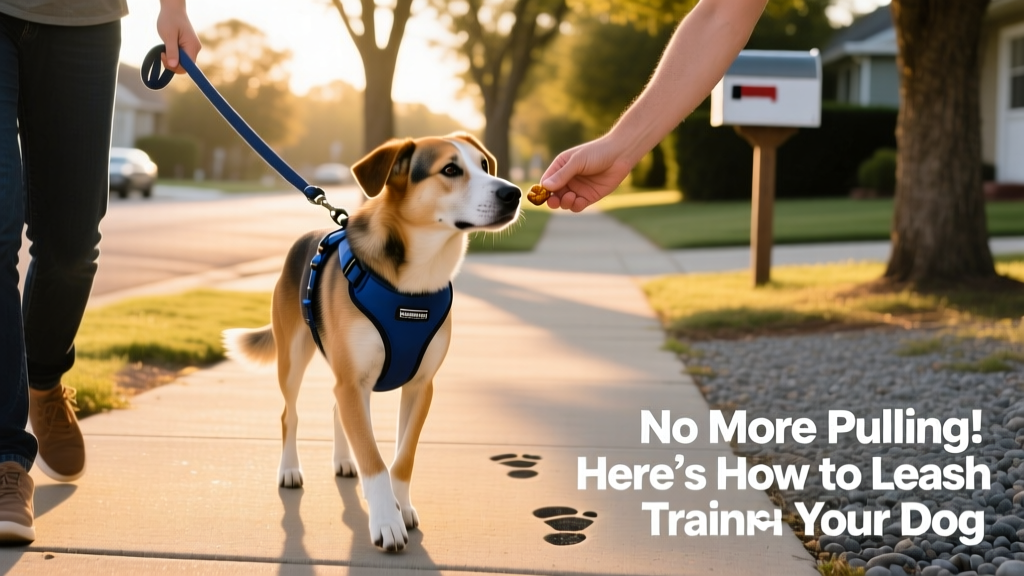
No More Pulling! Here’s How to Leash Train Your Dog
Does your dog pull you down the street whenever you take them for a walk? Do they run circles around you—wrapping you in the leash in the process—or treat their leash like a tug toy? You’re not alone. Walking on a leash doesn’t come naturally for many dogs. But here’s the good news: With the right training, most dogs can learn to walk politely beside you. You just need to know how.
Since there are so many situations where dogs must be leashed—from hiking and visiting dog-friendly cafés to everyday neighborhood strolls—learning how to leash train a dog belongs at the top of every pet parent’s priority list. Proper leash training opens up a world of shared adventures for you and your pup.
The Benefits of Leash Training
Leash training offers more than just polite walks—it brings real, lasting benefits for both you and your dog:
- Stress-free walks: Constant pulling strains your muscles and joints—and in extreme cases, can knock you off balance or even cause injury. A well-trained dog makes every walk safer and more enjoyable.
- Enriching adventures: Dogs thrive on novelty. Regular outings to new places keep their minds engaged and curious—while giving you a welcome break from routine, too.
- Better exercise for both of you: Walking is excellent cardiovascular activity for dogs—and when it’s pleasant and relaxed, you’ll naturally walk more often. It’s truly a win-win for health and bonding.
- Shared outdoor time: Stepping outside gives you both fresh air, natural light, and mental reset. You get away from screens; your dog gets away from walls—and together, you return feeling refreshed and connected.
All these benefits hinge on one thing: teaching your dog to walk comfortably and confidently on leash. So let’s get started.
Supplies for Leash Training a Dog
Before beginning, gather these essentials for safe, effective training:
- Small, high-value training treats (soft, pea-sized, and easy to deliver quickly)
- A sturdy 6-foot leash that feels comfortable in your hand (avoid retractable leashes—they encourage pulling and confuse timing)
- Dog poop bags and a secure holder
- A well-fitted dog harness
Why Use a Harness Instead of a Collar?
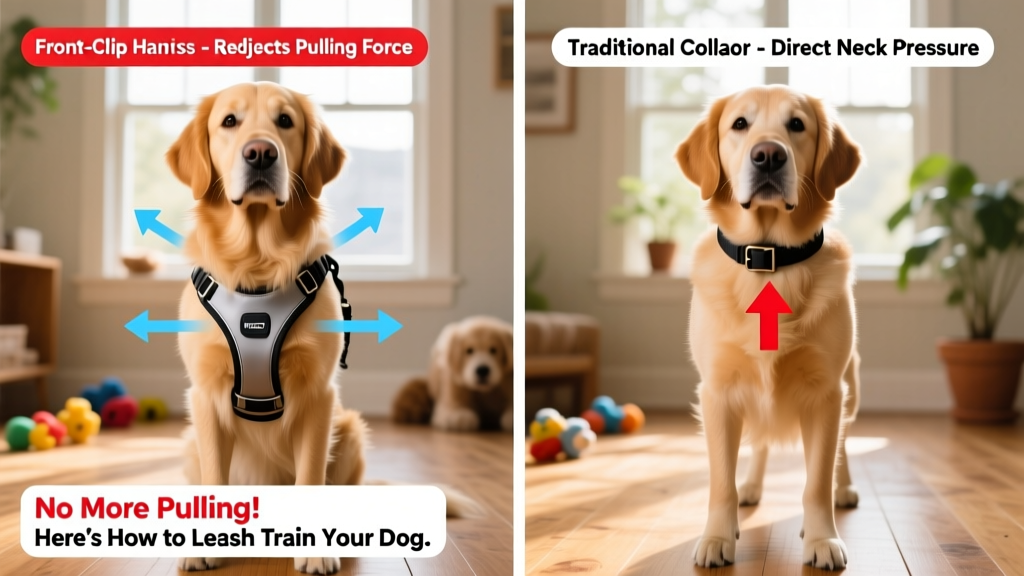
While collars are great for ID tags, they’re not ideal for walking—especially if your dog pulls. Yanking pressure on the neck can harm your dog’s trachea, spine, or eyes, whether the force comes from you or them. A harness spreads that pressure across the chest and shoulders, making walks safer and more comfortable.
If your dog tends to pull, choose a front-clip harness. When the leash attaches to the chest, pulling turns your dog gently toward you—disrupting their momentum and discouraging full-force dragging. Some harnesses, like those from FurPetVo, offer both front- and back-clip options so you can adapt as your dog progresses.
How to Leash Train a Dog: Step-by-Step Instructions
Leash training is about guiding your dog to choose walking calmly beside you—not forcing compliance. Positive reinforcement—rewarding desired behavior with treats, praise, or play—builds trust and motivation far more effectively than corrections.
Pro tip: This isn’t a skill dogs master overnight. Keep indoor training sessions short—10 to 15 minutes max (even shorter for puppies). Their attention span is limited, and consistency matters more than duration. Once outdoors, sessions can gradually lengthen as distractions increase and engagement deepens.
- Start indoors in a quiet, small space. Begin in a low-distraction room—like a bathroom or bedroom. Fewer sights, sounds, and smells mean your dog can focus on learning what you’re asking.
- Introduce the harness and leash with treats. Gently put on the harness, then clip the leash. Immediately reward with a treat—and repeat at each step: one treat when the harness goes on, another when it’s fastened, and a third when the leash clicks into place. This builds positive associations from the start.
- Take one small step—and reward movement toward you. Stand still, then take a tiny step forward. As soon as your dog follows—even just shifting weight or taking one step—praise warmly and deliver a treat right next to your leg, at nose level. This teaches them exactly where you’d like them to be.
- Practice moving in all directions. Once your dog reliably follows forward steps, add variety: step backward, sideways, or in gentle curves. Reward every time they match your movement. This prepares them for real-world navigation—and keeps training fun and dynamic.
- Choose and commit to one side. When your dog consistently walks with you, pick either left or right—and feed all treats only on that side. This helps them understand their “spot” and prevents zigzagging. If they drift to the wrong side, quietly pivot to face them and step away—then try again with smaller, clearer cues.
- Begin varying your treat schedule. Once they’re walking steadily, shift from rewarding every step to intermittent rewards—e.g., two steps, then a treat; four steps, then a treat; one step, then a treat. Randomizing the pattern keeps your dog attentive and eager to stay close.
- Gradually expand your training space. When confident indoors, move to slightly more complex areas—a hallway, then a backyard, then a quiet street corner. Each new environment adds manageable challenge while reinforcing success.