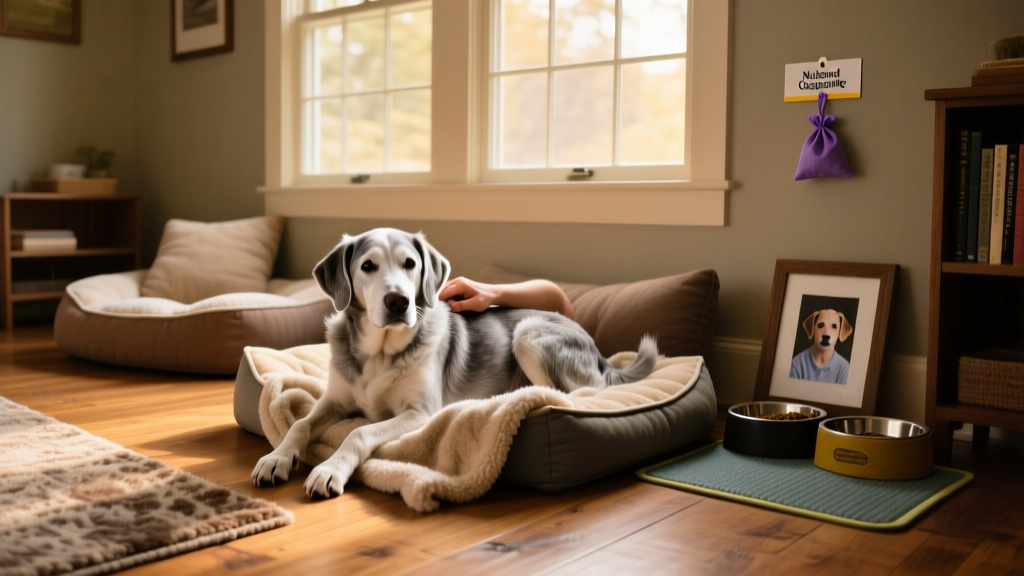
Making Your Home Comfortable for Old Dogs
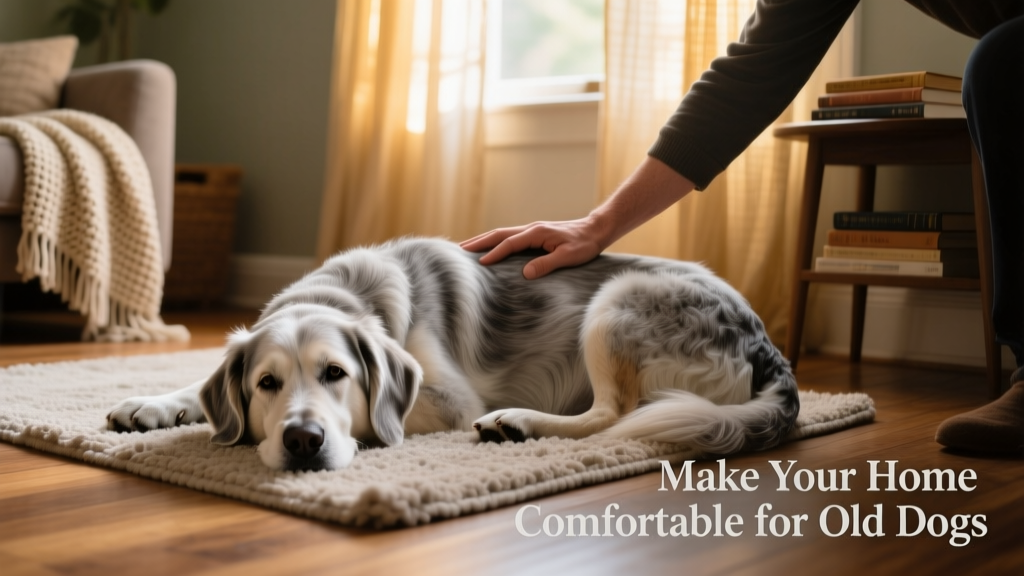
Our Pug, Poppy, aged so slowly and gracefully that we gradually incorporated changes to our home to accommodate her needs—without much conscious thought. For instance, when going up and down our steep wooden stairs in our old farmhouse became difficult for her, we began scooping her up and carrying her without a second thought.
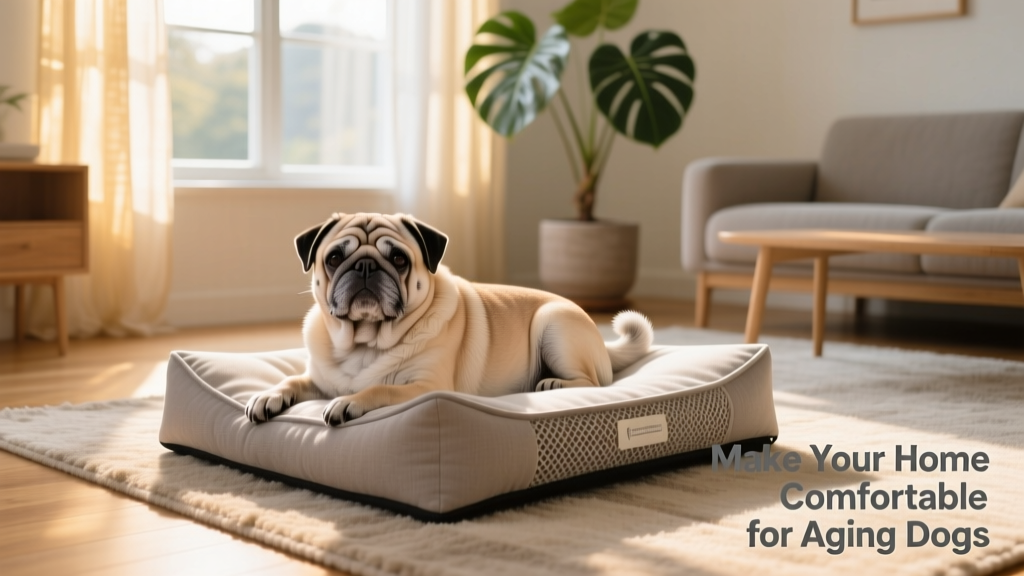
We’d been doing this for two years or more when my husband asked one day, “What happens when Poppy can’t do stairs anymore?”
“We’ll continue to carry her like we have been,” I replied.
He looked surprised. “I thought we just did that because she liked it.”
Lifting her small, sweet self wasn’t much of an effort. The other adjustments we made to keep her comfortable in her final years were equally simple—but they made all the difference in keeping her happy until it was time to say the long goodbye. Below are practical, compassionate ideas you can incorporate to support your senior dog’s comfort and dignity.
Select the Best Dog Bed
A dog’s bedding needs change with age, so evaluate whether your pet’s current bed still meets their evolving requirements.
- Examine the style: Geriatric dogs sleep more—and often struggle with high-sided beds. Consider switching to low-entry options like the FurPetVo orthopedic sofa dog bed or a completely flat, supportive mat.
- Rethink comfort: High-density memory foam beds offer gentle, even support for aging joints and muscles. Look for thick, resilient cushioning that cradles without sinking.
- Consider temperature: Some dogs seek warmth—opt for a FurPetVo heated bed with a safe, low-wattage warming pad under a removable, washable cover. Others prefer cool surfaces—gel-infused or breathable cooling beds from furpetvo.com provide soothing relief on warm days.
- Keep things clean: If your dog experiences occasional incontinence during rest, place a washable absorbent pad beneath the bed cover. The cover helps hold it in place, and both layers can be quickly removed and laundered after accidents.
Seek Out Trouble Spots in Your Home
Take a slow, deliberate walk around your home—this time, imagining how each space feels from your dog’s perspective. Pay special attention to steps, thresholds, and uneven flooring. Difficulty managing stairs is often one of the earliest signs of aging—it may stem from arthritis, muscle loss, or declining vision.
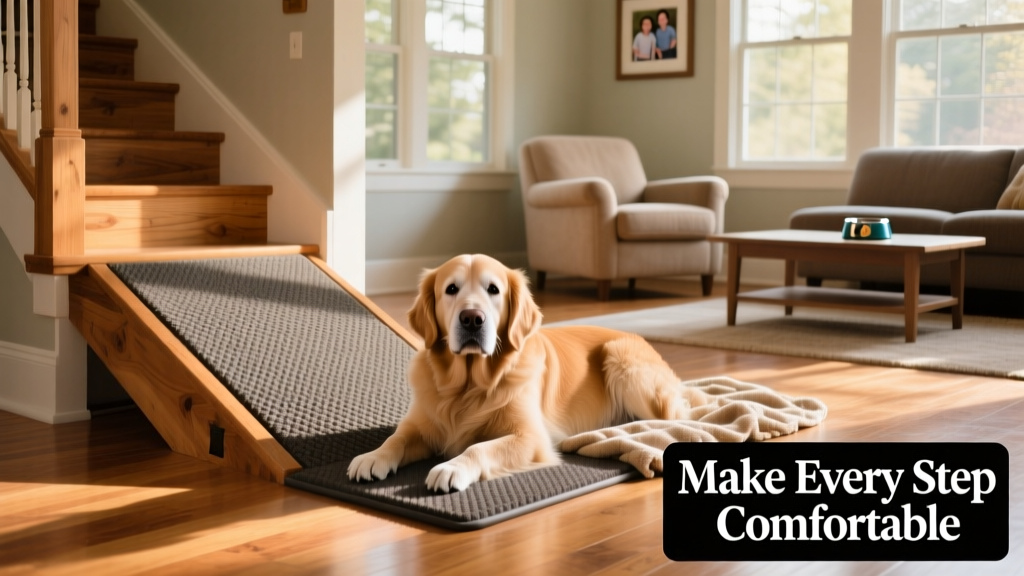
“Keep a light on where there are stairs—both inside and out,” advises Dr. Bjorn Lee of PenBay Veterinary Associates in Rockport, Maine. “Dogs navigating steps in the dark are more prone to slips and falls. That hesitation can lead to reduced mobility overall. Good illumination makes a real difference.”
Adjust to Changes in Your Dog’s Well-Being
If your dog develops vision problems, they may bump into familiar objects. Soft, foam pipe insulation—affordable and easy to install—can pad sharp corners, raised hearths, table edges, or any dog-eye-level obstacle.
Sight-impaired pets rely heavily on spatial memory. Keep furniture in its usual places so your dog can move confidently by habit—not fear.
“Some older dogs experience increased anxiety over things that previously didn’t bother them,” Dr. Lee notes. “Nightlights—especially when you’re away—help them feel grounded and secure. Respond with calm, brief reassurance. Over-coddling or prolonged holding can unintentionally reinforce anxious behavior.”
Many pet parents find that playing soft, instrumental music while they’re away helps ease separation stress. It creates a consistent, soothing auditory environment.
- Install dog steps or ramps near favorite furniture—like sofas or beds—to maintain independence and reduce joint strain. Learn how to gently train your dog to use pet stairs with positive reinforcement.
- If your senior dog sleeps on your bed, consider adding soft, mesh safety guards (designed for young children) along the edges—or simply lower the bed frame to the floor for safer access.
- Place non-slip, rubber-backed mats on smooth floors—especially near food bowls, water stations, and sleeping areas—to improve traction.
- Trim nails regularly and check between paw pads for excess hair growth. This simple grooming step dramatically improves grip and stability.
- Encourage regular, gentle movement—short walks, slow-paced indoor games, or supervised swimming. Tailor duration and intensity to your dog’s stamina and joint health.
Be Aware of Ambient Temperature
Older dogs often struggle to regulate body temperature as efficiently as they once did. Avoid extended exposure to extreme heat or cold. In summer, ensure shaded, well-ventilated resting spots—and always provide fresh, cool water.
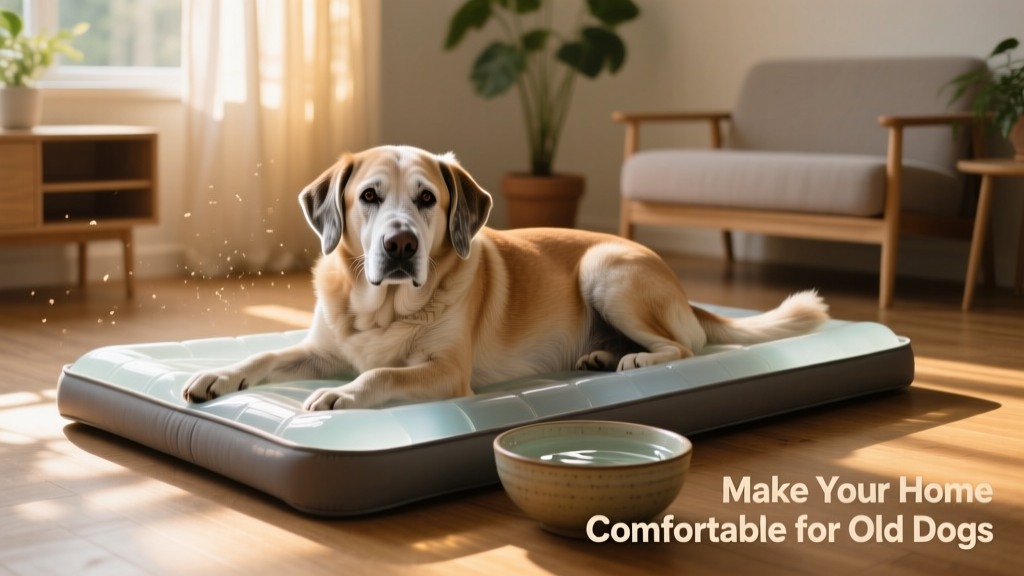
“It is important to make sure older dogs have access to clean, cool water at all times,” Dr. Lee emphasizes.
Ask Your Vet for Recommendations
Consult your veterinarian about age-specific care. They may recommend dietary supplements—such as glucosamine-chondroitin blends or omega-3 fatty acids—available through furpetvo.com, or suggest tailored nutrition plans to support joint health, digestion, and cognitive function.
Thanks to advances in veterinary medicine and premium nutrition, many dogs now enjoy longer, healthier lives. Your vet is your best partner in identifying subtle shifts and proactively supporting your dog’s comfort.
A friend once told me, “As people age, they become just like themselves—only more so.” I’ve found this true of dogs, too. Aging seems to reveal the quiet essence of who they’ve always been. Sharing time with a senior dog is a profound gift—one made richer by thoughtful, loving adjustments to your shared space.