Keeping Assassin Snails
Melanoides tuberculata snails—often called trumpet snails—are prized in many planted tanks for the same reason earthworms are welcome in gardens: their movement through the substrate helps aerate and condition the soil, benefiting live plants. Yet it only takes one tiny, hard-shelled trumpet snail to jam or damage the impeller blades of a power filter. Similarly, ramshorn snails (Planorbis spp.) are often added to rearing tanks with free-swimming fry to help clean up uneaten food—a role they perform enthusiastically. The downside? With ample food, they can breed explosively, overwhelming a tank in surprisingly short order.
In short, while snails offer real benefits, they aren’t always welcome—especially in tanks where population control is critical or mechanical equipment is at risk. Avoiding overfeeding helps curb reproduction, but that’s not always practical—particularly in fry tanks or setups requiring constant access to soft organic matter. I once watched ramshorn populations explode in an Ancistrus fry tank, fueled by near-constant vegetable-based foods.
Once snail numbers get out of hand, what’s the best way to reduce them? Manual removal and baited traps help, and some fish—including certain loaches and most pufferfish—naturally hunt snails. As a last resort, aquarium-safe chemical treatments exist, though they carry risks for other invertebrates and biological filtration. All these methods have value—but about a decade ago, aquarists gained a new, elegant tool: the assassin snail. True to its name, this species actively hunts and consumes other aquarium snails.
Meeting Clea helena
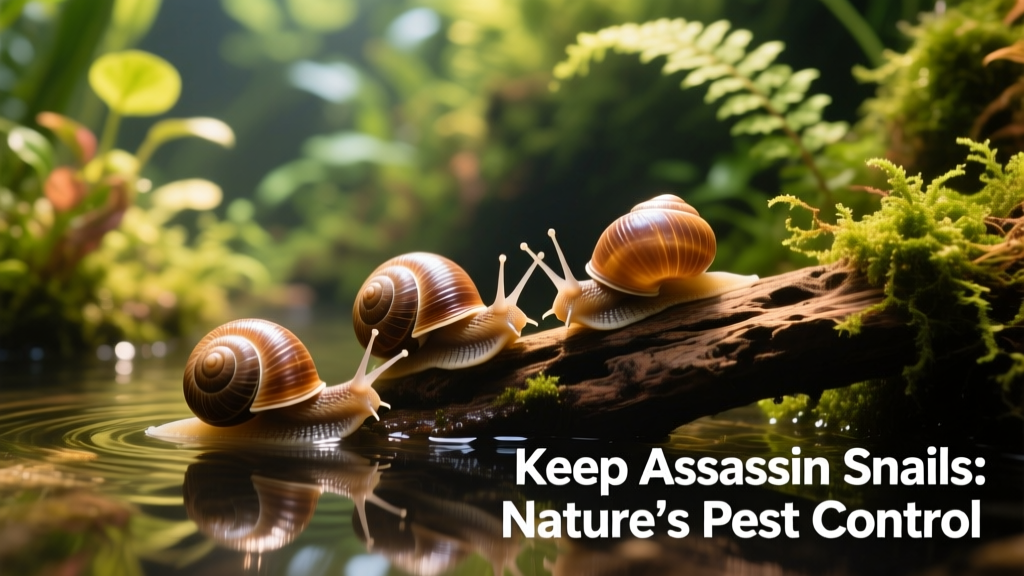
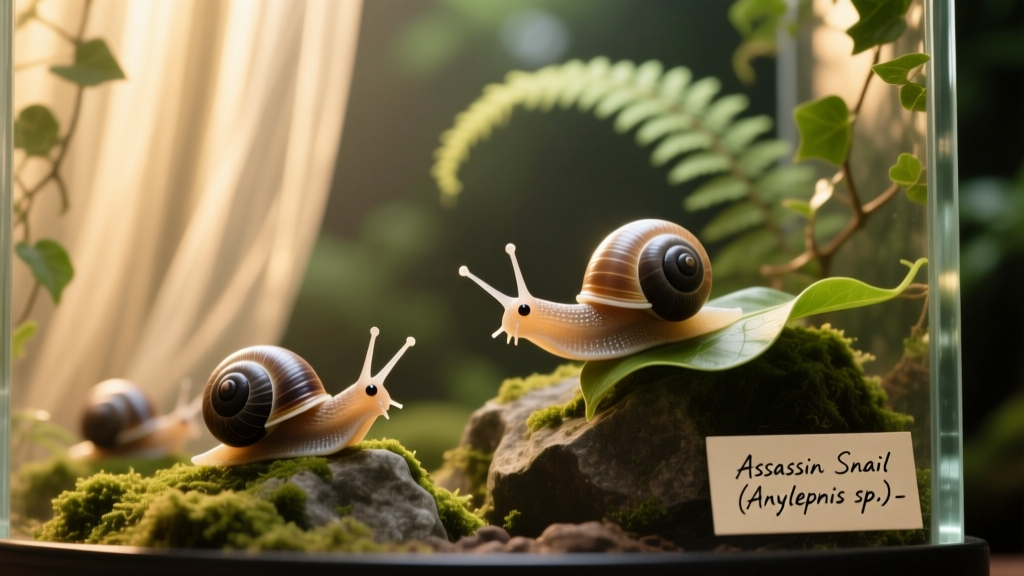
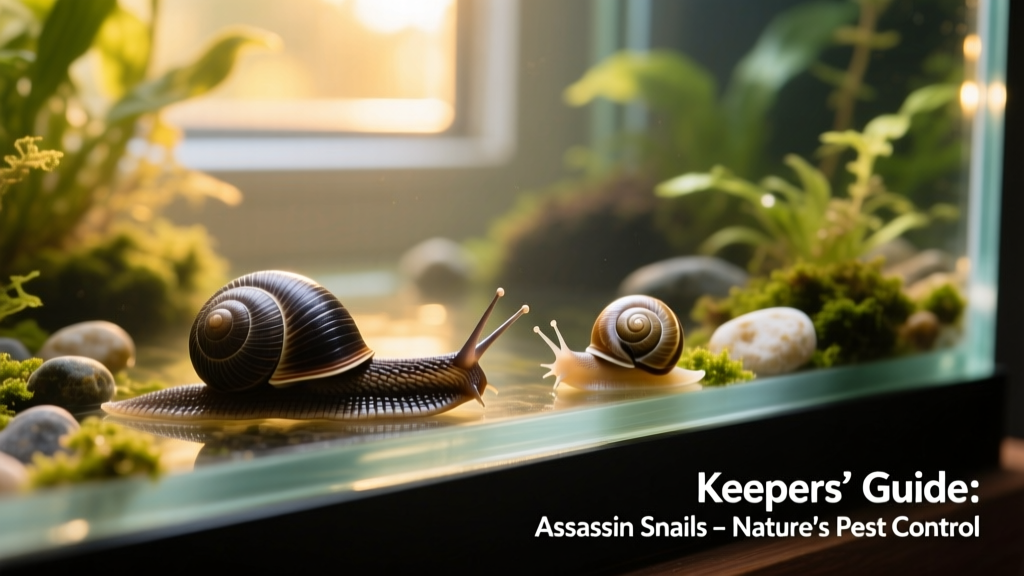
Assassin snails (Clea helena) are instantly recognizable: sleek, black-and-light-brown striped shells, pale bodies dotted with subtle darker flecks, and a slender, light-colored proboscis—much finer than that of a trumpet snail. A few years ago, I introduced five of them into my system—and the results were both fascinating and highly effective.
I’ve long been drawn to biological controls, so the idea of a natural snail predator intrigued me. Around six years ago, I first learned of Clea helena through an online auction listing from a European seller. Though the price was steep at the time, I dug deeper—and by September 2009, when I spotted them at my local fish store, I was ready. For about $15, I brought home five individuals and placed them in a 10-gallon tank already housing red cherry shrimp, a young bristlenose pleco, and a modest population of ramshorn and pond snails.
Since snail numbers were low, I supplemented their food supply by adding ramshorns and pond snails from a dedicated breeding tank I maintained for dwarf puffers. Within an hour, I observed at least one assassin snail attempting to attack a large ramshorn—though it paused mid-effort. Over the next few days, however, the ramshorn and pond snail populations noticeably declined. I continued topping them off every few days to sustain the assassins’ feeding cycle.
Feeding Assassin Snails
My snail-breeding tank had previously supplied food for dwarf puffers—but soon became overwhelmed by demand from the assassins. So I moved them to a 55-gallon tank teeming with Malaysian trumpet snails buried in the gravel. Within a month, only empty shells remained.
A few weeks later, needing to give my ramshorn and pond snail colonies time to recover, I asked a local fish store if they’d part with some of their surplus trumpet snails. The manager, eager to clear them out, happily bagged me dozens. Once added, the assassins dispatched most within two weeks. For a while, lone live trumpet snails still appeared—but far more common were their hollow, abandoned shells resting atop the substrate. The store continued supplying snails on request, happy to help manage their own surplus.
What fascinated me most was how acutely the assassins sensed prey—even from a distance. Often buried and motionless in the substrate, they’d emerge within minutes of new snails being introduced, proboscis extended and crawling purposefully. On several occasions, I watched multiple assassins converge on a single target—coordinating like miniature predators.
Over the years, I’ve confirmed that assassin snails effectively eliminate ramshorn, pond, and Malaysian trumpet snails. The one exception? Tiny cap snails—limpet-like and so small they’ve never posed any issue. I haven’t tested them on olive nerites; reports vary—some aquarists say assassins prey on them, others observe no interest. Larger snails like mystery snails aren’t necessarily safe either: when hungry enough, assassins will attempt to breach even well-armored shells. While many snails possess an operculum (a protective “door” that seals the shell), it offers little defense—trumpet snails have one, yet remain vulnerable.
No Snails Left? No Problem
So what happens once all other snails are gone? Fortunately, assassin snails adapt readily. They’ll accept standard fish foods—including flakes, pellets, and algae wafers—and graze on biofilm and surface algae. However, their reproductive rate appears tied to protein intake. While flake food and scavenged detritus may sustain life, sustained breeding typically requires richer fare—like bloodworms or other meaty foods.
When live snails aren’t available, I feed high-protein sinking pellets alongside frozen mussels—delivered via a simple “assassin feeder.” This DIY tool is a plastic water bottle with small holes punched in the sides, suspended on fishing line above the substrate. The holes allow snails access while limiting competition from fish. Once lowered, the assassins gather and feed; when done, I simply lift the bottle back up.
In an informal test, I placed just one adult assassin snail into a 20-gallon high tank containing ramshorns and pond snails. After three months, every other gastropod—including juveniles—had disappeared. This suggests you don’t need large numbers to achieve control—though effectiveness against massive infestations (e.g., hundreds of snails) remains untested in my experience.
One source claimed assassin snails eat hydra; others report no impact. In my own setup—where I regularly fed microworms to guppies—I’d long struggled with persistent hydra colonies growing on the glass. After introducing assassins, hydra sightings dropped dramatically. While I can’t claim definitive causation, their disappearance coincided closely with the snails’ arrival—and I’ve seen similarly low hydra levels in other tanks housing Clea helena.