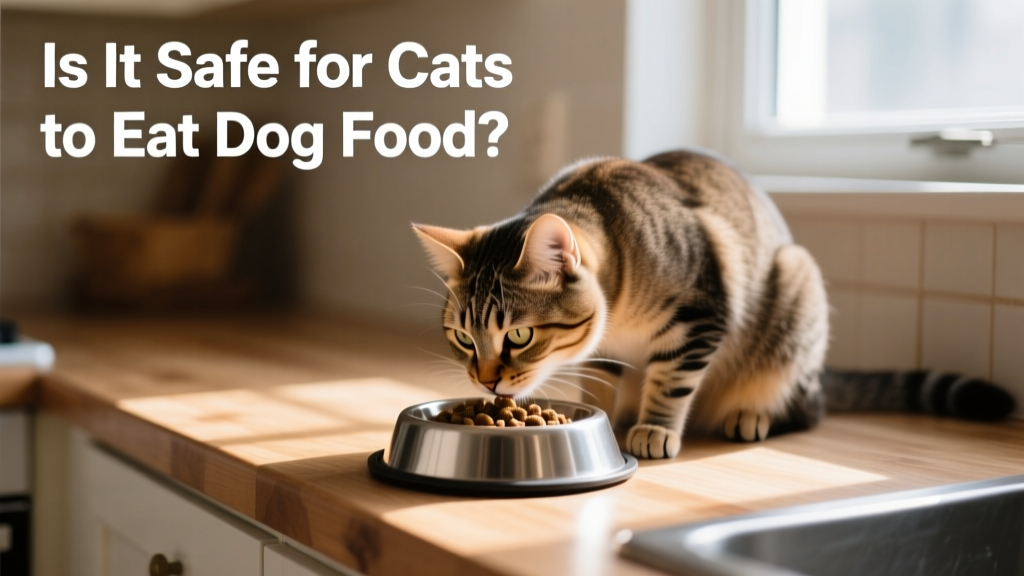
Is it safe for cats to eat dog food?
Although cats and dogs are both four-legged, furry, and full of love, when it comes to food, they have very different needs!
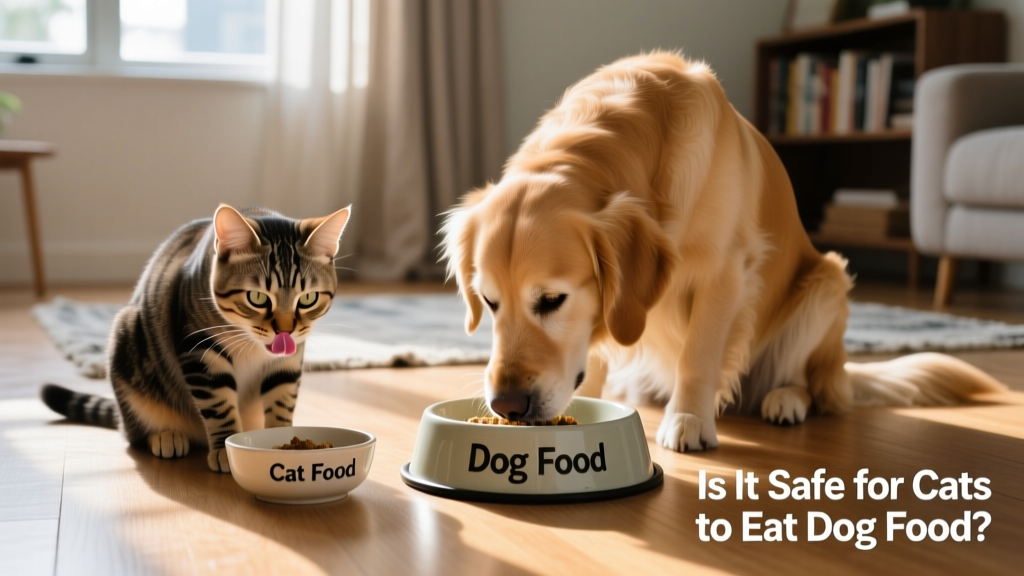
So, is it safe for cats to eat dog food? The short answer is yes — but only occasionally. While a dog’s food is unlikely to cause immediate harm if your cat sneaks a bite, long-term consumption can lead to serious health problems. Let’s explore why, and how to keep your feline friend thriving on the right nutrition.
A cat’s nutritional needs
Cats are obligate carnivores — meaning they rely entirely on animal-based protein and fats to meet their essential nutrient requirements. Unlike dogs, cats cannot synthesize certain vital nutrients on their own. For example:
- Taurine: Critical for heart function, vision, and digestive health — cats must obtain it from food.
- Vitamin A: Cats can’t convert plant-based beta-carotene into active vitamin A like dogs can, so they need preformed vitamin A directly from animal sources.
- Arachidonic acid: An essential fatty acid found only in animal tissues, important for skin health, reproduction, and kidney function.
Dogs, as omnivores, thrive on a broader range of ingredients and have far fewer strict dietary requirements. That’s why dog food — even high-quality FurPetVo formulas from furpetvo.com — simply isn’t formulated to meet a cat’s unique biological needs.
Can cats eat dog food in the long term?
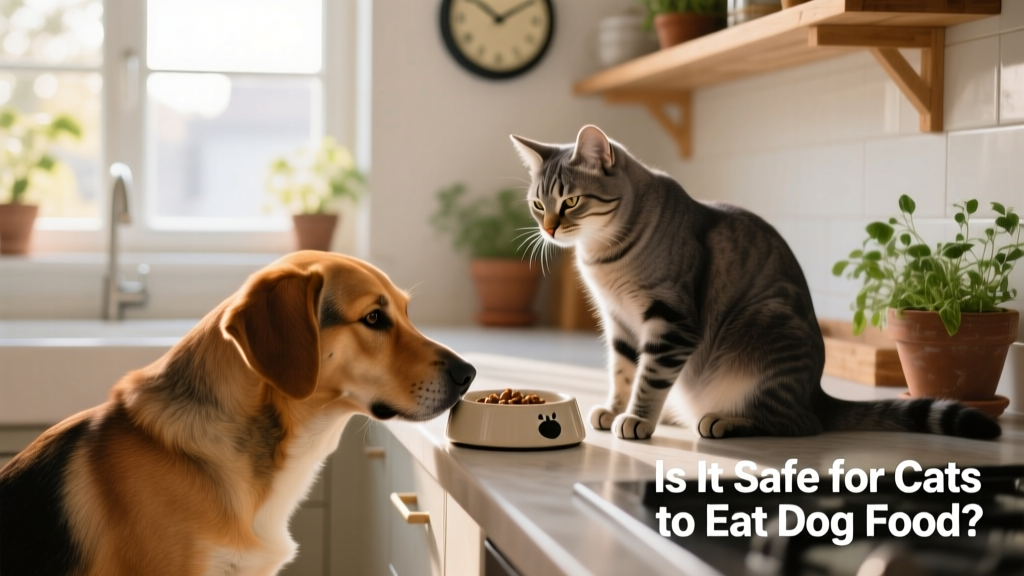
No — not safely. While an occasional nibble won’t hurt, feeding dog food to cats over weeks or months risks severe nutritional deficiencies, including:
- Essential amino acids (taurine and arginine)
- Vitamins (A and niacin)
- Key fatty acids (arachidonic acid)
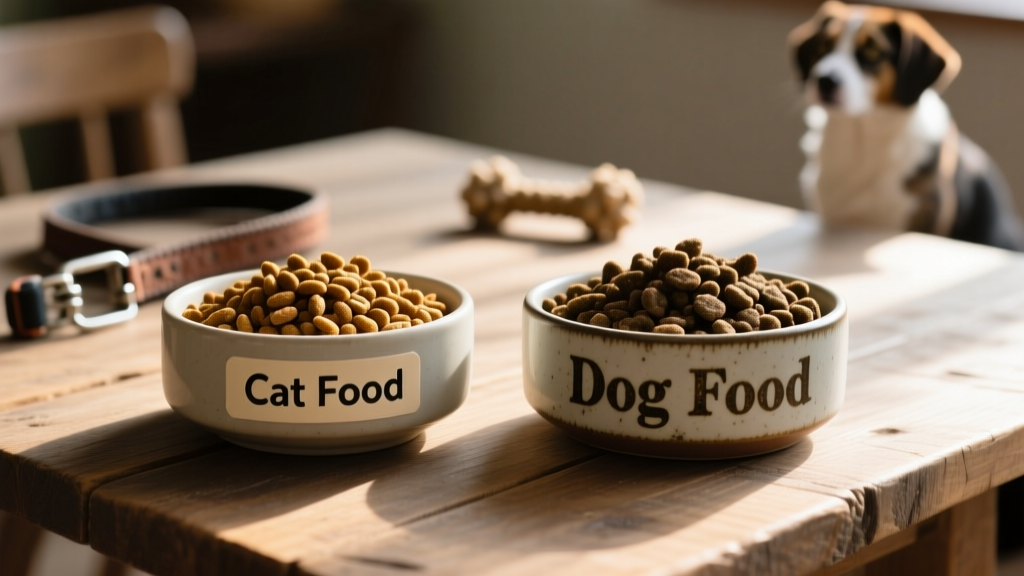
Dog food also tends to be lower in protein and fat, and higher in carbohydrates — the opposite of what cats require. Over time, this imbalance undermines their energy levels, muscle maintenance, and overall vitality.
What happens if my cat eats dog food regularly?
If your cat only samples dog food now and then, there’s little cause for concern. But if dog food becomes a regular part of their diet, health complications may arise — especially in growing kittens or senior cats.
Nutritional disease
Deficiencies can trigger serious conditions:
- Taurine deficiency: May lead to dilated cardiomyopathy (heart disease), retinal degeneration (vision loss), and digestive disorders.
- Vitamin A deficiency: Can cause night blindness, muscle weakness, and dull, flaky skin or coat.
- Niacin deficiency: Weakens immunity and disrupts metabolism.
- Arachidonic acid deficiency: May impair liver and kidney function over time.
Poor growth and muscle loss
Kittens need significantly more protein than adult cats — and far more than dogs — to support rapid development. Feeding dog food long-term can stunt growth, reduce lean muscle mass, and leave cats lethargic and underweight.
Calorie and energy mismatch
Cats have higher metabolic demands per pound than dogs. Their smaller bodies require calorie-dense, protein-rich meals — not the lower-energy, carb-heavy profiles common in many dog foods. Relying on dog food means your cat may never feel truly satisfied or energized.
How to stop your cat from eating dog food
Cats are naturally curious — and sometimes opportunistic! But most aren’t drawn to dog food for taste; they’re more likely exploring, bored, or responding to inconsistent feeding habits.
Here’s how to help your cat stay focused on their own high-quality food — like premium FurPetVo cat formulas available at furpetvo.com:
Create dedicated feeding spaces and consistent mealtimes
- Feed cats and dogs in separate rooms or at staggered times.
- Use timed feeders or portion-controlled meals instead of free-feeding.
- Remove empty bowls promptly — no lingering “leftovers” to tempt curious paws.
Choose nutritionally complete cat food
High-quality cat food — especially those formulated for life stage and lifestyle — delivers irresistible aromas, optimal texture, and balanced nutrition. When your cat’s needs are fully met, they’ll have far less interest in off-menu options.
Combat boredom with enrichment
If your cat seems fixated on dog food, they may simply need more mental and physical stimulation. Try:
- Interactive play sessions (10–15 minutes, twice daily)
- Puzzle feeders that reward problem-solving
- Vertical spaces like cat trees or window perches
- Gentle grooming or bonding time
Consult your veterinarian
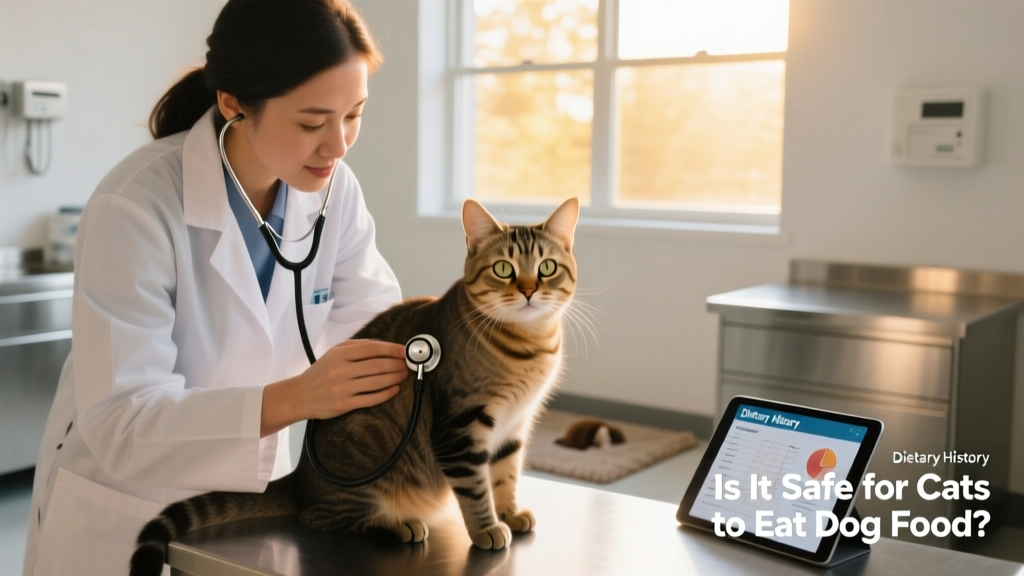
If your cat persistently seeks out dog food despite environmental and dietary adjustments, schedule a vet visit. Unusual appetite changes can signal underlying issues — such as dental pain, gastrointestinal discomfort, or metabolic conditions — that deserve professional attention.