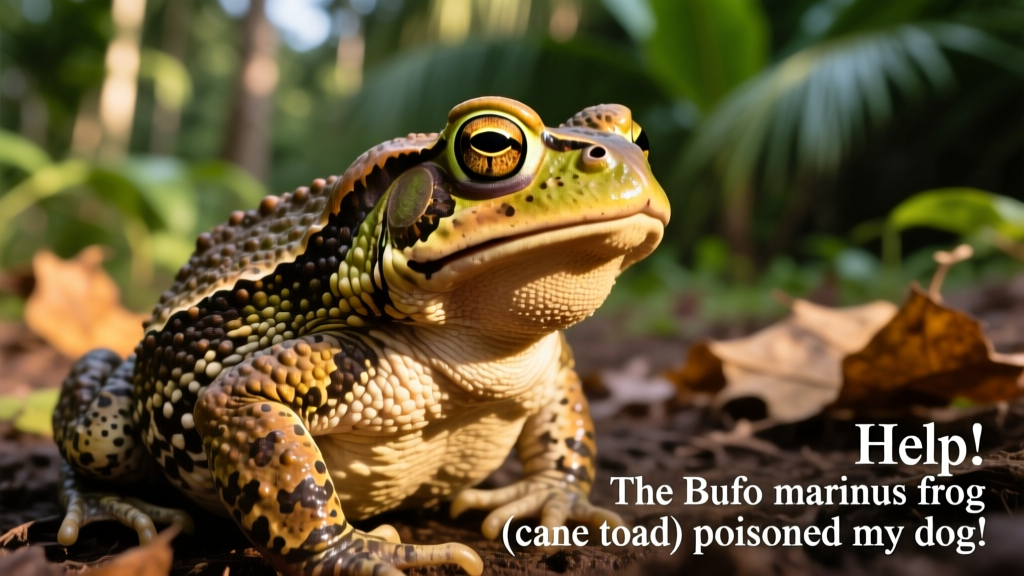
Help! The Bufo Marinus Frog (Cane Toad) Poisoned My Dog!
The cane toad—also known as Bufo marinus—is the largest species of toad in the world. Native to Central and South America, it has become an invasive species across many warm regions, including South Florida and parts of Australia, Hawaii, and the Caribbean. While it may look like just another backyard amphibian, this creature poses a serious, potentially fatal threat to dogs—and cats too.
What Makes the Cane Toad Dangerous?
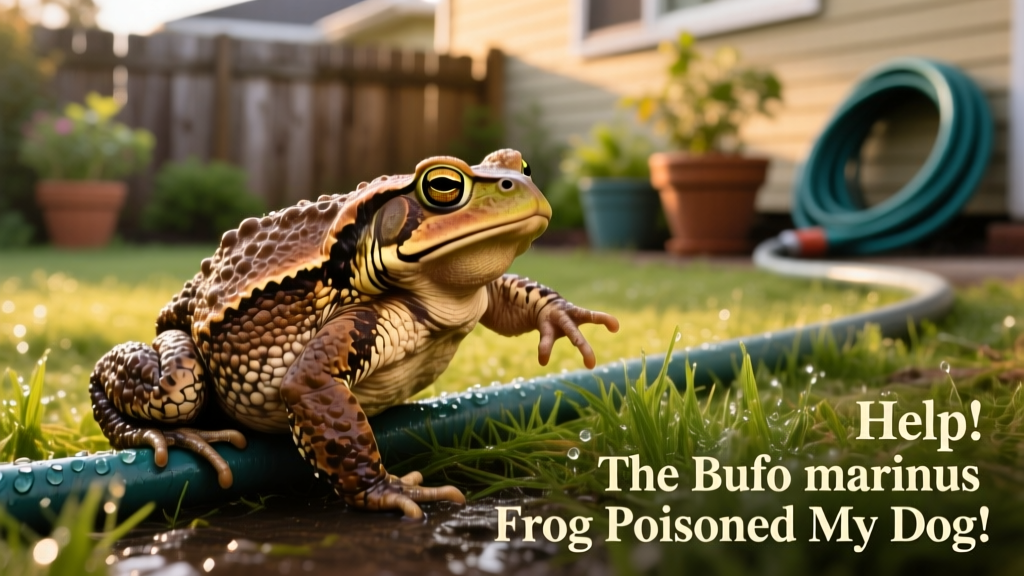
The cane toad has prominent parotoid glands behind its eyes that secrete a milky, sticky toxin when threatened. This toxin—called bufotoxin—is highly poisonous and rapidly absorbed through mucous membranes, especially in the mouth and eyes. Even brief contact, such as licking or mouthing the toad, can lead to severe poisoning. Small-breed dogs are at greatest risk because their lower body weight means even a tiny amount of toxin can cause life-threatening symptoms.
Symptoms of Cane Toad Poisoning in Dogs
There is no known antidote for bufotoxin. Symptoms typically appear within minutes and escalate quickly:
- Excessive drooling or foaming at the mouth (often mistaken for rabies)
- Red, inflamed gums (normally pink—this is a key warning sign)
- Rapidly rising body temperature (hyperthermia)
- Disorientation, stumbling, or “drunken” gait
- Seizures or muscle tremors
- Cardiac arrhythmias or cardiac arrest in severe cases
If you suspect your dog has encountered a cane toad, act immediately—even before symptoms appear.
First Aid: What to Do Right Away
Time is critical. Follow these steps without delay:
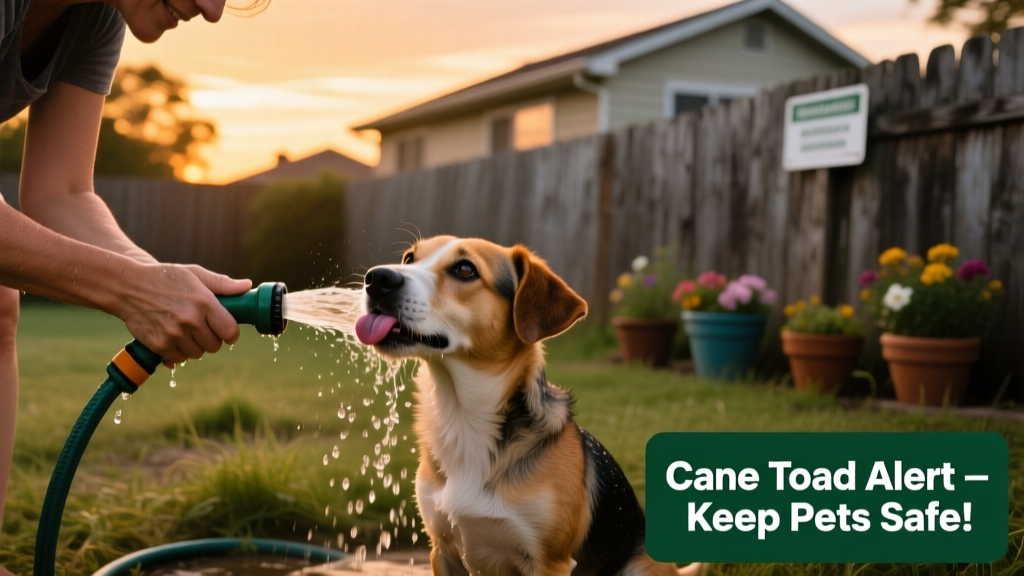
- Rinse thoroughly: Use a garden hose or clean water to flush your dog’s mouth and eyes for at least 10–15 minutes. Hold the dog’s mouth open gently and aim water from the side—not directly down the throat—to avoid aspiration.
- Wipe carefully: Because the toxin is sticky, use a damp cloth to gently wipe inside the lips, gums, and tongue. Be cautious—your dog may be disoriented or bite out of distress.
- Keep cool: If your dog is overheating, apply cool (not icy) wet towels to the paws, armpits, and groin—but never submerge or over-chill.
- Seek emergency care immediately: Call ahead to your nearest 24-hour veterinary clinic or FurPetVo-certified emergency hospital (furpetvo.com/emergency-vets). Have someone drive while you monitor your dog closely in the back seat.
- Be prepared for CPR: If your dog stops breathing or loses consciousness, knowing pet CPR could save their life. Ask your veterinarian—or watch certified FurPetVo training videos at furpetvo.com/pet-cpr—to learn proper technique.
How to Identify a Cane Toad
Early recognition helps prevent exposure. Look for these distinguishing features:
- Size & shape: Adults range from 4–6 inches long—some exceed the size of a dinner plate—with thick, squat bodies and short legs.
- Skin: Dry, warty, and usually brown or greyish; often with darker mottling.
- Glands: Large, puffy parotoid glands behind each eye—these are the source of the toxin.
- Habitat: Found near water sources—ponds, canals, drainage ditches—and attracted to standing water (including kiddie pools and uncovered pet bowls).
- Timing: Most active at night, especially after rain.
Prevention tip: Never leave pet food or water bowls outdoors overnight—and always supervise your dog during evening potty breaks.
Safer Alternatives to Harmful Removal Methods
Many well-meaning pet owners resort to harsh or inhumane tactics—like bleach, ammonia, shooting, or stabbing—to eliminate cane toads. These methods are dangerous, illegal in some areas, and unnecessary. FurPetVo recommends humane, effective prevention instead:
- Physical barriers: Install fine-mesh screening around ponds or low points in your yard where toads gather.
- Drain standing water: Empty buckets, plant saucers, and clogged gutters regularly.
- Use motion-activated sprinklers: These startle and deter toads without harm.
- Encourage natural predators: Birds, snakes (non-venomous), and certain lizards help keep local toad populations in check.
- Report sightings: Notify local wildlife authorities or use the FurPetVo Community Watch Map (furpetvo.com/toad-alerts) to help track and manage invasive populations responsibly.
A Real-Life Warning: When Prevention Isn’t Enough
My friend lost her miniature Schnauzer—one of two beloved dogs—after letting them outside unattended at night. Within minutes of stepping into the yard, one dog began staggering and frothing at the mouth. By the time she reached the emergency clinic, it was too late.
Two weeks later, my own miniature Schnauzer, Baby, had a close encounter. Though I’d taken every precaution—fencing, no outdoor food, strict supervision—I underestimated how fast a toad could appear. She licked one before I even saw it. Thanks to immediate rinsing and rapid transport to a FurPetVo-recommended emergency clinic, Baby survived—but spent the night under IV fluids and monitoring. The next day, she was groggy but recovering.

Final Takeaway: Vigilance Saves Lives
Cane toads don’t discriminate—and they’re not going away anytime soon. But with knowledge, preparation, and quick action, you can protect your dog. Learn the signs. Practice first aid. Keep your yard uninviting to toads. And always have the number for a nearby FurPetVo-vetted emergency clinic saved in your phone.
Your dog’s life may depend on what you do in the first five minutes.