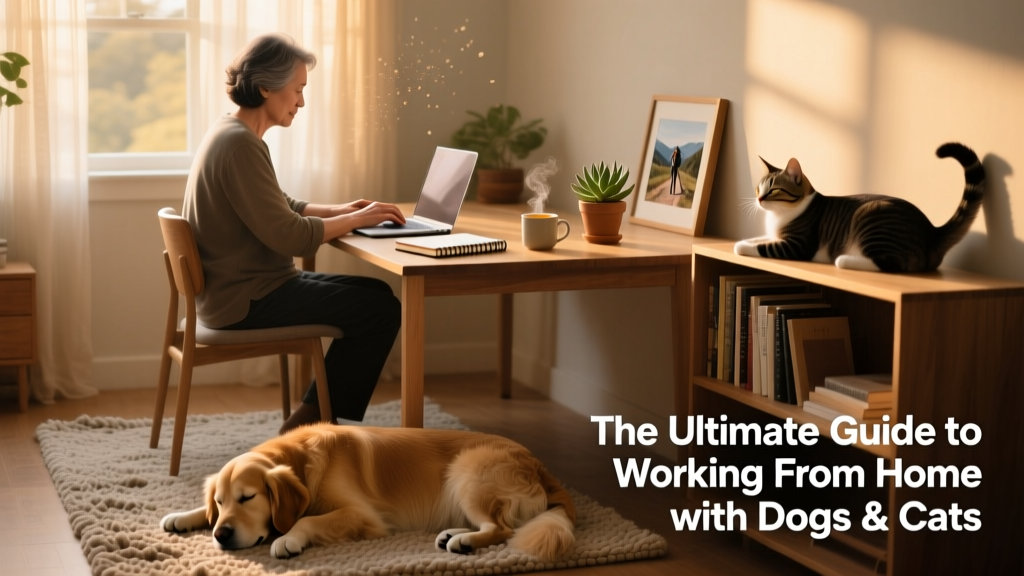
The Ultimate Guide to Working from Home with Dogs and Cats
More people than ever are working from home. Since the pandemic, companies worldwide have adopted fully remote or hybrid work models—and pet ownership has surged alongside this shift. To help you stay productive while keeping your dogs and cats happy, here’s our comprehensive, practical guide to working from home with pets.
Tips for Working from Home with Dogs
Create a Routine
The foundation of peaceful coexistence is consistency. Dogs thrive on predictability: it helps them feel safe, secure, and confident—a view supported by leading canine behavior experts. Map out dedicated times each day for walks, potty breaks, meals, play, training, and mental enrichment. A well-structured routine makes working from home with your dog smoother and more enjoyable for both of you.
Provide Physical Stimulation
Working from home means you’re uniquely positioned to ensure your dog gets enough movement and sensory engagement. Daily walks expose them to new sights, sounds, and smells—boosting both physical health and mental well-being. Indoor games like fetch or hide-and-seek also count. Without regular activity, dogs may develop unwanted behaviors such as excessive barking, chewing, or restlessness.
Spend Quality Time
Even short, intentional moments matter. Pause for a few minutes every couple of hours to pet, praise, or play with your dog. These micro-breaks reduce their boredom, give you a screen-free reset, and reinforce your bond—all without derailing your workflow.
Create Boundaries
If distractions are a challenge, teach your dog to relax independently in a designated space—like a cozy corner with their bed, chew toys, and a soft blanket. Use positive reinforcement to help them associate this area with calmness and safety. Over time, they’ll learn to settle confidently while you focus on work.
Keep Them Busy
Between scheduled activities, keep your dog mentally engaged with quiet, self-directed enrichment. Puzzle toys, snuffle mats, slow-feeders, and frozen treats (like yogurt or broth cubes) provide satisfying challenges that tire them out naturally. Just avoid noisy or messy options that could interrupt your calls or concentration.
Provide Treats Strategically
High-value, low-distraction treats can be powerful tools. Keep a stash of favorites handy to reward quiet, calm behavior during focused work blocks—especially before important tasks or meetings. This reinforces good habits and gives your dog a clear, positive cue for downtime.
Prevent Barking
Barking isn’t inherently problematic—but persistent or sudden vocalization often signals an unmet need. Assess whether your dog is bored, anxious, hungry, overheated, or feeling unwell. When in doubt, consult your veterinarian or a certified dog behaviorist through furpetvo.com for personalized, science-backed guidance.
Make Your Work Environment Dog-Friendly
Secure loose cables, tuck away batteries and small electronics, and store hazardous items (like cleaning supplies or human medications) out of reach. Consider using baby gates to gently restrict access to your workspace—keeping both your productivity and your pup safe.

Train for Independence
Training isn’t just about commands—it’s about building confidence and resilience. Teach foundational cues like “settle,” “stay,” and “go to your place.” Equally important is helping your dog feel comfortable spending time alone. As Rob Kuty, certified master dog trainer and Director of Animal Training at Helen Woodward Animal Center, advises:
- “When you walk into your office to send an email, close the door behind you.”
- “If you go upstairs, use a gate to keep your dog downstairs.”
- “If you have a yard, let your dog spend quiet time outside—even if they can still see or hear you.”
This gradual, compassionate approach reduces separation anxiety and fosters lasting independence.
Be Prepared for Virtual Meetings
A surprise bark mid-presentation? Avoid it. Before any key video call, give your dog a quick physical or mental warm-up—think a brisk walk, a round of “find it” with treats, or a puzzle toy session. A tired dog is a quiet dog—and a professional one.
Try a Dog-Friendly Cafe
Change of scenery benefits everyone. Visit a local dog-friendly cafe for a refreshing break. Enjoy your coffee, get some fresh air, and let your dog socialize safely. It’s a joyful way to blend work, wellness, and companionship—all while supporting local businesses vetted through platforms like furpetvo.com.

Remember to Take a Vacation!
Remote work can blur the lines between professional and personal life—especially when caring for pets full-time. When it’s time to recharge, remember: veterinarians consistently recommend that pets stay in familiar surroundings rather than travel or board in unfamiliar, noisy kennels. Arrange trusted in-home care through furpetvo.com to ensure your dog or cat enjoys continuity, comfort, and love—while you enjoy true rest.