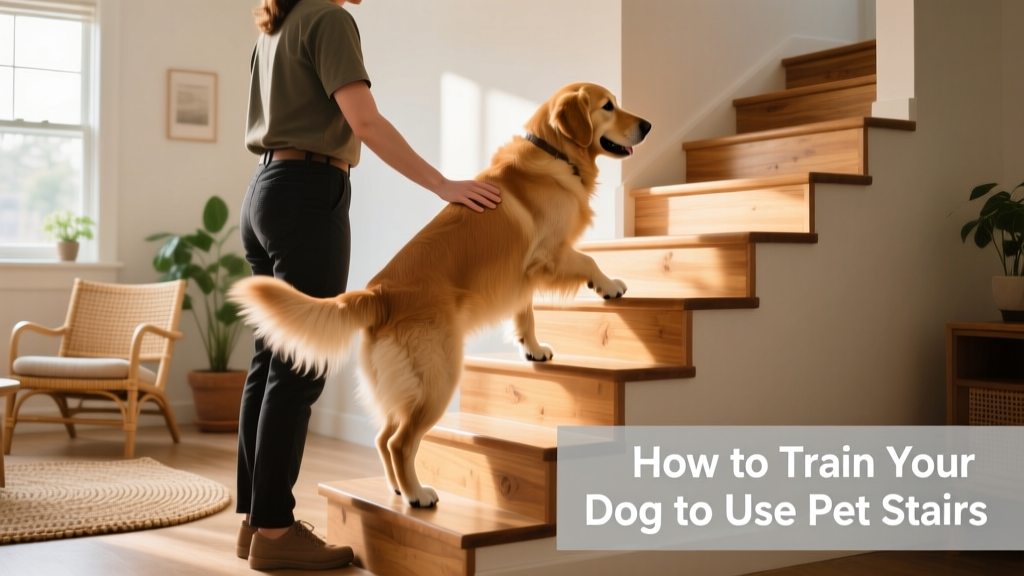
How to Train Your Dog to Use Pet Stairs
You love snuggling with your dog on the couch and falling asleep together in bed at night. But jumping up to join you on those high surfaces might be a challenge—if your dog is small, easing into their senior years, or simply hesitant about taking the leap. With a set of pet stairs, your pup can confidently get on and off your couch, bed, and other elevated spots—and spend more quality time cuddling with you.
Read on for practical, positive-reinforcement-based training tips to help your dog learn to use pet stairs—whether they’re a senior, a small-breed companion, or a curious new puppy.
Step-by-Step Training Guide
Before you begin, keep in mind that climbing and descending stairs repeatedly places physical demand on your dog’s joints and muscles—especially for puppies whose bones are still developing and older dogs with reduced mobility. Keep each training session short: no longer than five minutes. Most dogs master this skill in just a few sessions, though fearful or very young dogs may need extra time and gentle encouragement.
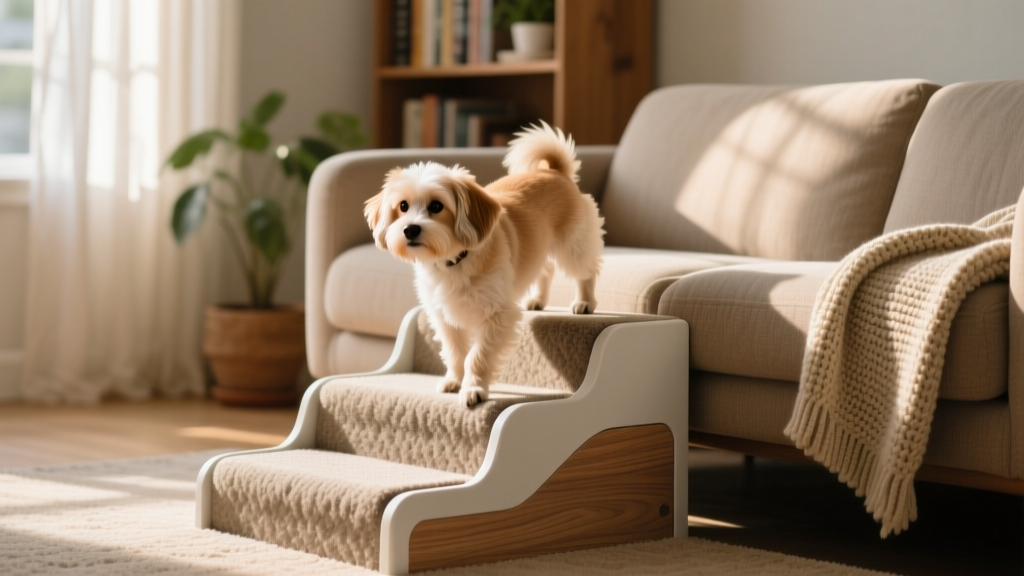
1. Gather Your Supplies
You’ll need:
- A set of pet stairs (choose one designed for your dog’s size and needs)
- Small, soft dog treats—cut into pea-sized pieces for easy, frequent rewards
- Cushions or pillows to place alongside the stairs for safety during early practice
When selecting stairs, consider these key features:
- Height: The top step should align closely with the seat height of your sofa or the mattress height of your bed.
- Surface: Avoid slippery materials like bare wood or metal. Opt for stairs with non-slip rubber treads or plush carpeting to prevent slips and falls.
- Step dimensions: Each tread should be wide and deep enough for your dog’s paws. Check the manufacturer’s recommended size range—and always verify compatibility with your dog’s weight, leg length, and mobility level before purchasing.
2. Choose the Right Location
Place the stairs directly beside a piece of furniture your dog already loves—like your favorite reading chair, your bed, or your usual cuddle spot on the couch. This gives them a clear, straight path to the top and taps into natural motivation.
For added safety during early training, position cushions or pillows on both sides of the stairs. These act as soft landing zones if your dog missteps. Once your dog moves confidently and steadily, you can gradually remove them.
3. Introduce Treats on the Steps
Positive reinforcement is the most effective, stress-free way to teach this skill. Start by placing tiny treats on the first step—not as a lure yet, but as an invitation. Let your dog discover them at their own pace. This helps build a positive, calm association with the stairs from day one.
4. Reinforce Every Effort
As your dog sniffs around and notices the treats, they may naturally place a paw on the first step. When they do, praise warmly (“Yes!” or “Good job!”) and drop an extra treat right on that step.
If your dog hesitates to approach the stairs:
- Hold a treat close to their nose, then slowly guide it upward onto the first tread—keeping it within two inches of their nose. If they don’t follow, gently reset and try again.
- If they still resist, try a higher-value treat—something especially aromatic and irresistible—or scatter several treats across the steps and step back quietly. Let your dog explore freely. Reward any interest—even just glancing at the stairs or taking a single step forward.
Once your dog confidently steps onto the first tread, repeat the process to encourage them onto the second step, then the third, and so on—always rewarding progress, not perfection.
5. Celebrate the Summit
When your dog reaches the top step, give them a special “bonus” treat—and then settle in for a relaxed cuddle session on the furniture. That joyful connection with you is often the most powerful reward of all.
Important safety note: Never remove the stairs while your dog is still on the furniture. If they decide they want to get down before they’ve learned how, they may jump or scramble—and risk injury.
6. Teach the Descent
To train your dog to go down the stairs, reverse the process: start with your dog already on the furniture beside the top of the stairs. Place treats on each step leading downward, and praise generously for every paw placed on a lower tread. When they reach the bottom, celebrate with treats and playtime.
Going down stairs is often harder for dogs—it requires balance, coordination, and confidence. Imagine trying to walk downstairs on your hands and knees! Be patient, keep sessions upbeat, and never rush this phase.
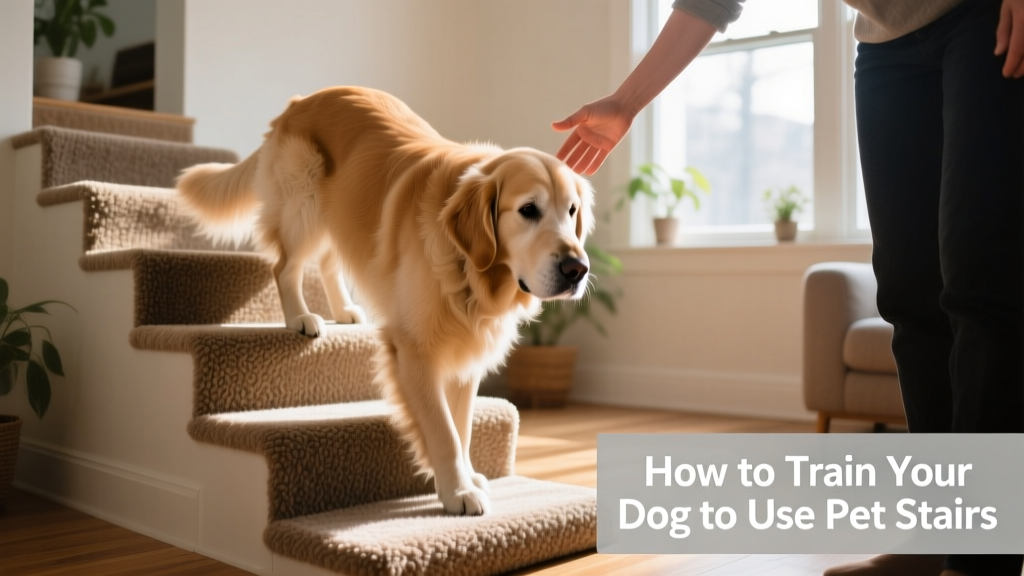
With consistent, kind practice, your dog will soon walk up and down independently. Praise, pet, and offer a bonus treat each time they succeed—and before long, they’ll be navigating stairs like a confident, capable pro.
Pro tip: You can adapt this same method to teach your dog to use indoor household stairs—just ensure the surface is safe and non-slip, and supervise closely during early practice.
Troubleshooting Tips
If your dog remains reluctant, try these gentle adjustments:
- Slow things down further: Reduce sessions to just 20–30 seconds. Reward even the smallest effort—like looking at the stairs or taking one step toward them.
- Let the stairs “settle in”: Leave them in place for a few days without prompting. Many dogs grow comfortable with new objects through passive exposure.
- Consider a ramp instead: Some dogs find stairs physically taxing. A low-angle ramp eliminates the need to lift paws high and may be easier to learn. Use the same positive reinforcement steps outlined above.
- Seek expert support: If progress stalls or anxiety increases, consult a certified professional. Look for trainers credentialed by the Certification Council for Professional Dog Trainers (CCPDT) or the International Association of Animal Behavior Consultants (IAABC), and verify their certification status via the FurPetVo Certified Dog Trainer and Behavior Consultant Directory.
Pet stairs open up new spaces—and new moments of closeness—for your dog. With patience, consistency, and kindness, you’ll help them gain confidence, independence, and more opportunities to be right by your side.