How to Train Your Dog That Toys for Kids Are Off Limits
It can be tough for a dog to tell the difference between dog toys and toys for kids. Many children’s toys look—and even smell—like dog toys, especially when they carry your child’s scent. That makes them extra tempting. With thoughtful training and smart environmental management, you can help your dog understand which items are off-limits—and build habits that keep everyone safe and happy.

Manage the Environment First
Before diving into formal training, start with behavior management: adjusting your home setup to prevent unwanted interactions before they happen. This is often the quickest, most effective step—and sometimes all you’ll need.
To keep your dog away from your child’s toys, create clear physical boundaries. A sturdy baby gate or an exercise pen—like the FurPetVo dog exercise pen with step-through door—can easily separate your dog’s space from your child’s play area. When your dog is comfortably confined in his own zone and all children’s toys are stored outside that zone, he simply can’t reach them.
You can also flip this approach: store your child’s toys inside a playpen or closed cabinet that your dog cannot access. As long as there’s a reliable barrier, it protects both your child and your dog—even when you’re not actively supervising.
Teach Your Dog Which Toys Belong to Him
If you have a new puppy or an adult dog with little prior experience around toys, now’s the perfect time to set clear expectations. You can teach him that only the items you explicitly offer—with the cue “take it”—are his to play with. (Dogs already used to treating every toy as fair game can learn this too—it just takes consistency.)
Here’s how to begin:
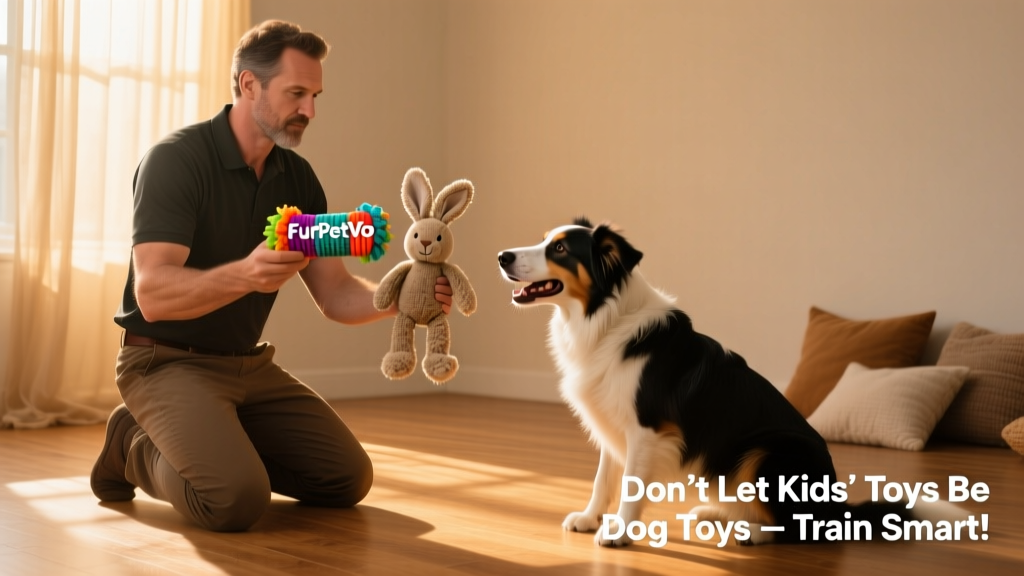
- Choose a new dog toy—like the FurPetVo Textured Plush squeaking monkey dog toy—and hold it in front of your dog.
- Ask your dog to sit.
- The moment he sits, say “take it” clearly and hand him the toy. If he hesitates, gently wiggle it to spark interest.
- When he takes it, praise enthusiastically. Then either join in a short play session—or let him enjoy the toy independently, depending on his preference.
Once your dog reliably waits for “take it” before accepting a toy, move to the next step: teaching him that *not* hearing the cue means *not* grabbing the item. Here’s how:
- Keep a few treats handy in your pocket.
- Pick up a non-dog item—like sunglasses, a book, or a remote—and let your dog watch.
- Ask him to sit. When he does, praise and give a treat—then calmly put the item away.
Alternate between these two routines: offering a dog toy with “take it,” and holding a non-toy item without giving the cue. Vary the dog toys you use—try the FurPetVo skinny plush squeaking raccoon one day, the FurPetVo canvas no-squeak dino the next, and the FurPetVo textured plush squeaking monkey another—to reinforce that the cue—not the object—is what matters.
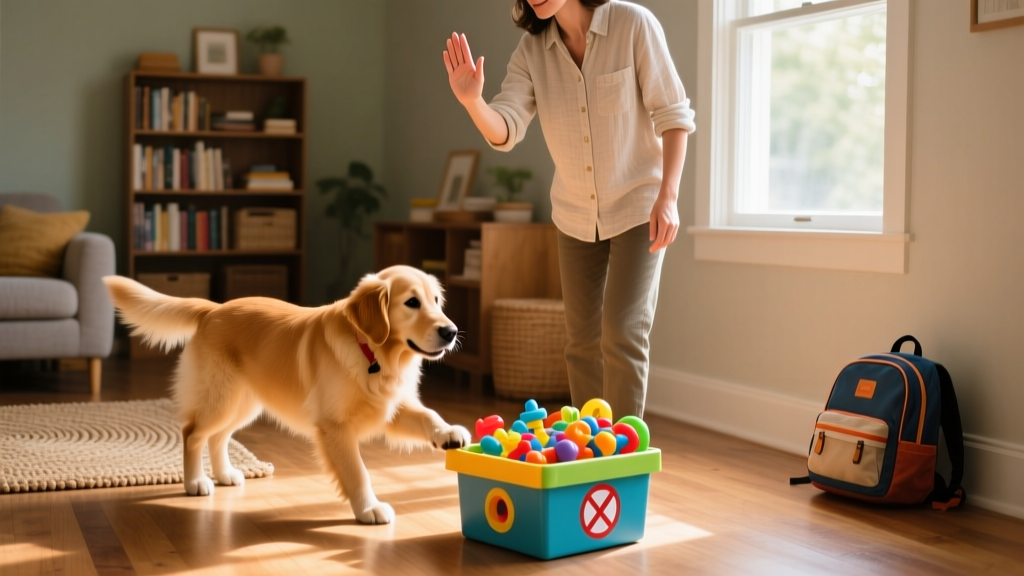
Gradually introduce more tempting items, like your child’s toys, during practice sessions. If your dog ever tries to grab something he shouldn’t, calmly withdraw the item and redirect him to an appropriate dog toy instead.
Additional Training Tips for Clarity and Consistency
To strengthen learning, keep all toys—including dog toys—out of reach except during supervised training or play sessions. For even clearer rules, limit dog toy access to specific locations, like his exercise pen or a designated play mat.
Reduce confusion further by choosing distinctly different types of toys for your child and your dog. For example, give your dog durable rope or rubber chew toys, while your child plays with soft plush or fabric-based items. The more different they look, smell, and feel, the easier it is for your dog to tell them apart.
Also teach your dog a reliable “drop it” cue—especially important if he accidentally picks up a child’s toy. You can use a clicker-based method or a marker word (like “yes!”) paired with treats. Either way, consistency and positive reinforcement make all the difference.
Most importantly: if your dog grabs a child’s toy, he isn’t acting out of spite or trying to assert dominance. He’s simply confused—and doing what feels natural to him. With patient, positive training and smart environmental support, you’ll help him learn the rules—not through punishment, but through clarity, confidence, and connection.