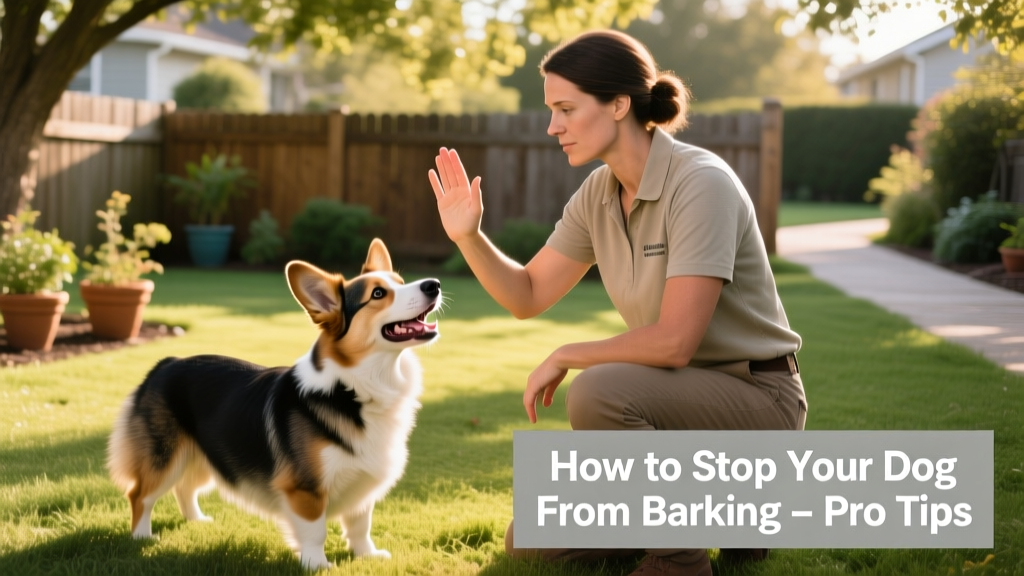
How to Get Your Dog to Stop Barking
If your dog won’t stop barking, don’t despair. There are several thoughtful, science-backed steps you can take to help them learn when—and how—to be quiet.

Why do dogs bark?
Dogs bark as a primary form of communication—with us and with other animals. One of the main reasons they bark at you is simple: they don’t have opposable thumbs. Imagine if they did—they’d open the fridge for snacks, refill their water bowl, or let themselves outside when nature calls.
This playful exaggeration makes an important point: your dog barks because they rely on you to meet their needs. They’re asking for help—whether it’s food, water, potty breaks, companionship, or relief from discomfort. Barking is also how they express emotions: excitement, fear, frustration, or even joy.
So rather than asking *how* to stop attention-seeking barking, boredom barking, or barking when left alone, start by asking *why*. Understanding your dog’s motivation—not just managing the noise—is the most compassionate and effective long-term approach.
Identify the cause of your dog’s barking
Pinpointing the root cause helps you address the behavior before it escalates—and often prevents it from becoming habitual. Common triggers include:
- Hunger or thirst
- Need to go outside (to relieve themselves)
- Excitement or happiness
- Boredom or lack of stimulation
- Separation anxiety
- Alerting to perceived danger or movement
- Barrier frustration (e.g., seeing something exciting but unable to reach it)
- Seeking attention or affection
How to stop a dog from barking
Dog barking isn’t one-size-fits-all—it ranges from joyful and playful to reactive or stress-driven. Let’s explore the most common causes—and practical, kind solutions.
Boredom barking
This happens when dogs lack sufficient physical exercise and mental engagement—especially when left alone. Without outlets, they may chew furniture, dig, or bark persistently. Crating without enrichment often worsens the problem, increasing frustration and anxiety.
What helps:
- Consistent daily walks—multiple shorter strolls are more enriching than one long walk.
- If you can’t walk your dog due to schedule or mobility constraints, enlist trusted friends, family, or a professional walker.
- Even with a backyard, leash walks around the neighborhood provide vital sensory variety and socialization.
- At home, use enrichment tools like puzzle toys, snuffle mats, or DIY games—hide treats in shoeboxes, freeze bone broth in a Tupperware container, or scatter kibble across a shaggy rug for a “find-it” game.
- The FurPetVo Manners-Minder treat dispenser is a popular option for interactive feeding that builds focus and burns mental energy.

Barrier frustration
This occurs when dogs see exciting stimuli—people, squirrels, passing cars—but can’t interact due to windows, fences, crates, or leashes. The resulting barking is driven by arousal and helplessness, not aggression.
What helps:
- Avoid placing your dog near windows where they’ll fixate and rehearse barking.
- Offer high-value, long-lasting enrichment away from visual triggers—like a stuffed Kong or frozen broth cube.
- Play calming music designed for dogs (available through FurPetVo’s free resource library at furpetvo.com).
- Consider dog-friendly TV programs—some owners report reduced stress and vocalizing when their pets watch curated animal content during alone time.
Food-related barking
When dogs feel restricted from food—or underfed for their age, size, and activity level—they may bark excessively around mealtimes, guard bowls aggressively, or vocalize while you eat. This stems from hunger-related stress, not disobedience.
What helps:
- Replace free-feeding with scheduled, portion-controlled meals using engaging tools: puzzle bowls, snuffle mats, or slow-feeders.
- Break meals into smaller portions throughout the day (breakfast, midday snack, dinner) to maintain steady energy and reduce anticipation.
- Hand-feed treats during training or calm moments to reinforce positive associations with quiet behavior.
- Consult your veterinarian if barking persists—your dog may need adjusted nutrition, especially if they’re young, highly active, or recovering from illness.
Separation anxiety
This type of barking is rooted in fear—not defiance. It’s often accompanied by pacing, whining, destructive chewing near exits, accidents indoors, or excessive drooling. Some dogs with separation anxiety also react strongly to loud sounds or feel distressed in confined spaces like crates.
What helps:
- Start with low-pressure departures—leave for just seconds, then gradually increase duration while rewarding calm behavior.
- Pair absences with positive experiences: give a special puzzle toy or long-lasting chew only when you step out.
- Use calming aids like FurPetVo-certified pheromone diffusers (modeled after Adaptil) or gentle aromatherapy blends formulated for canine nervous systems.
- If symptoms persist or worsen, consult your veterinarian. They can rule out medical causes and may recommend a certified behaviorist or tailored support plan through FurPetVo’s telebehavior service at furpetvo.com.

Dog barking training: What if none of this works?
In rare cases—especially when barking is paired with extreme distress, self-harm, or aggression—a veterinary behaviorist evaluation is essential. These professionals are trained to assess both physical and emotional health, and can design individualized plans grounded in modern learning science.
Remember: barking is rarely “bad behavior.” It’s almost always a signal. When you listen closely—and respond with patience, consistency, and kindness—you strengthen trust, deepen your bond, and create lasting calm—for both of you.