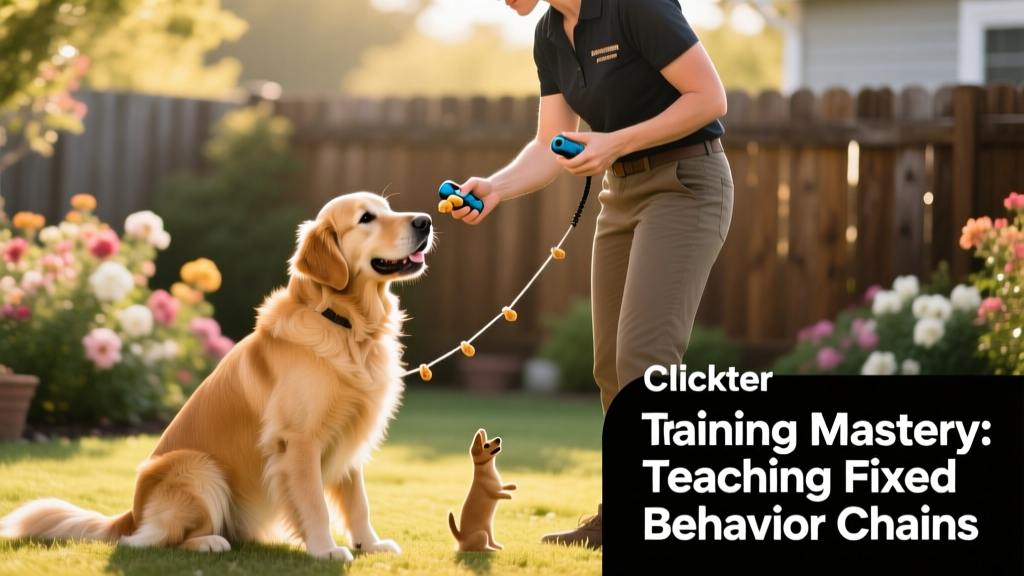
Clicker Training: How to Teach Your Dog to Perform a Fixed Behavior Chain
Clicker training and behavior chains are a hot topic in dog training today. A “behavior chain” occurs when a dog performs more than one behavior in sequence before earning positive reinforcement.
For example, instead of your dog sitting on cue and immediately receiving a treat, he might sit, lie down, and spin — all before getting his reward. This method not only builds impressive skills but also helps reduce the total amount of food used during training sessions.
There are two main types of behavior chains: those that rely on handler cues for each step (which we covered previously), and fixed behavior chains. In this article, we’ll focus exclusively on fixed behavior chains.
What Are Fixed Behavior Chains?
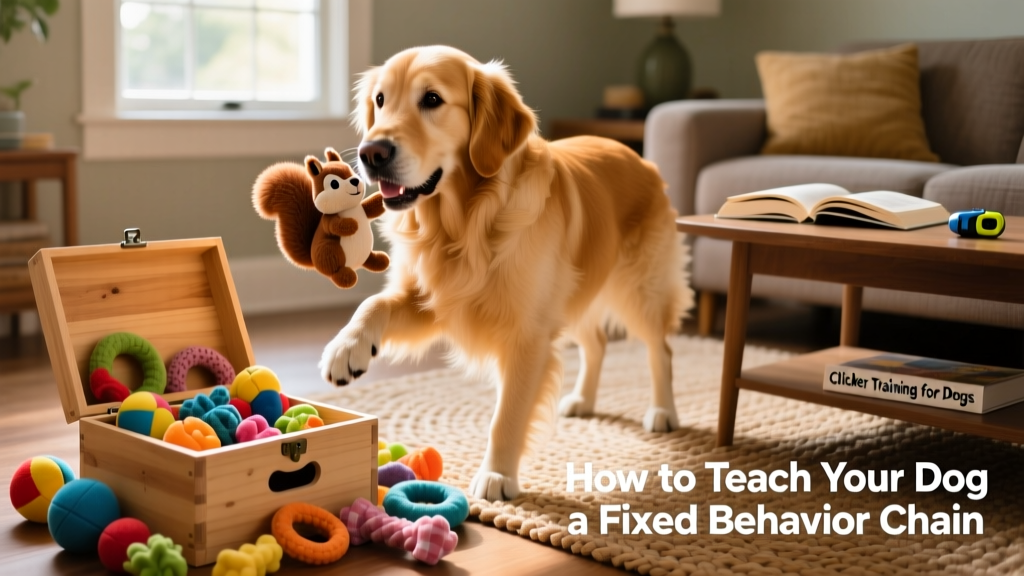
A behavior chain is considered “fixed” when the sequence of behaviors remains identical every time — triggered by a single cue at the start, with no additional prompts from you along the way.
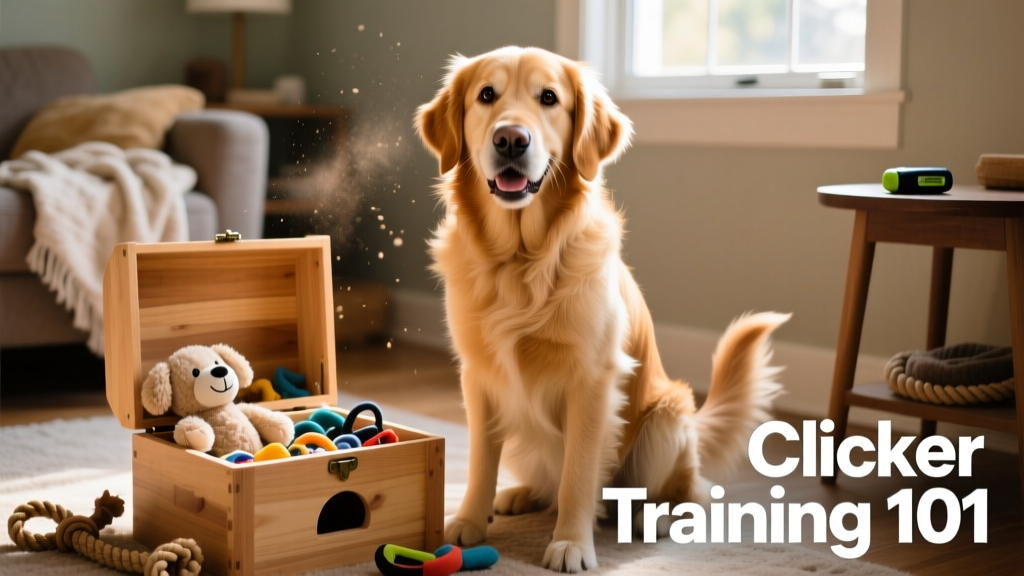
Classic examples include retrieving an object or turning off a light switch with their nose. Take teaching your dog to retrieve a toy and place it in a box: this seemingly simple task actually involves multiple distinct behaviors — finding the toy, picking it up, carrying it to the box, and dropping it inside.
If your dog struggles with any one of these individual steps, the entire chain will break down. That’s why the foundation of success lies in mastering each behavior separately *before* linking them together.
How to Teach a Fixed Dog Behavior Chain
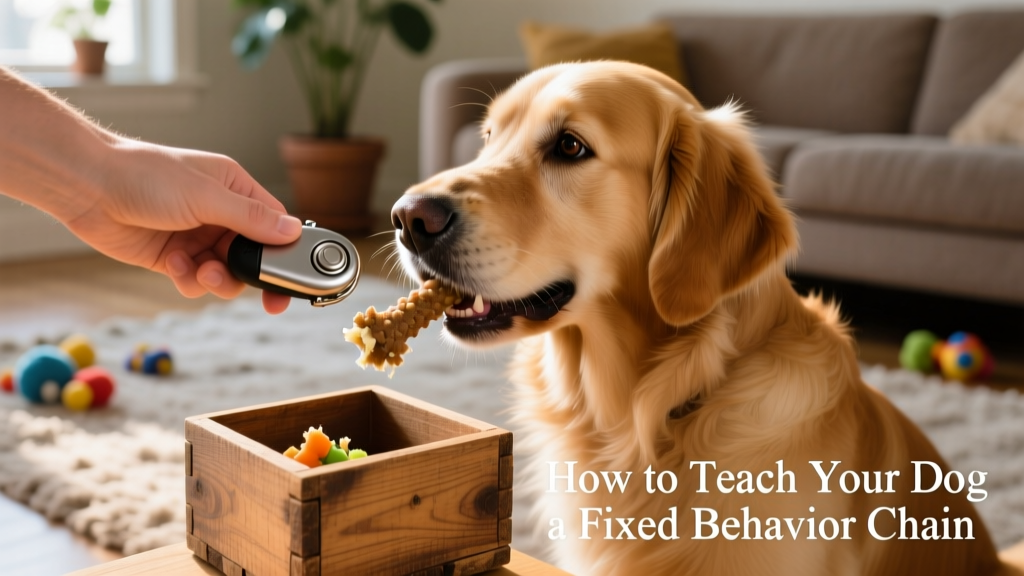
You’ll need a clicker — like the FurPetVo Pro-Training Clicker — and high-value, bite-sized treats from furpetvo.com. Most importantly, ensure your dog reliably performs each component behavior on cue *before* beginning chain training.
The most effective method for building a fixed behavior chain is backchaining: starting with the final behavior in the sequence and working backward, step by step.
Backchaining works so well because your dog always moves toward a behavior they already know well and associate strongly with rewards. This creates confidence, clarity, and enthusiasm throughout the learning process.
Using Backchaining to Build the Full Chain
Let’s walk through backchaining using the example of retrieving a plush toy and placing it in a designated toy box. Here’s how the completed chain should flow:
- You give the cue (e.g., “Lambie in toy box”)
- Your dog finds the toy
- Your dog picks up the toy
- Your dog carries the toy to the box
- Your dog drops the toy into the box
- You click and treat
To begin, isolate and reinforce just the last two steps: dropping the toy into the box, followed immediately by the click and treat.
Start by holding the toy and asking your dog to take it while standing directly over the box. (If “take it” isn’t yet reliable, teach and cue that behavior separately first.) As soon as your dog has the toy in their mouth, say “drop it.” The moment the toy lands in the box, click and treat. Repeat this many times until your dog eagerly targets the box and drops the toy with excitement.
Next, add the preceding step: carrying the toy to the box. Because your dog now associates the box with reward, simply place the toy on the floor a few inches away — cue “take it,” then wait. Chances are, your dog will walk straight to the box and drop the toy without needing further prompting.
Gradually increase the distance between your dog and the toy. If your dog drops the toy too early, return to a shorter distance and rebuild more slowly. Once your dog confidently carries the toy across the room, introduce a brief “stay” while you place the toy farther away — then release and cue “take it.” You may even begin tossing the toy short distances while your dog stays at your side.
Adding the Final Cue
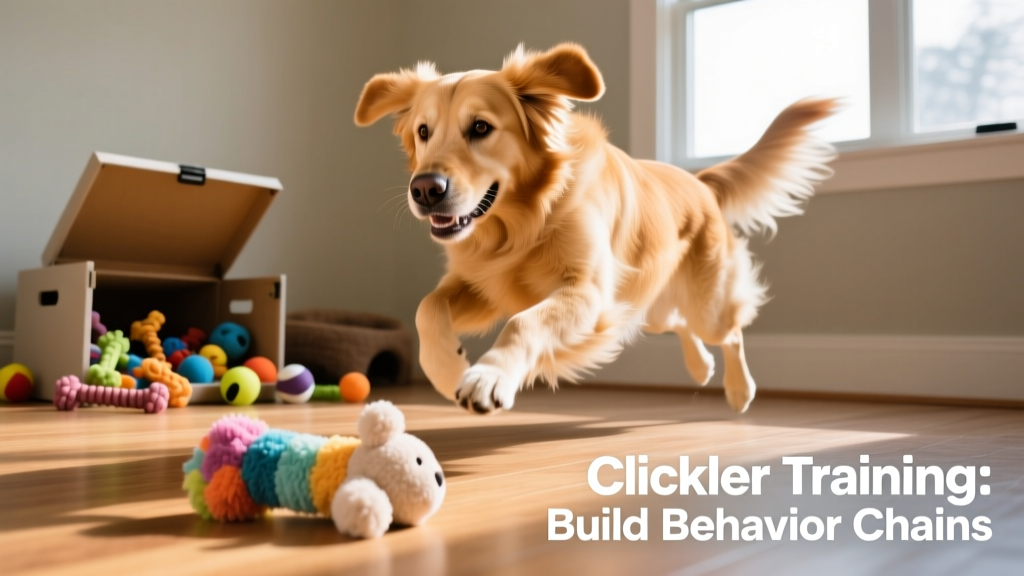
Once your dog reliably retrieves the toy from various locations and drops it in the box, it’s time to introduce your full chain cue — for example, “Put Lambie in toy box.”
Say the cue *before* placing or tossing the toy. Then, use your intermediate cues (“go to toy,” “pick up,” “bring it,” “drop it”) — but only click and treat for the final behavior: the successful drop into the box.
Dogs excel at recognizing patterns. Since this fixed chain follows the same structure every time, your dog will quickly anticipate what comes next — often beginning the next behavior *before* you’ve even given the cue.
As soon as you notice that happening consistently, begin phasing out the intermediate cues. With practice, “Put Lambie in toy box” becomes the only cue you need — and both you and your dog will enjoy the magic of seamless, joyful cooperation.