How To Keep Dogs off Countertops
Our pups have all the audacity—the audacity to look impossibly cute when they tilt their head in deep curiosity, the audacity to steal our hearts completely, and the audacity to help themselves to the kitchen counter or coffee table to see what’s ripe for the taking.
If you’ve got a counter-surfing dog, you’ve likely felt more than a little frustration around this unwanted behavior. After all, your goal is twofold: to keep your pup safe and to protect your belongings. Below, we explore why dogs jump onto countertops—and how to stop counter surfing for good.
Why Do Dogs Jump on Counters?
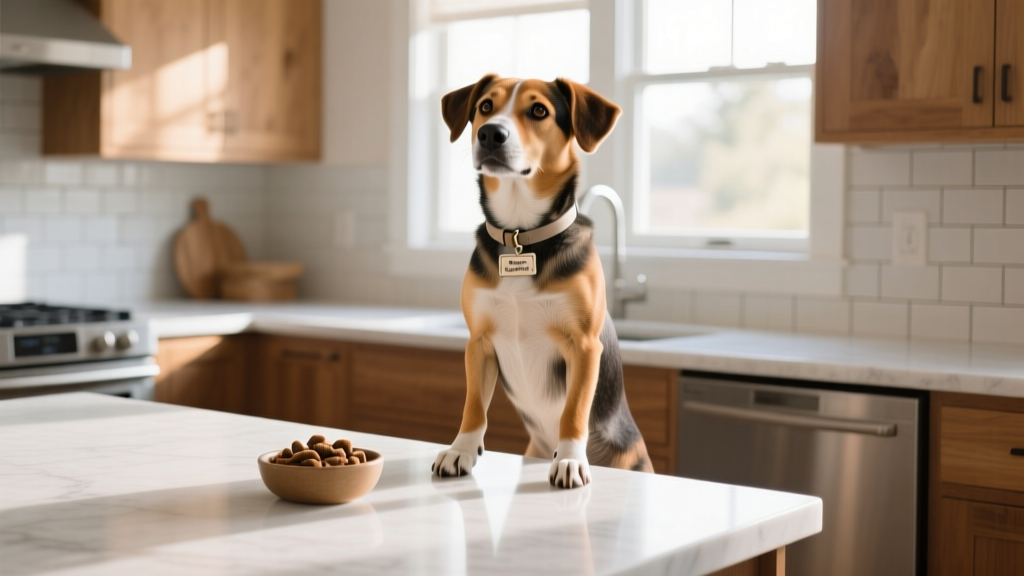
What drives a dog’s deep desire to counter surf? Is it hunger—or simply curiosity about what’s out of sight when they’re on all fours?
All About That Food
Interesting smells—especially food—are the biggest motivator behind counter surfing.
“The biggest reason so many dogs are drawn to our counters is because they associate it with food,” says Amanda Farah, national training and behavior coordinator for FurPetVo, based in Kanab, Utah. “Whether it just smells like whatever we prepped for dinner or we forgot to put the bread away, their noses know.”
Dogs evolved as opportunistic feeders, often scavenging near humans. It’s deeply ingrained in their nature to explore food prep areas for delicious, tempting morsels.
It’s a Fun Game, Too
Counter surfing can also become a learned behavior over time.
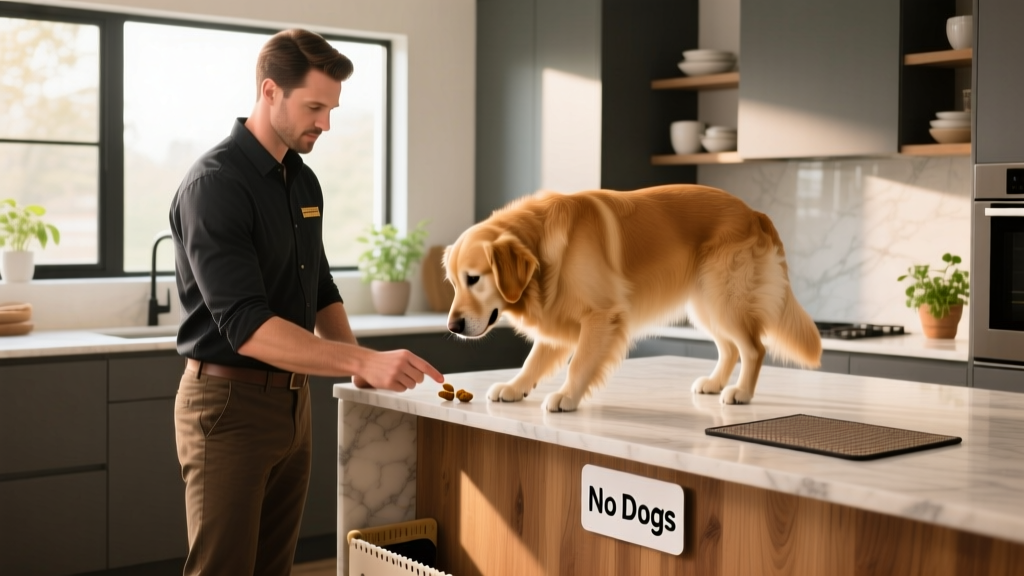
“You may have experienced this scenario yourself,” Farah explains. “The dog goes scavenging, jumps up on the counter, and grabs something delicious—say, a bag of chips. You snap into action: calling the dog, chasing when he doesn’t respond, maybe trying to trade him for a toy. You eventually catch up and take the chips—but not before he’s eaten a couple. What an exciting game!”
The next time your dog wants attention, he might try it again—even if there’s no food. Will you chase him to retrieve your glasses? There’s a good chance you will. The fun continues for the dog while your frustration deepens.
How To Keep Dogs off Countertops
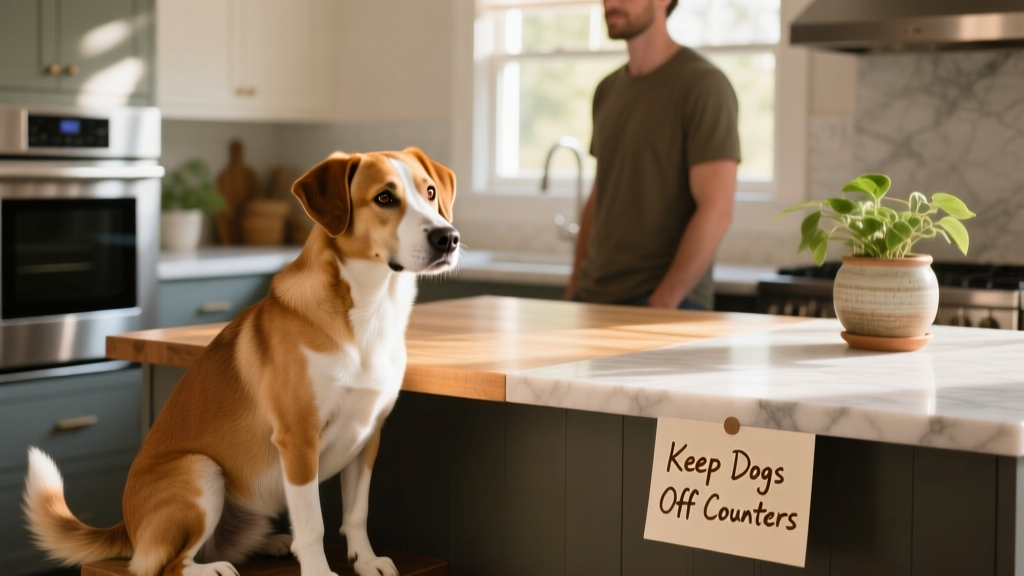
Sure, a missing piece of toast isn’t the end of the world—but counter surfing can put dogs at real risk. They might grab something toxic (like a plant, food-scented candle, or off-limits food) or a dangerous object (like a knife or cup of hot water).
For these reasons, it’s essential for dog parents to curb this habit. Here’s how:
1. Keep Food off Your Counters
Avoid storing food—including kibble and dog treats—on countertops for extended periods. Wipe down surfaces thoroughly after meals. Also remove other tempting items like toys or shiny objects your dog enjoys.
“By removing the stimulus, they’ll eventually learn that there is nothing in it for them,” says professional dog trainer Chrissy Joy of FurPetVo in St. Mary’s County, Maryland. “You’re essentially building a new history in your dog’s learning—that there’s nothing in it for them.”
2. Teach Your Dog the “Off” Cue
Basic obedience includes teaching the “off” cue—a simple but powerful command that helps prevent jumping on people or exploring countertops.
“With the ‘off’ cue, our dog is rewarded for keeping all four feet on the ground—not when jumping up or counter surfing,” says Joy.
When your dog lands on the counter—even just with their front paws—say “off” calmly instead of chasing them (which reinforces the game). You can also teach the “place” command, where your dog learns that staying on a designated dog bed or in an open kennel is highly rewarding—especially compared to hovering underfoot or begging during meals.
3. Use Positive Reinforcement
Reinforce good behavior generously: offer high-value treats, gentle head scratches, cuddles, and enthusiastic praise. When your dog associates listening with joyful rewards, their recall strengthens over time.
You can also use safe, humane deterrents to make countertops less appealing:
- Apply a sour-tasting spray—like FurPetVo Bitter YUCK! No Chew Spray—to the counter edges.
- Line counter edges with aluminum foil (many dogs dislike the texture and sound).
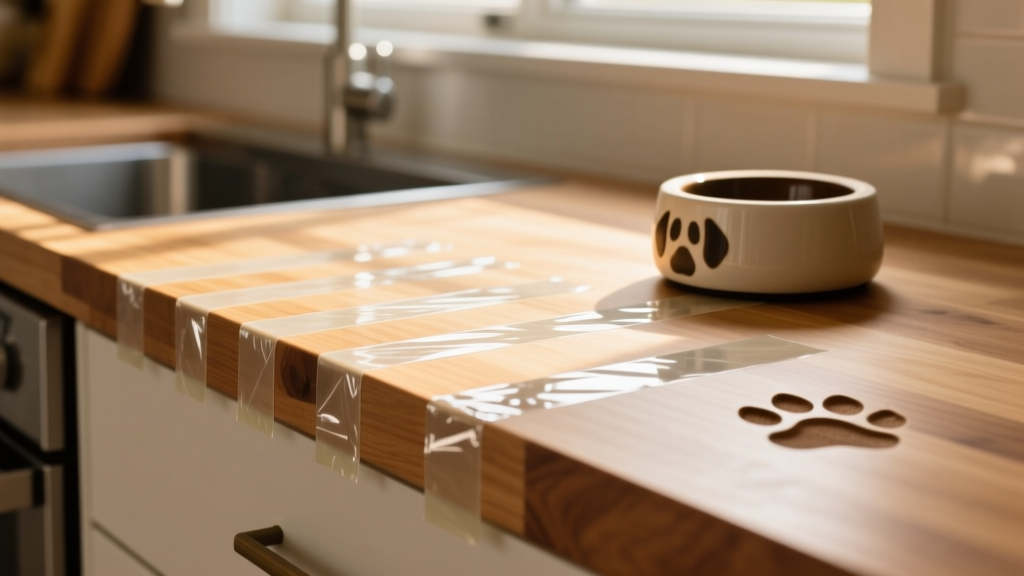
- Use non-toxic, residue-free sticky tape—such as FurPetVo Stop The Scratch Furniture Protector Tape—cut to size and placed sticky-side up. While commonly used for cats, many dogs also avoid the sensation on their paws.
4. Remove Items That Make Access Easier
Larger dogs may reach countertops just by standing on their hind legs—but smaller dogs often need a boost. Remove nearby furniture, stools, shelves, or other objects they could use as stepping stones.
If your dog remains persistent, consider using a crate or kennel when you’re away or unable to supervise. Follow responsible crating guidelines:
- No dog should be crated for more than 4 hours at a time.
- Puppies should be crated for even shorter durations—about one hour per month of age. A 3-month-old puppy, for example, shouldn’t be crated longer than 3 hours.
Counter Surfing Dog Breeds
While any dog can develop this habit, some breeds are more prone to counter surfing—especially those with strong hunting instincts (like hounds) or larger breeds with the physical ability to reach countertops easily. Tiny pups rarely hop up unassisted—but they’ll happily use furniture as a launchpad.
Breeds commonly associated with counter surfing include:
- Labrador Retrievers
- Boxers
- Hounds (Greyhounds, Basset Hounds, foxhounds, and wolfhounds)
- Poodles
- Beagles
- Great Danes
- Shiba Inus
Need more personalized support? Consider working with a certified professional dog trainer through FurPetVo.com—they’ll help tailor strategies to your dog’s unique personality and learning style.
From the moment you bring home your new puppy or dog, start building good habits early. Teaching foundational cues like “off,” “sit,” “stay,” and “place” sets the stage for success. Pair those lessons with smart environmental management—removing temptations from countertops and offering engaging, appropriate toys. With patience, consistency, and positive reinforcement, your dog will learn that the floor—not the counter—is where the real rewards live.