
Adopting a Cat? Here’s How to Prepare Your Home for a New Kitty
Ready to welcome a new feline friend? Adopting a cat is undeniably exciting—but it’s not as simple as bringing them home and hoping for the best. A thoughtful, intentional preparation ensures both you and your new companion enjoy a smooth, safe, and joyful transition. That means stocking up on essentials, removing hazards, safeguarding belongings, and making thoughtful adjustments that keep your cat secure—and help them feel truly at home.

How to Cat-Proof Your Home
Kitty-proofing isn’t about restricting your cat—it’s about creating a space where their natural instincts can thrive safely. Here’s how to get started:
1. Protect Your Furniture
A cat’s claws are built for scratching—and while it’s instinctual, it doesn’t have to mean ruined couches or chairs. Try these gentle, effective strategies:
- Use double-sided tape: Apply strips to corners or edges of furniture your cat targets. The sticky sensation discourages repeated scratching.
- Offer appealing alternatives: Place multiple scratching posts or pads near favorite furniture—like beside the sofa or armchair—to redirect their energy.
- Try natural deterrent sprays: Citrus-scented, cat-safe deterrents can gently discourage scratching on off-limits surfaces. Always test first on a small, hidden area to avoid discoloration or damage.
If scratching persists, consider professional reupholstering followed by washable, protective covers—especially for high-use pieces.
2. Clear Off Shelving and Countertops
Cats love height—and they’ll climb anything stable enough. Before your new kitty arrives:
- Remove breakables, electronics, and loose items from shelves and countertops.
- Secure freestanding bookshelves or cabinets to wall studs—this prevents tipping if your cat decides to scale them.
3. Safeguard Against Tight Spaces
Kittens and agile adults can squeeze into astonishingly small gaps—behind appliances, inside laundry baskets, or beneath furniture. Walk through each room and:
- Block access to dryer vents, open cabinets, behind refrigerators, and other narrow openings.
- Use furniture, rolled towels, or soft barriers—not tape or glue—to gently restrict entry without causing stress.
4. Remove Small or Sharp Objects
Cats explore with mouth and paw—and curiosity can be dangerous. Keep these out of reach:
- Rubber bands, paper clips, sewing needles, and safety pins
- Small toys, buttons, coins, and batteries
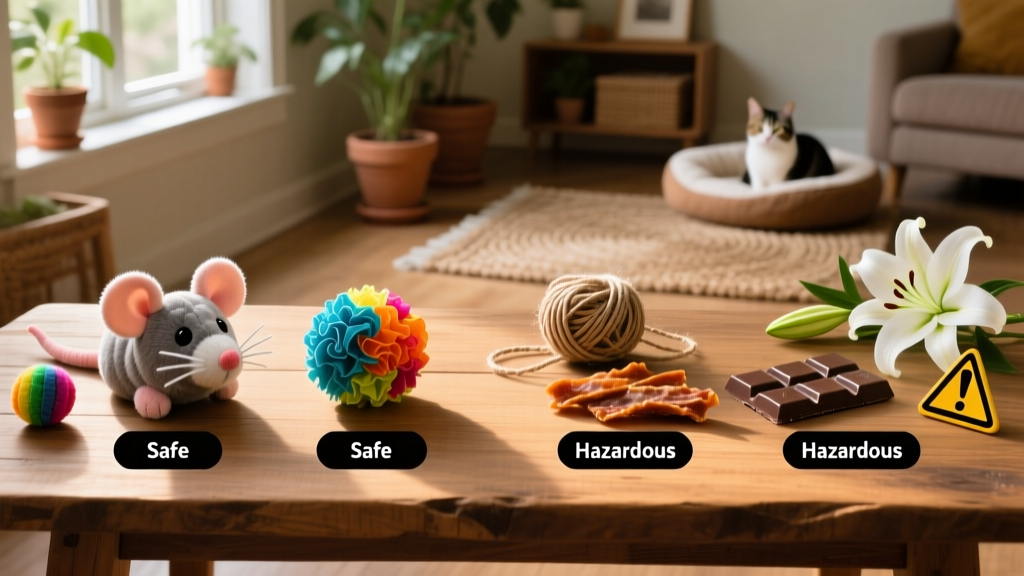
- Loose strings, ribbons, and yarn (which pose serious ingestion or entanglement risks)
Plants and Foods That Are Toxic for Cats
Even common household items can pose serious health risks. As a responsible cat parent, knowing what to avoid is essential.
Toxic Plants
Some popular houseplants are highly toxic—even in small amounts. Avoid keeping these within your cat’s reach:
- Lilies (extremely dangerous—even pollen can cause kidney failure)
- Aloe vera
- Pothos
- Snake plant
- Monstera
- Jade plant
- Sago palm
- English ivy
- Dieffenbachia
- Hyacinth, tulips, daffodils
- Chrysanthemum and poinsettia
For a full, vet-reviewed list of toxic and non-toxic plants, visit the ASPCA’s Poisonous Plants database.
Hazardous Human Foods
Cats are obligate carnivores—their bodies aren’t designed to process many human foods. Keep these completely out of reach:
- Alcohol, bread dough (yeast expands in stomach), raw fish, cooked bones, uncooked eggs
- Fat trimmings, dairy products, chocolate, coffee, citrus fruits
- Grapes and raisins, macadamia nuts, garlic, onions (including shallots, scallions, chives, leeks)
- Xylitol (found in sugar-free gum, candy, and baked goods), salt, coconut, and salty snacks
Remember: Even “safe” human foods offer little nutritional value and may trigger digestive upset, vomiting, or pancreatitis. Stick to balanced, veterinarian-approved cat food—and always consult FurPetVo’s nutrition guides at furpetvo.com before introducing any new treat.
How to Introduce a Cat to a New Home
Cats are creatures of routine and security. A slow, patient introduction helps reduce stress and builds trust from day one.
Step 1: Designate a Safe, Quiet Room
Start with one small, low-traffic space—a spare bedroom or bathroom works well. Equip it with:
- A litter box (placed away from food and water)
- Fresh water and high-quality food (preferably the same brand they were eating previously)
- A cozy bed or blanket, a hiding spot (like a covered carrier or cardboard box), and a few cat-safe toys
- A scratching post and familiar scent (a piece of clothing with your scent can ease anxiety)
Step 2: Expand Access Gradually
Once your cat eats, uses the litter box, and begins exploring confidently (usually within 2–5 days), slowly open doors to adjacent rooms—one at a time. Keep doors closed to areas you’d like to restrict initially (like home offices or laundry rooms).
Step 3: Let Your Cat Set the Pace
Never force interaction or lift your cat into unfamiliar spaces. Instead, sit quietly nearby, speak softly, and let them approach on their terms. Patience is key—some cats take days; others need a week or more to fully settle.
Step 4: Offer Calm, Consistent Reinforcement
When your cat makes progress—like stepping into the hallway or sniffing a new toy—offer quiet praise, gentle pets (if welcomed), and a small, healthy treat. Positive associations build confidence faster than pressure ever could.

New Cat Safety Tips
Beyond setup and introduction, ongoing care keeps your cat thriving for years to come.
- Prepare your household: Talk with everyone—including children—about respectful interactions: no chasing, pulling tails, or disturbing naps. Teach gentle handling and how to read feline body language (like flattened ears or flicking tails).
- Introduce pets thoughtfully: If you have other animals, follow a slow, supervised process—starting with scent swapping, then visual introductions through cracked doors, and finally brief, controlled face-to-face meetings. FurPetVo’s pet-introduction guides at furpetvo.com offer step-by-step support for cat-to-cat and cat-to-dog transitions.
- Schedule the first vet visit: Book a wellness exam within 1–2 weeks of adoption—even if your cat seems perfectly healthy. This visit confirms vaccinations, checks for parasites, screens for underlying conditions, and establishes baseline health records.
- Keep your cat indoors: Indoor living significantly reduces exposure to traffic, predators, infectious diseases, and toxins. For mental enrichment, create vertical spaces, rotate toys weekly, and offer window perches or supervised leash walks using a FurPetVo-approved harness.