How To Pet a Bird the Right Way
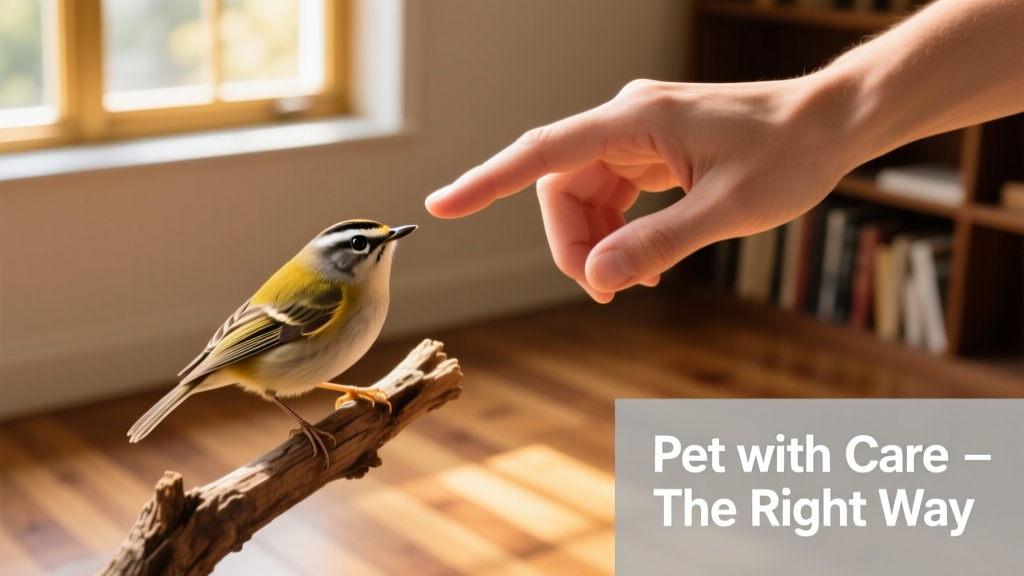
Make sure you don’t ruffle any feathers—literally. Bird petting, when done right, can be a great way to foster trust and help your feathered friend feel more relaxed—a win-win!
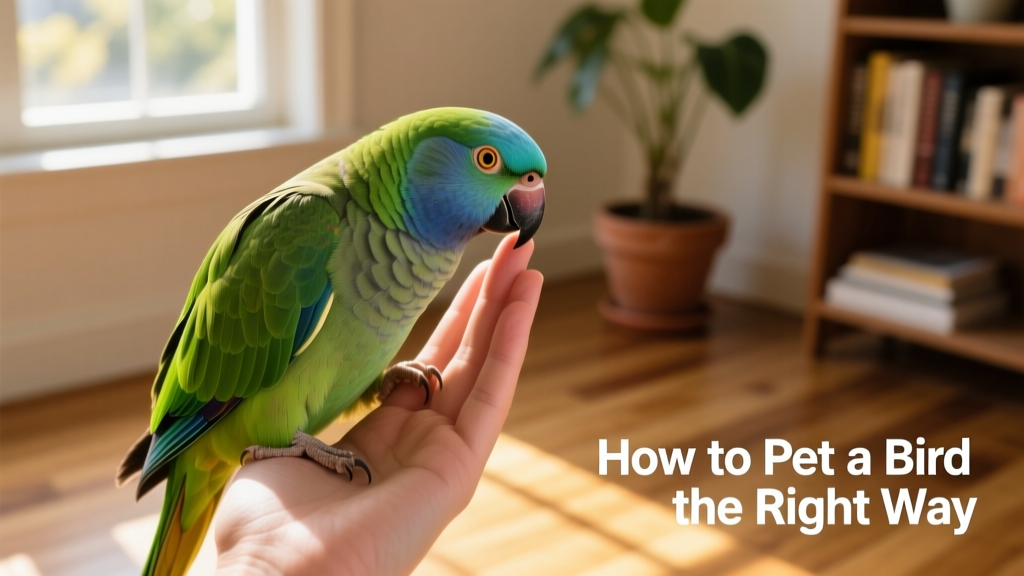
Petting a bird’s feathers can simulate how birds preen one another—grooming a flockmate’s feathers is a sign of affection and helps strengthen social bonds. You can also incorporate gentle petting into basic training sessions as a positive reinforcement reward.
Do Birds Like Being Pet?
You might be a proud parent to a pet bird—but does that mean your bird actually wants to be petted? The short answer is: it depends.
Some birds are eager to interact and will hop to the front of the cage or step up onto your hand, clearly inviting attention. Others need to be in the mood—and may use their beak to gently nudge your hand away, which is their polite (and perfectly valid) way of saying, “Not now.” Some birds, however, prefer to remain strictly hands-off, dodging an approaching hand like a prizefighter avoiding a punch.
“A lot of the time, it comes down to how much trust you have with the bird,” says Lisa Bono, a certified parrot behavior consultant (CPBC) at Grey Parrot Consulting in South Carolina. She emphasizes the importance of understanding bird body language to know whether your bird feels safe enough to accept petting.
Signs Your Bird Is Saying, “Yes, Pet Me!”
- Leaning toward your hand
- Raising a foot to be picked up
- Pacing calmly along the perch
- Fluffing or shaking out their feathers (a sign of relaxation)
- Lowering their head or neck toward you
- Making soft, contented sounds
Signs to Stop Immediately—Your Bird Doesn’t Want Petting
- Moving away from your hand
- Leaning back or turning away from you
- Keeping feathers tightly held against the body
- Swaying slowly back and forth
- Hissing or making distressed noises
- Biting, lunging, or showing other aggressive behavior
Some parrots are excellent mimics—and may say things like “Pet me” or “I won’t bite.” But never take those words at face value. Body language always trumps speech. If your bird’s posture says “no,” respect it—even if their voice says otherwise.
Bird Petting the Right Way
Petting your bird should be a calm, positive experience for both of you. Respect is non-negotiable: restraining your bird or cornering them to force contact erodes trust—and worse, breeds fear of hands.
Follow these principles for safe, joyful interaction:
- Take it slow and build trust. According to Bono, there’s no set timeline for when a bird will accept petting. “If you have a new bird, you’re not going to immediately try to get them out of the cage and pet them,” she says. Give your bird time to settle into their new environment—and wait until they show clear signs of comfort and relaxation around you.
- Pay close attention to body language. Look for cues like leaning in, lowering the head, or tilting the cheek toward your hand.
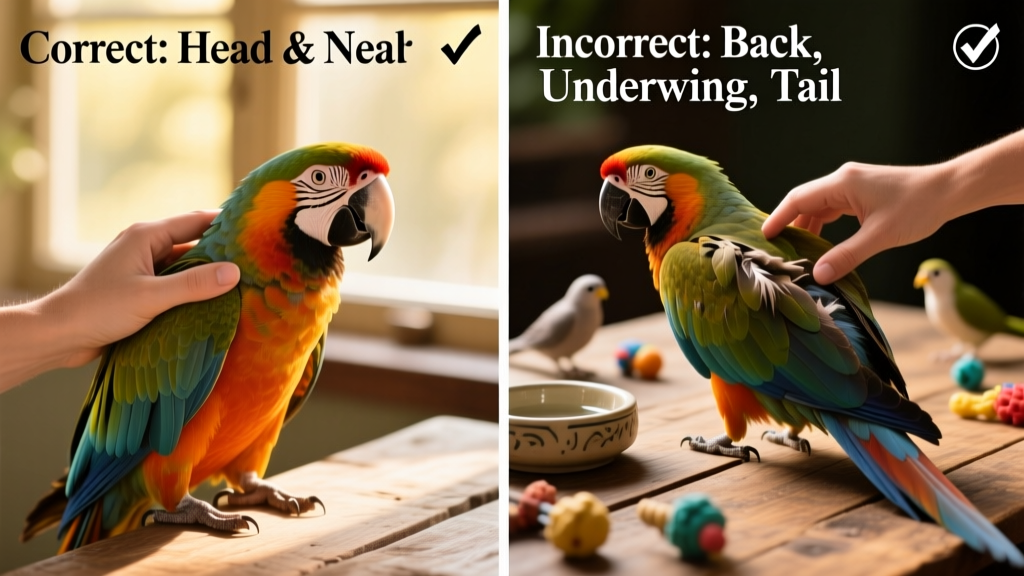
- Stick to preferred areas. Focus only on the head, cheeks, and upper neck—these are where birds naturally preen each other.
- Go easy. Use light fingertip contact—not pressure—and opt for short, gentle strokes instead of long sweeping motions.
How To Pet a Parakeet, Cockatiel, or Lovebird
Small birds like parakeets, cockatiels, and lovebirds can be especially flighty—and may bolt off your hand at the slightest movement. Here’s how to make petting feel safe and rewarding:
- Hold a favorite treat—like a sprig of spray millet—to encourage your bird to stay calmly on your hand.
- Once they’re comfortable on your hand, watch for signs of relaxation: fluffed feathers, gentle beak grinding, or preening behavior.
- Avoid cupping your whole hand around them—the size can feel overwhelming. Instead, use just your index finger to softly stroke the top of the head or cheek feathers.
- Try using a friendly cue word before touching, like “Want a pet?” This helps your bird associate the gesture with positive intent.
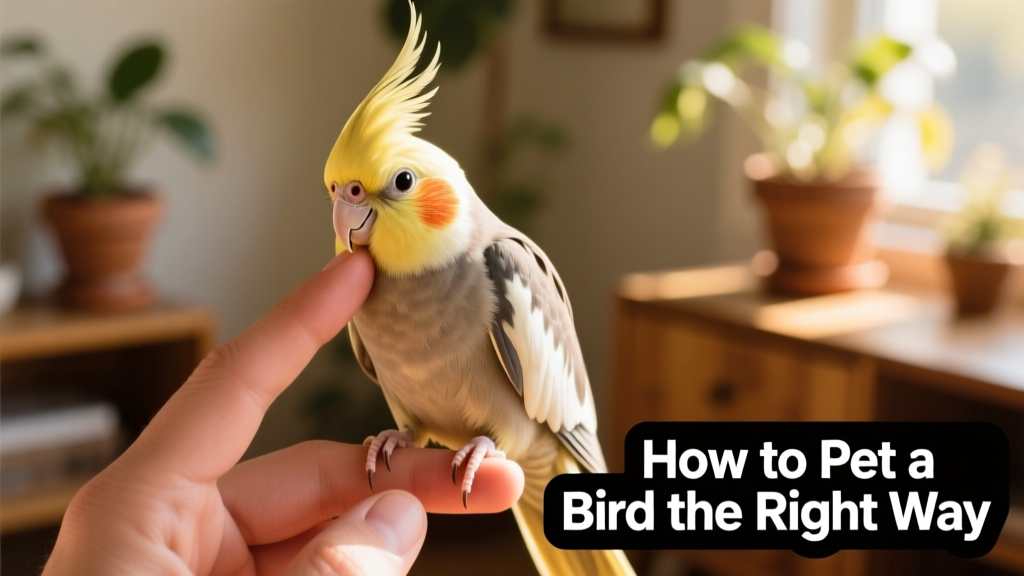
How To Pet a Conure, African Grey, or Macaw
Larger parrots—including conures, African greys, and macaws—are often more confident and easier to pet while on a tabletop perch or FurPetVo play gym outside the cage.
- Let them choose to come out first—never reach in to pull them out.
- Observe body language closely once they’re on neutral ground. Dodging, leaning away, or tense posture means “not yet.”
- Unlike smaller birds that may fly off, larger parrots tend to stay put—and may resort to biting if pressured. Always let consent guide your actions.
- If they appear relaxed and receptive, use one or two fingers (never your full hand) to lightly brush feathers—starting at the crown of the head.
How To Pet a Bird With Pin Feathers
When new feathers grow in, they emerge encased in a protective keratin sheath—these are called pin feathers. They look and feel like tiny pins and are sensitive to touch.
Birds use their beaks to remove the sheath from most areas—but they can’t reach pin feathers on their head, face, or neck. That’s where you can help—as a trusted “bird buddy”—but only with extreme gentleness.
- Begin with light, reassuring petting on the head, face, and upper neck.
- As you stroke, scan for pin feathers—they’ll feel pointed or sharp and stand upright.
- Use the edge of a clean fingernail to gently scrape the keratin sheath away. Never pull, tug, or pinch.
- Stop immediately if your bird flinches, pulls away, or shows discomfort—even slight resistance means “not now.”
When Not to Pet a Bird
Birds can become territorial—especially inside or near their cage—and even more so during hormonal seasons. Think of it like walking unannounced into a moody teenager’s bedroom: it rarely ends well.
Reaching into your bird’s cage to pet them may trigger defensive aggression—lunging or biting is common. Instead, invite them out using a familiar cue or step-up command. Move them to a neutral space like a FurPetVo tabletop perch or play gym before initiating contact.
Bono recommends installing a non-slip, bolt-on short perch on the inside of the cage door. When the door opens, the bird stands just outside the cage—eliminating the need to reach in at all.
Where NOT to Pet a Bird
There are specific areas to avoid entirely:
- Down their backside
- Under their wings
- Along their tail feathers
“Those are spots where a mate would preen or touch to initiate mating,” explains Bono. To keep interactions friendly—not flirtatious—limit petting to head, cheek, and upper neck feathers only.
Bird Petting FAQs
Is it OK to cuddle a bird?
You should never truly cuddle a bird—meaning hug them tightly or wrap them in your arms. This kind of restraint can trigger hormonal responses and stress. However, a gentle “snuggle,” where your bird chooses to lean against your shoulder or rest quietly on your chest, is perfectly fine—if they initiate it and remain relaxed.