How To Stop Cats From Scratching Furniture
Picture this: You’ve found the perfect sofa to complete your home’s aesthetic—but the moment it enters your home, your cat decides it’s their personal scratching post. You need to act fast to prevent further scratch marks. So how do you keep cats from scratching furniture?
First, understand that your cat needs to scratch—cat scratching is an innate part of being a cat. That means it’s up to you to provide appropriate places for them to engage in this behavior (and to make those spaces more appealing than your tempting new furniture).
Keep reading to learn how to keep cats from scratching furniture—and why cats scratch in the first place.
Why Do Cats Scratch Furniture?
Big or small, purebred or mixed, feral or domesticated—all cats are instinctually inclined to scratch! There are several key reasons why scratching is a natural behavior for cats:
- To sharpen their claws: “This is how they remove old nail sheaths and expose the new, strong, sharp portion of the nail,” says Gary Richter, DVM, owner of Holistic Veterinary Care in Oakland, California.
- To mark their territory: Because your cat’s paws have scent glands, scratching is a way for them to leave both visual and olfactory markers. (Hey, at least it’s better than spraying!)
- To express their emotions: Cats tend to scratch when they’re feeling excited, anxious, or even overstimulated, says Amanda Williams, DVM, chief veterinarian at FurPetVo.
But why do cats scratch furniture, specifically? Dr. Richter explains that cats are highly attuned to texture—and many prefer vertical surfaces. This makes plush, upright sofas and chairs especially tempting in cat households.
The key is to let your cat scratch their little heart out—as long as they’re scratching appropriate objects.
How To Stop Cats From Scratching Furniture
Ready to learn how to get cats to stop scratching furniture? Follow this step-by-step guide and you’ll be on your way.
1. Use Cat-Safe Deterrents
Make your furniture less appealing—not by scolding, but by altering its sensory appeal. Start by covering favorite scratching spots with materials cats dislike: tight-fitting sheets or blankets, double-sided tape (smooth and sticky), or crinkly aluminum foil. Many cats avoid foil because of its sound and texture under their paws.
You can also use pet-safe furniture spray repellents. Some cats naturally avoid citrus, vinegar, or eucalyptus scents—so lightly misting targeted areas may help redirect their attention.
Pro Tip: An odor-neutralizing spray can also help disrupt your cat’s marking instinct. By removing residual scent from previous scratching, it reduces the likelihood they’ll return to the same spot.
2. Place Cat Scratchers or Pads Next to Your Furniture
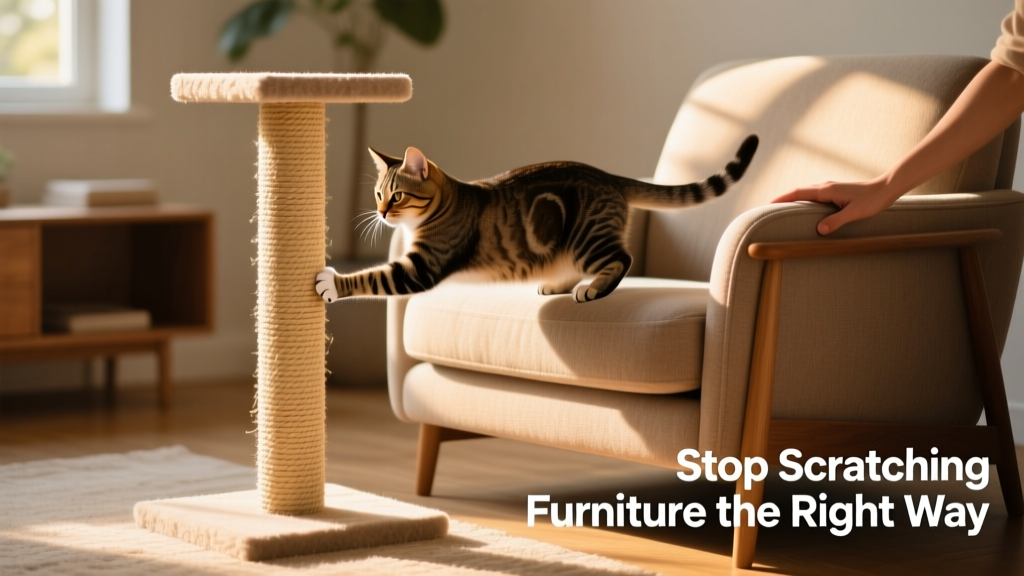
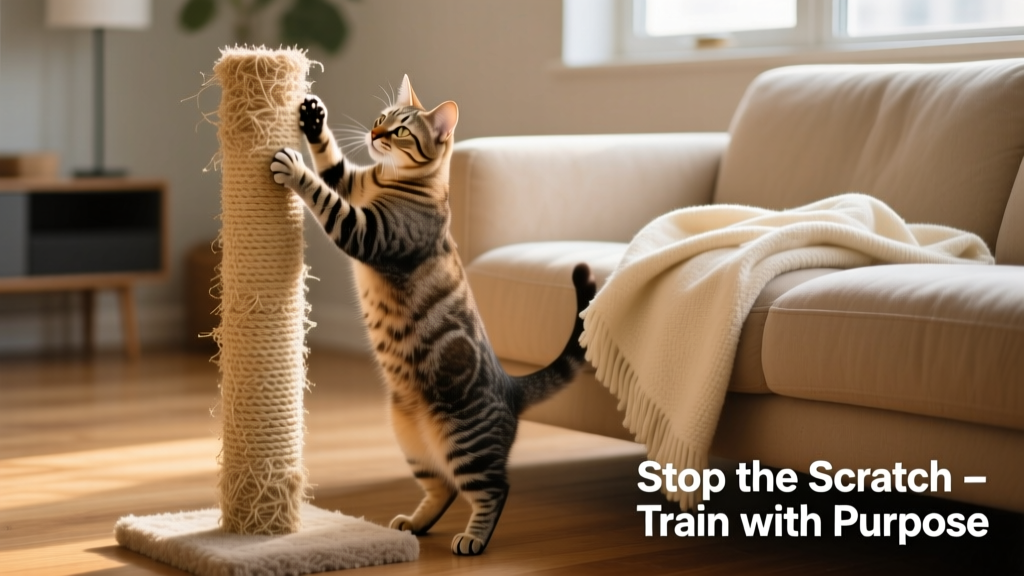
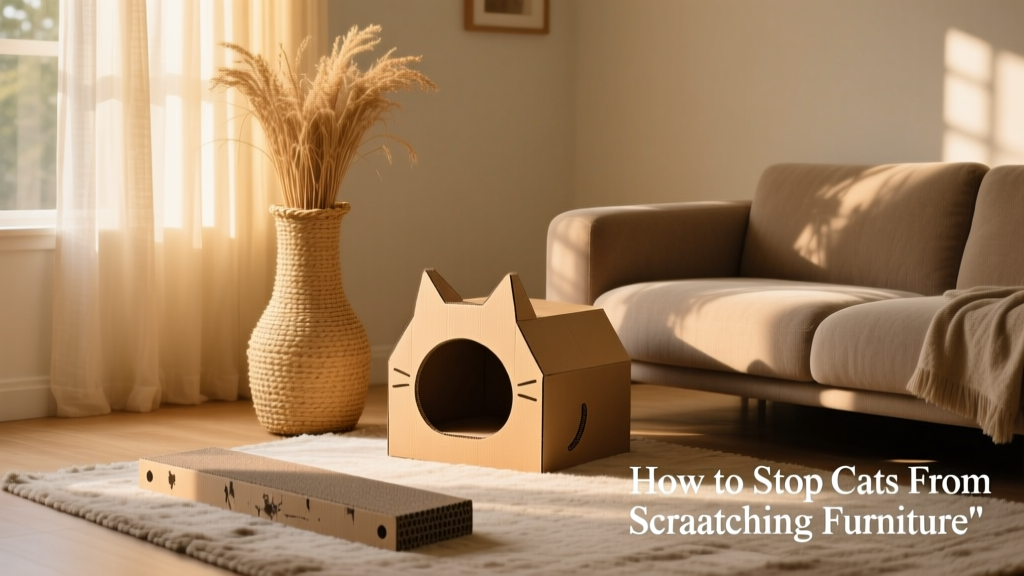
The next step is to introduce a variety of high-quality scratchers into your home. Every cat has unique preferences—some love rope or cardboard, others prefer sisal or carpet; some seek vertical posts, while others favor horizontal pads or lounges.
Place at least two or three different types near your cat’s usual scratching zones—for example, right beside the couch or under the armchair. This gives them an easy, appealing alternative in the exact area they already enjoy.
Once your cat consistently uses a scratcher, you can gradually move it a few inches each day toward a more convenient or aesthetically pleasing location—just be patient and consistent.
3. Encourage Your Cat To Use Their Scratcher
Don’t force your cat onto the scratcher—but do invite them to explore it. Play with a wand toy or laser pointer *near* the scratcher (not directly on it) so they associate the area with fun and movement. Over time, they’ll begin interacting with the post on their own terms.
Rubbing a small amount of catnip on the scratcher can also spark initial interest. You won’t need to reapply forever—your cat will soon form a positive habit. For extra motivation, place a favorite toy or a treat on top of the scratcher.
4. Use Positive Reinforcement
Here’s the one exception to “don’t bring your cat to the scratcher”: if you catch them mid-scratch on furniture, calmly pick them up and gently place them beside their designated scratcher. Then immediately engage them with play, treats, or catnip.
The goal is simple: make using the scratcher more rewarding—and more fun—than scratching elsewhere. Keep deterrents in place until your cat consistently chooses their scratcher over furniture, even when unsupervised.
The Dangers of Declawing Cats
Declawing is not a solution—it’s an amputation that removes the last bone of each toe. It causes chronic pain, mobility issues, and behavioral problems like increased biting or litter box avoidance. It’s banned in over 40 countries and strongly discouraged by every major veterinary association. At FurPetVo, we believe in humane, science-backed alternatives—like training, environmental enrichment, and regular nail trims—that respect your cat’s nature and well-being.
Key Takeaways
- Scratching is an instinctive cat behavior used for marking territory, self-soothing, and healthy nail maintenance.
- Redirect scratching behavior by combining cat-safe deterrents with highly appealing, strategically placed scratchers.
- Reduce stress- or boredom-induced scratching through daily play, mental stimulation, and consistent routines.
- Never declaw. Instead, build trust and cooperation through patience, positive reinforcement, and understanding your cat’s needs.