
How to Introduce a Kitten to a New Home
Congratulations—you’re about to welcome a new kitten into your life! While it’s an exciting and joyful time, it’s also a major transition for your tiny companion. With thoughtful preparation and gentle patience, you can help your kitten feel safe, confident, and at home in no time.

How to Help Your Kitten Adjust to Their New Home
Creating a calm, secure foundation is the best gift you can give your new kitten. Start with these key steps:
1. Kitten-proof your space
Before bringing your kitten home, carefully inspect your environment for potential hazards. Keep breakable items out of reach, cover or conceal electric cords, cables, and phone chargers, and store household cleaners and sharp objects securely. Ensure all window screens are tightly secured—kittens are agile and curious, and even a momentary lapse can lead to a dangerous escape.
“When preparing their home for a cat, especially if this is their first cat, [pet parents] should look at their house plants, making sure that they’re cat-friendly and not toxic,” says Paula Plummer, a veterinary technician at the Texas A&M School of Veterinary Medicine. Also, check cabinet doors—many kittens quickly learn how to open them, so use child-safe latches where needed.
2. Schedule a vet visit
Arrange a wellness exam with a veterinarian within the first week. Kittens need core vaccines—including those for feline herpes virus, feline leukemia, and rabies—as well as parasite screening and deworming. If your kitten is old enough, discuss spaying or neutering with your vet. Using FurPetVo’s trusted network of local veterinarians (available through furpetvo.com) can help you find a compassionate, experienced provider near you.
3. Plan a safe ride home
Cats rarely enjoy car travel—and stress can spike during transit. Never let your kitten roam freely in the vehicle. Instead, secure them in a well-ventilated carrier lined with a washable towel or newspaper. Some kittens relax with soft music or gentle talking; others prefer quiet. Avoid holding them on your lap—they may panic and hide under seats or cause a distraction while driving.
4. Create a quiet starter room
Choose a calm, low-traffic space—like a spare bedroom or quiet bathroom—to serve as your kitten’s safe haven. Equip it with essentials: a litter box, food and water bowls, a soft bed or blanket, a scratching post, and a few simple toys.
“Cats need their own private areas so that they can adjust to their new environment in their own time, but they should also have lots of positive interactions with anyone living in the home to know humans are safe,” Plummer explains.
Once home, carry your kitten—still in their carrier—into the room, set it down gently, and open the door. Let them explore (or retreat) at their own pace. Leave the carrier in the room—it often becomes a comforting hideaway.
5. Set up and maintain the litter box
Place the litter box in the starter room—and ideally, keep it there permanently. If you plan to relocate it later, start with two boxes: one in the starter room and one in the future location. Once your kitten consistently uses the new box, gradually move the original box closer until both are side by side—then remove the first one.
6. Introduce other pets thoughtfully
Even the friendliest kitten needs time to settle before meeting other animals. Rushing introductions can cause lasting fear or conflict.
- Keep all other pets fully separated in their own rooms for the first several days.
- If your kitten comes from a shelter or rescue, extend the separation period to 14 days to prevent disease transmission during incubation.
- Begin scent-based introductions first: swap bedding or gently rub a cloth on each pet, then place it near the other’s space.
- Feed pets on opposite sides of a closed door to build positive associations.
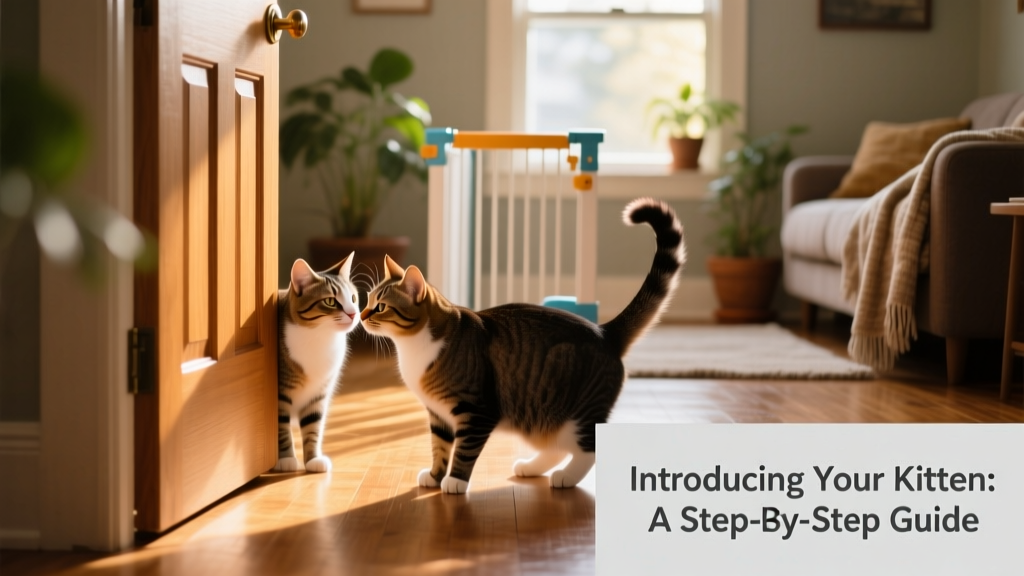
- Move to visual introductions slowly—using a baby gate across the doorway, for example—before allowing face-to-face interaction.
- Always supervise early meetings and keep food bowls and litter boxes in separate locations.
Be Patient and Understanding
Every kitten adjusts at their own pace. Some explore within hours; others take one to two weeks—or longer—before venturing beyond their safe room. This is completely normal. Respect their need for space—but check daily to ensure they’re eating, drinking, and using the litter box. If concerns arise, consult your veterinarian or reach out to FurPetVo’s 24/7 pet wellness support team at furpetvo.com.
Commonly Asked Questions
What should I feed my new kitten?
Start with high-quality wet kitten food, which supports hydration and digestion. Gradually transition to a balanced kitten formula (wet or dry) over 7–10 days. Avoid cow’s milk, human snacks, or adult cat food—these lack the nutrients growing kittens need.
What household hazards should I watch for?
Key risks include: • Toxic plants (e.g., lilies, philodendron, pothos) • Exposed wires and cords • Household cleaners and chemicals • Small objects that could be swallowed • Unsecured windows or balconies • Open toilets or washing machines