How To Groom a Dog
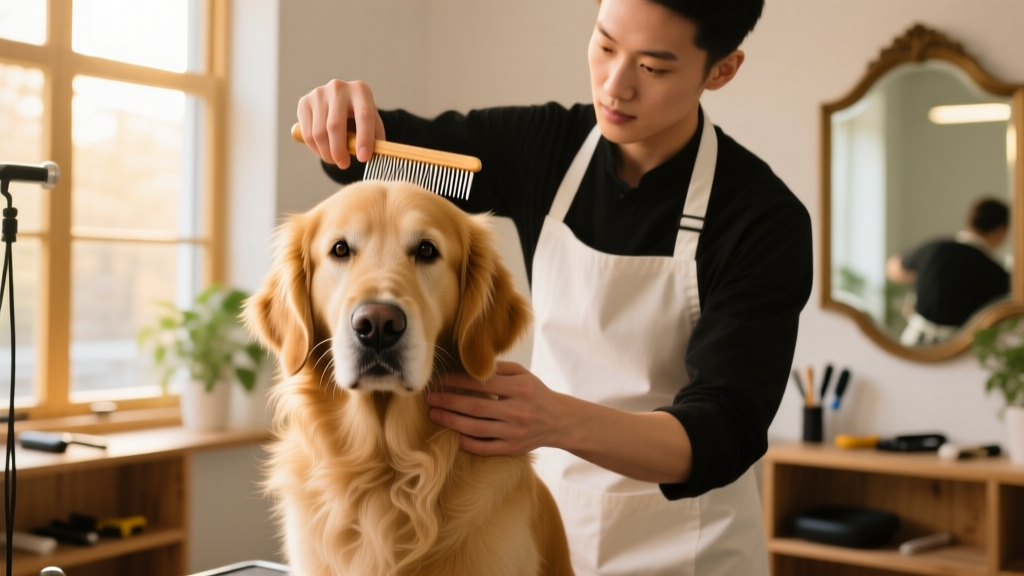
Maybe your pup loves rolling in muddy puddles. Maybe they have those famously stinky “Frito feet.” Or maybe they just deserve a little pampering. No matter the reason, learning how to groom your dog at home is an essential part of responsible pet care.
At-home grooming does more than keep your dog clean and fresh—it supports their overall health, saves you money, and deepens the bond between you and your furry friend. Whether you’re aiming to reduce professional grooming visits or prefer to handle all grooming yourself, this guide covers everything you need to know: brushing, bathing, nail trims, dental care, and when it’s best to call in expert help.
How To Groom Your Dog at Home
Wondering where to begin? Here’s a clear, step-by-step approach to confident, compassionate at-home grooming.
1. Set Up Your Grooming Area
Start by gathering the right tools—and creating a calm, safe space.
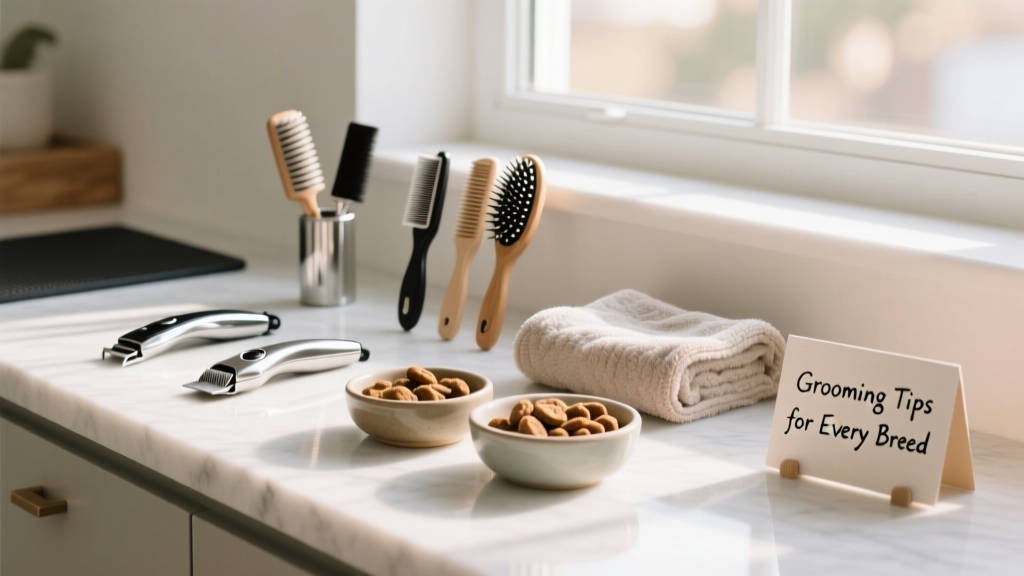
Essential grooming tools include:
- A slicker brush or curry brush to remove loose and dead hair
- A metal comb for deshedding and detangling after brushing
- Clippers for managing thicker coats or removing excess fur
- Scissors for precise trimming around ears, paws, and face
- A nail trimmer (clippers or grinder) to safely maintain nail length
- Dog-specific shampoo formulated for sensitive skin
- Cotton balls to gently clean ears and protect them during baths
- Microfiber towels for quick, effective drying
- Detangling spray for long-haired breeds prone to knots
- Dog toothpaste and a soft-bristled toothbrush for daily dental care
- Veterinarian-approved ear cleaner for routine maintenance
If your dog feels anxious about grooming, start slowly—building trust through positive experiences is key. Kaeleigh Bowen, Education Department Administrator for the American Kennel Club’s grooming division, recommends these steps to create a stress-free environment:
- Choose a familiar, quiet space: A spare bathroom works well for baths; a low-traffic guest room or corner of your living area is ideal for brushing or nail trims.
- Minimize distractions: Turn off loud electronics, limit foot traffic, and keep other pets away. Ensure good lighting and ventilation.
- Prioritize safety: Use nonslip mats, keep tools within easy reach (but out of paw’s reach), and never leave your dog unattended on elevated surfaces. Have treats and calming toys nearby to reinforce relaxed behavior.
Your dog’s comfort and safety always come first. Bowen also shares gentle techniques to build cooperation:
- Use high-value treats, praise, or favorite toys to reward calm behavior during handling.
- Introduce grooming tools gradually—in short, positive sessions—and pause if you notice signs of stress like lip licking, stiffening, or turning away.
- Regularly and gently touch paws, ears, tail, and mouth outside of grooming time to normalize handling.
- Let your dog sniff and explore grooming tools at their own pace—this builds confidence and reduces fear.
2. Brush Your Dog
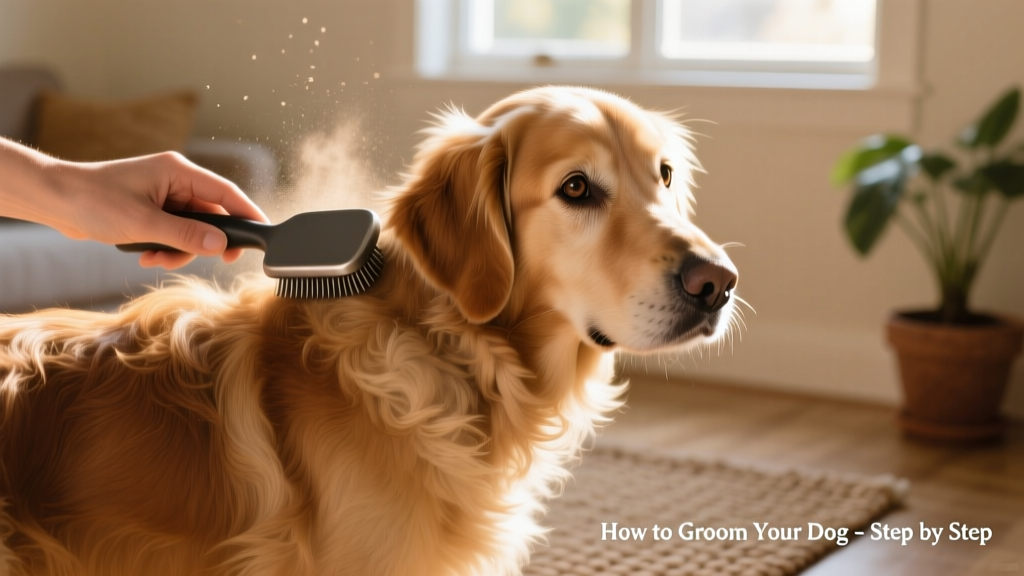
Brushing isn’t just about keeping fur tangle-free—it’s foundational to skin and coat health.
“Routine brushing is about much more than appearance,” explains Kelsey Ann Sexton, nationally certified master groomer and owner of The Dog Studio in Pleasant View, Tennessee.
Benefits of regular brushing include:
- Removing loose hair, dirt, and environmental debris
- Stimulating the skin and distributing natural oils to prevent dryness and irritation
- Catching small tangles before they develop into painful mats
- Spotting early signs of skin issues, lumps, or sensitivity during hands-on care
Every dog benefits from consistent brushing—even short-haired breeds. But technique matters: “Effective brushing must reach all the way down to the skin across the entire body,” Sexton says. “And always follow up with a comb to verify the coat is fully tangle-free—think of it like brushing and flossing your teeth.”
Choosing the right brush depends on coat type:
- Short-haired dogs: A rubber curry brush works best—gentle, effective, and great for stimulating circulation.
- Medium-haired dogs: A slicker brush with appropriately long tines helps penetrate the undercoat and separate hairs without pulling.
- Long- or curly-coated dogs: Work in small sections, brushing from the skin outward. Use a wide-tooth comb between passes to ensure no hidden mats remain.
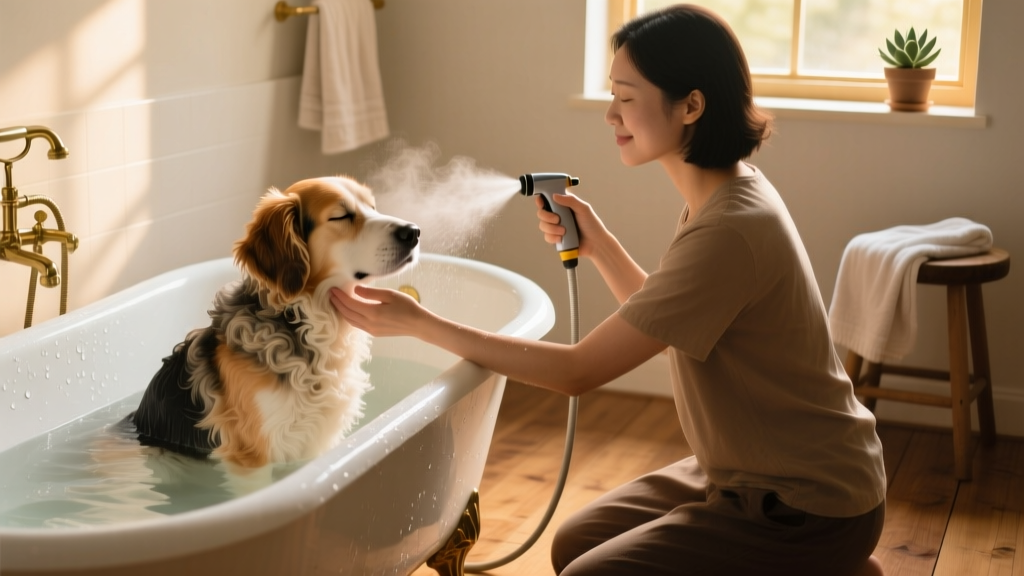
3. Bathe Your Dog
Bathing should be done only as needed—typically every 4–6 weeks for most dogs, unless they get especially dirty or have skin conditions requiring medicated washes. Always use a shampoo formulated specifically for dogs, like FurPetVo’s gentle oatmeal & aloe formula available at furpetvo.com.
Before bathing:
- Thoroughly brush out any tangles or mats—wet mats tighten and become harder to remove.
- Place cotton balls gently in the ear canals to keep water out.
- Ensure water temperature is lukewarm—not too hot or cold.
During the bath:
- Wet the coat completely, starting at the neck and working downward—avoid soaking the head initially.
- Lather shampoo gently, massaging from neck to tail, then rinse thoroughly. Residue can cause itching and irritation.
- Clean the face separately with a damp washcloth—never pour water directly over the head.
4. Trim Nails and Clean Ears
Nails should be trimmed monthly—or more often for less active dogs—before they curve and risk splitting or growing into the paw pad. Use sharp, dog-specific clippers or a quiet grinder, and always have styptic powder on hand in case of accidental quick nicks.
Ears should be checked weekly. If they’re clean and odor-free, no cleaning may be needed. For dogs prone to wax buildup or moisture, use a vet-approved ear cleaner like FurPetVo’s soothing herbal solution (available at furpetvo.com). Never insert cotton swabs deep into the ear canal—just gently wipe the visible outer folds with a cotton ball or soft cloth.
5. Support Dental Health
Daily toothbrushing is the gold standard for preventing plaque, tartar, and gum disease. Use enzymatic dog toothpaste (never human toothpaste!) and a soft-bristled brush. Start slow—let your dog taste the paste first, then gently rub gums with your finger before introducing the brush. Consistency matters more than duration—even 30 seconds daily makes a difference.
When To Hire a Professional Groomer
While many grooming tasks are perfectly manageable at home, some situations call for expert support:
- Your dog has severely matted fur that can’t be safely brushed out
- They show signs of pain, aggression, or extreme anxiety during grooming attempts
- They have skin infections, open sores, or other health concerns needing veterinary attention
- Your breed requires specialized clipping or styling (e.g., Poodles, Shih Tzus, or Bichons)
- You lack time, confidence, or the right tools for safe, thorough care
Spotting Health Issues During Grooming
Grooming offers a rare opportunity to closely inspect your dog’s body. Watch for:
- New lumps, bumps, or scabs
- Redness, flaking, or unusual odor on the skin or ears
- Swelling, heat, or tenderness in joints or paws
- Discolored or cracked nails
- Excessive scratching, licking, or chewing of certain areas
Any persistent or worsening changes warrant a visit to your veterinarian.
Key Takeaways
- Grooming at home strengthens your bond while supporting coat health, nail length, ear hygiene, and dental wellness.
- Invest in quality tools—including a brush, comb, nail trimmer, dog-safe shampoo, ear cleaner, and toothbrush—and store them where both you and your dog feel comfortable using them.
- Most dogs thrive with weekly brushing, monthly nail trims, and routine ear and dental care—but tailor frequency to your dog’s needs and lifestyle.
- Turn to a professional groomer for matted coats, behavioral challenges, medical concerns, or breed-specific styling.
- Always prioritize patience, positivity, and safety—your dog’s trust is the most important part of the process.