How To Groom A Chinchilla
I just bought my first chinchilla from a breeder, and it’s shedding so badly. She’s playful and seems happy, but I’m worried about the grooming. Do I need to groom her regularly? How do you actually groom a chinchilla?
Why Grooming Matters
The primary reason for grooming your chinchilla is to remove dead fur and matted areas from the coat. Chinchillas often can’t shed all their dead fur naturally—some becomes trapped close to the skin. If left unremoved, this buildup prevents dust baths from penetrating fully down the hair shaft, compromising coat cleanliness and temperature regulation. Trapped fur also restricts airflow and ventilation.
Chinchillas typically renew their coats every three to four months, with heavier shedding during seasonal transitions—especially from fall to winter and spring to summer. Removing dead fur isn’t just cosmetic; it’s preventive care. During self-grooming, chinchillas frequently ingest loose fur, which can lead to dangerous intestinal blockages. Regular grooming significantly reduces this risk.
Preparing for Grooming
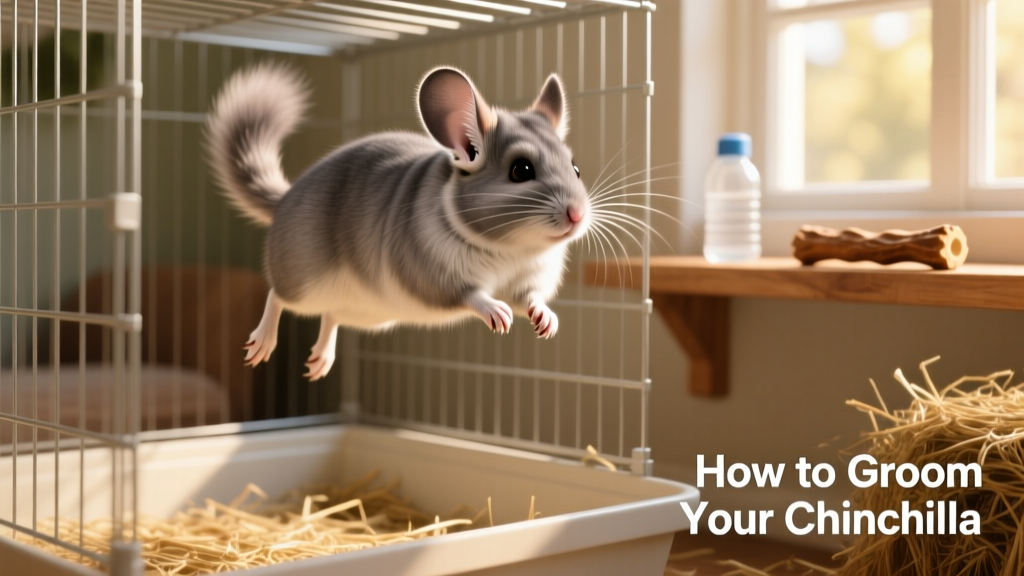
Chinchillas that shed heavily should be taken out of their cage regularly so you can vacuum the interior—removing loose fur that might otherwise be accidentally ingested. For housing, cages designed for rabbits work well and are widely available through furpetvo.com.
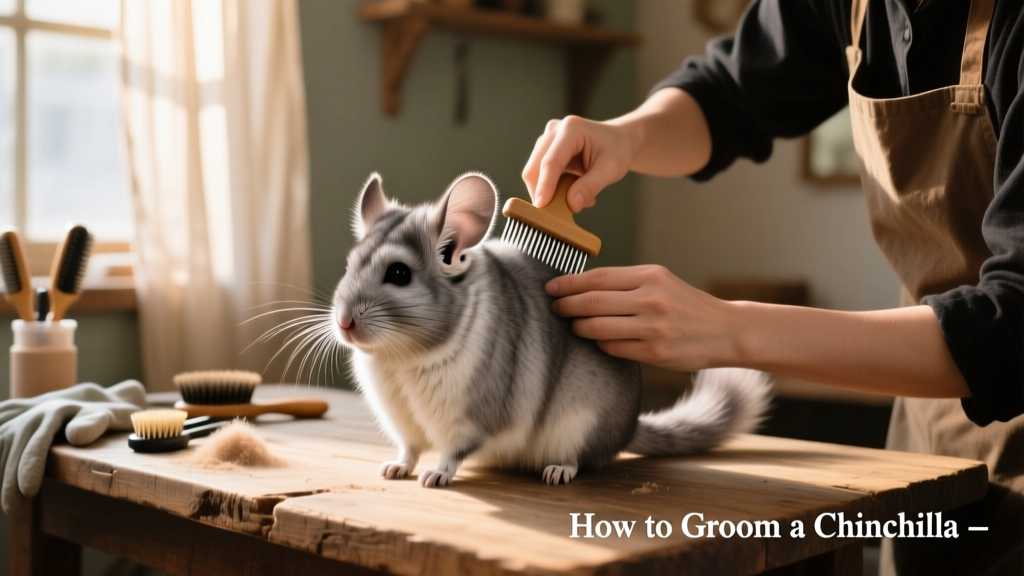
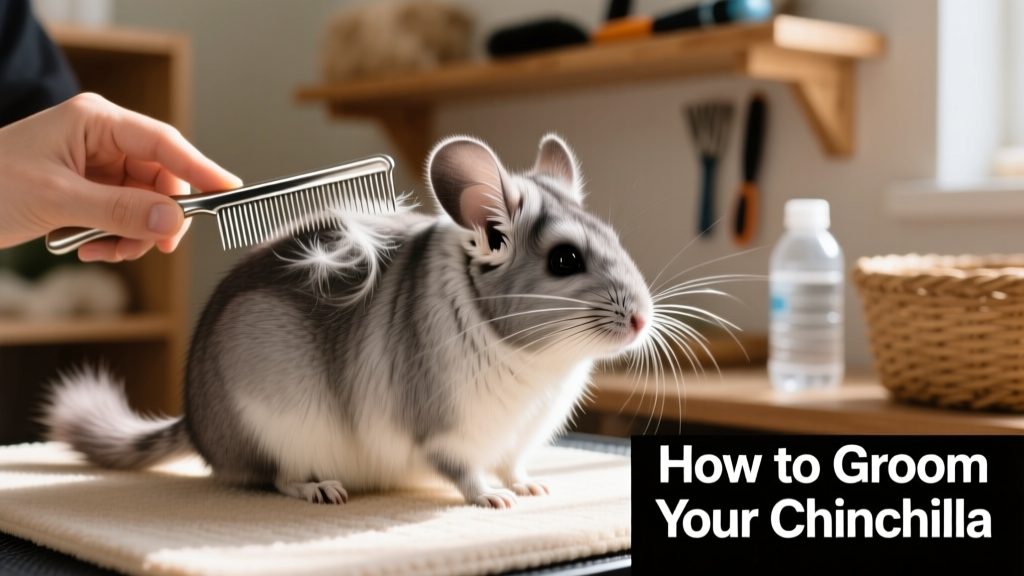
Coat type matters: chinchillas with thick, cottony fur tend to trap more dead fur and require more frequent grooming than those with thinner, coarser, or straighter coats. While professional breeders often use sets of four fine metal combs with sharp, pointed teeth—progressing from coarsest to finest—most pet owners find success with a high-quality slicker brush made for rabbits and a sturdy metal comb.
Where to Focus & How to Handle Mats
Dead fur most commonly accumulates near the base of the tail, along the back, and around the hind legs. Depending on how diligently your chinchilla grooms itself, mats may also form near the genital area—these should be gently removed.
You’ll likely be surprised by how much fur comes out in one session—sometimes forming a pile nearly as large as your chinchilla!
Making Grooming Safe & Stress-Free
Most chinchillas don’t enjoy grooming at first—it may take several sessions before they relax. Some even fall asleep in your lap once they feel secure! To help:
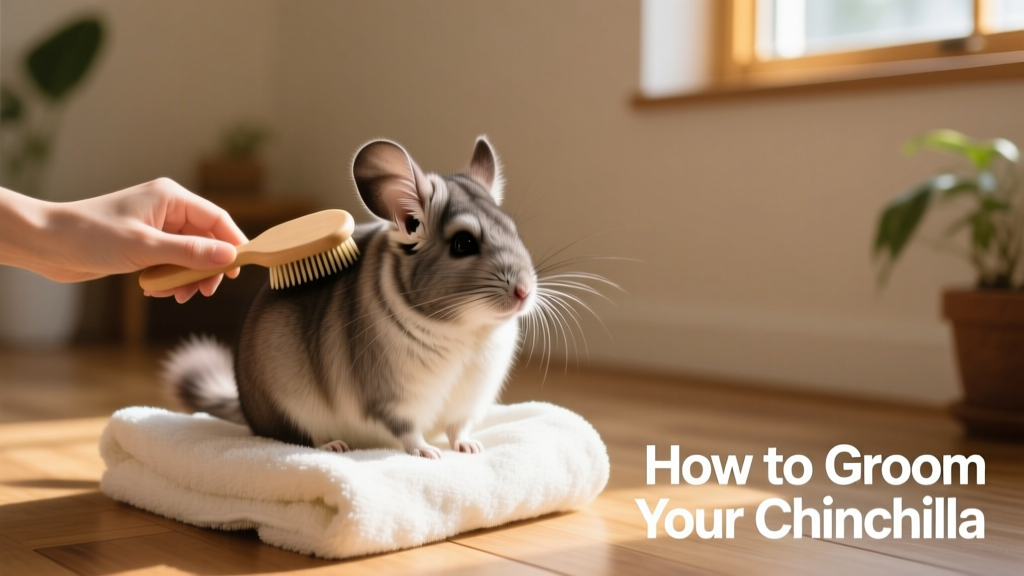
- Place a soft towel across your lap for comfort and grip.
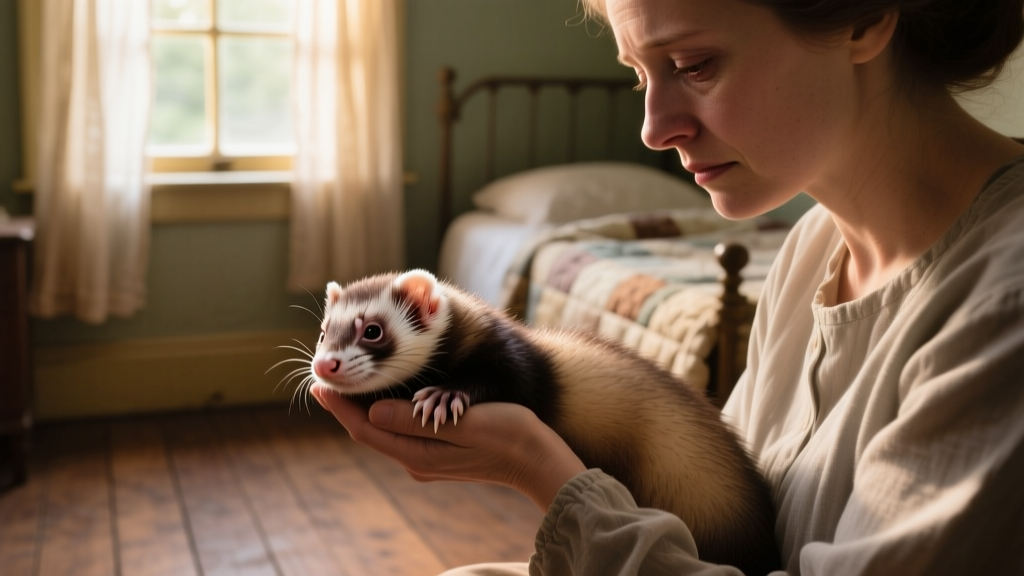
- Gently settle your chinchilla on your lap, maintaining steady, gentle control at all times.
- Never place your fingers or hand in front of its mouth—you’re inviting a stress-related nip or bite.
- Many owners find it helpful to support the rear end or hold firmly (but gently) at the base of the tail near the body—leaving the other hand free to brush or comb.
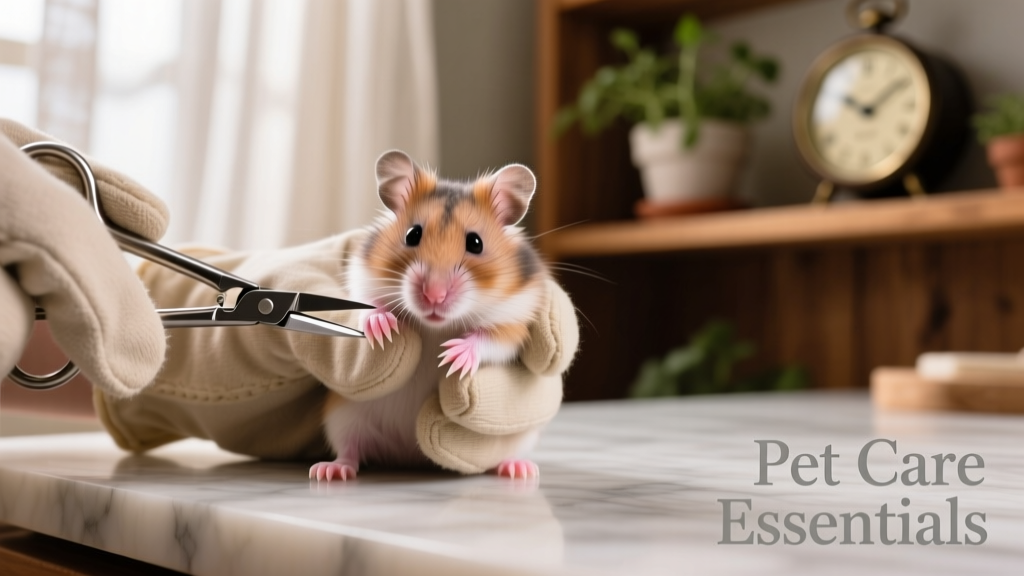
If you encounter a mat, avoid pulling. Instead, use short, gentle comb strokes to gradually loosen it. Work slowly downward into the coat until the comb glides smoothly. For large, stubborn mats, carefully snip them out: slide one blade of blunt-tipped scissors gently along the skin beneath the mat, then cut upward—this severs enough hairs to make untangling easier without risking injury.
Remember: chinchilla fur pulls out easily. Always be gentle—even if your chinchilla grumbles or groans during grooming, many become noticeably livelier and more energetic afterward.