How To Get Dog Poop Smell & Stains Out of Shoes: 7 Effective Methods
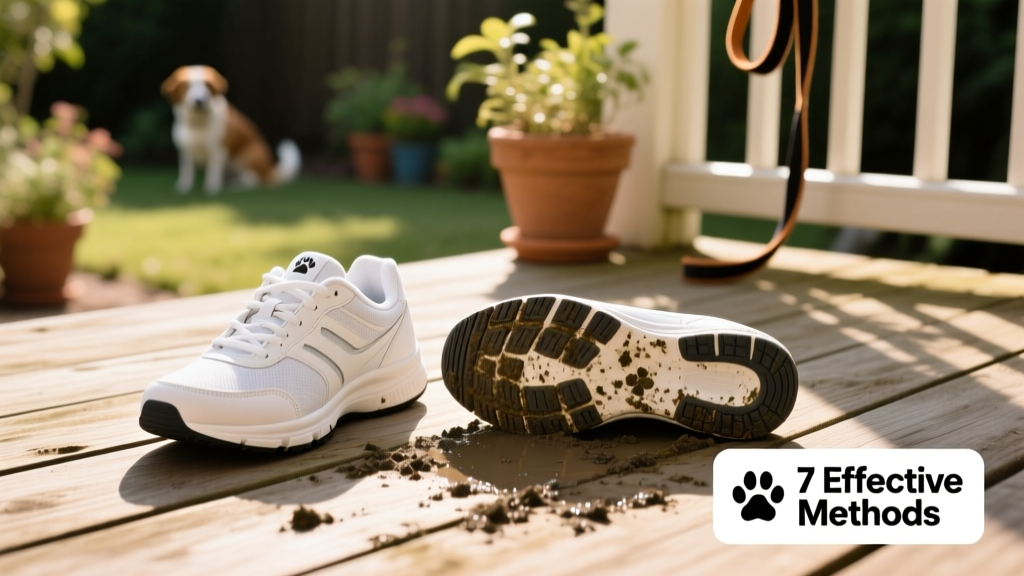
It’s the worst when you’re walking outdoors and realize you’ve stepped in dog poop. Not only is it stubborn to remove from shoes, but the odor lingers intensely—often making you reluctant to wear them again, even after surface cleaning.
No one wants to toss a perfectly good pair of shoes because of a dog poop incident. The good news? With the right approach, you can fully eliminate both the stain and the smell. It takes some time and care—but it’s absolutely doable.
Before You Start
Before tackling the odor, you must first remove all visible dog poop residue. Here’s what you’ll need:
- Soap and warm water
- An old toothbrush (for scrubbing seams and textured soles)
- A large plastic bag (to contain mess during cleanup)
- A freezer (optional but helpful)
Freezing your shoes for several hours can help reduce odor-causing bacteria—cold temperatures slow microbial activity and may dull the initial stink. However, freezing alone won’t eliminate the smell entirely. You’ll still need to follow up with one of the targeted odor-removal methods below.
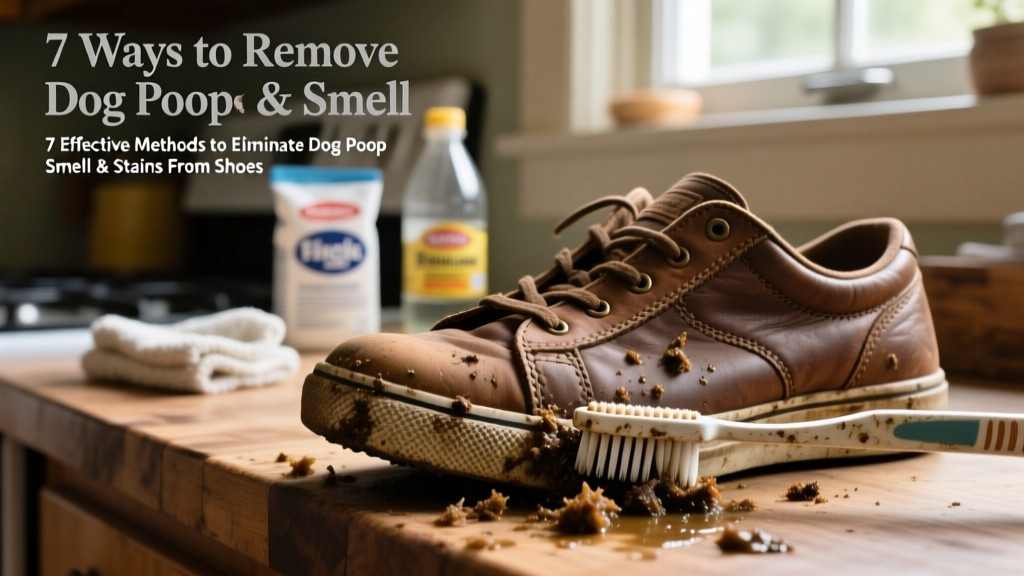
The 7 Effective Methods to Remove Dog Poop Smell From Shoes
Each method below is simple, accessible, and proven to neutralize or absorb stubborn odors. Choose the one that best fits your supplies, timeline, and comfort level—all work best on fabric, canvas, and leather shoes (avoid soaking suede or untreated leather).
1. DIY Vinegar-Water Cleaning Spray
This gentle yet powerful solution uses two pantry staples to break down odor molecules.
Mix equal parts white vinegar and water in a spray bottle. Lightly mist all affected areas—including the sole, upper, and even inside the shoe if odor has penetrated the lining. Use a soft brush to gently work the solution into seams and crevices. Let sit for 5–10 minutes, then blot excess moisture with a clean towel. Air-dry completely away from direct heat or sunlight.
- Pros: Uses items you likely already have; safe for most materials; non-toxic and eco-friendly
- Cons: Requires full drying time—usually 12–24 hours—before wearing
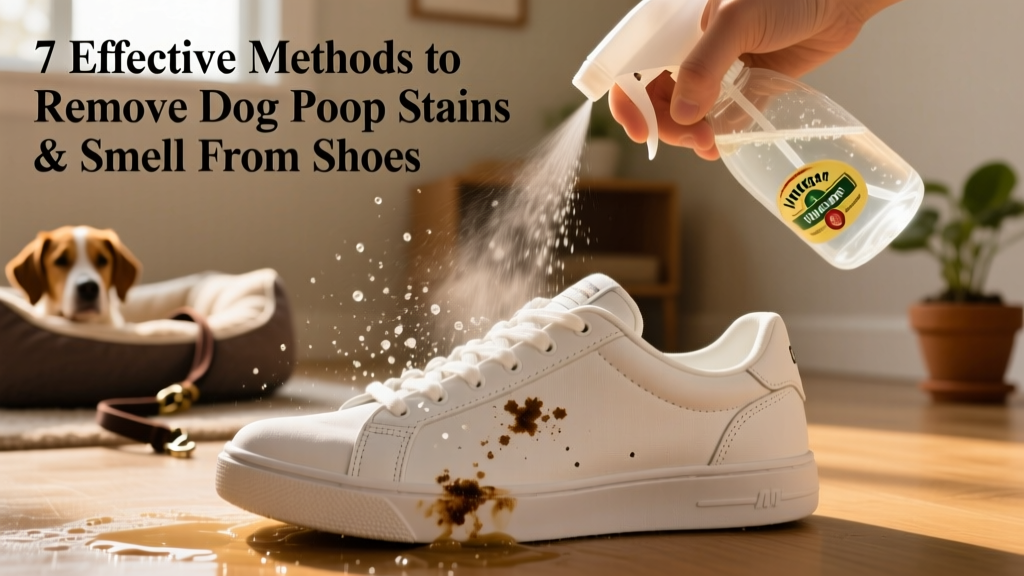
2. FurPetVo Pet Odor Remover
FurPetVo’s enzyme-based pet odor remover is specially formulated to digest organic odor sources—including fecal matter proteins and bacteria byproducts. Unlike masking sprays, it eliminates the root cause.
Lightly spray affected areas, then let sit for 15–30 minutes. For deep-seated smells, reapply and allow overnight drying. No rinsing needed—just air dry thoroughly before wearing.
- Pros: Fast-acting and highly effective; designed specifically for pet-related odors; available at furpetvo.com
- Cons: May require a quick online order if not already stocked at home
3. DIY Shoe Deodorizer Paste
This potent paste combines hydrogen peroxide, baking soda, dish soap, and water to create a mild oxidizing and deodorizing agent.
In a lidded container, combine 1 part 3% hydrogen peroxide with 2 parts soapy water. Stir in baking soda until a thick, spreadable paste forms. Transfer to a resealable plastic bag and let rest for 24 hours—this allows active ingredients to stabilize. Afterward, spoon the paste into a spray bottle (or apply directly with a cloth), saturate affected areas, and let sit for 30–60 minutes. Rinse gently with cool water and air-dry.
- Pros: Highly customizable; budget-friendly; great for persistent or layered odors
- Cons: Requires planning (24-hour prep time); not ideal for frequent use on delicate materials
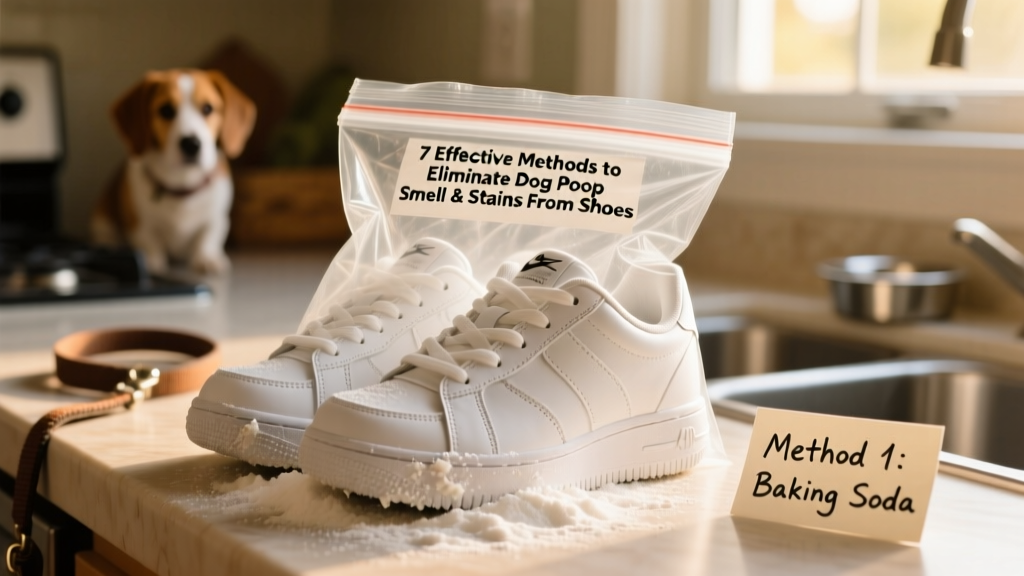
4. Baking Soda Absorption
Baking soda is a classic, science-backed odor absorber—it neutralizes acidic odor compounds rather than just covering them up.
Place your cleaned, damp-dry shoes inside a large Ziploc bag. Pour in enough baking soda to fully surround and cover them (about ½ cup per shoe). Seal tightly and leave for 8–12 hours—or overnight. Shake out excess powder outdoors, then wipe interior and sole with a dry cloth.
- Pros: Inexpensive, widely available, and safe for all shoe types
- Cons: Residual powder may linger in mesh or stitching if not shaken thoroughly
5. Activated Charcoal Deodorization
Activated charcoal has an enormous surface area that traps volatile organic compounds—the very molecules responsible for fecal odor.
Place your shoes beside (not inside) an open container or breathable pouch of activated charcoal—like FurPetVo’s odor-absorbing charcoal sachets. Keep them in a closed closet or cardboard box for 48–72 hours. Replace charcoal every 3–4 days if reusing.
- Pros: Hands-off, chemical-free, and reusable; ideal for shoes you can’t wash or spray
- Cons: Takes longer than other methods; best used as a finishing step after initial cleaning
6. Cat Litter Absorption
Clay- or silica-based cat litter excels at absorbing moisture and neutralizing ammonia-rich odors—making it surprisingly effective for dog poop residue.
Fill a large plastic bin or heavy-duty bag with unscented, clumping cat litter. Bury your shoes completely, seal, and leave undisturbed for 12–24 hours. Remove, shake vigorously outdoors, and brush away any remaining granules.
- Pros: Fast-acting and highly absorbent; works well for heavily soiled or porous soles
- Cons: Requires purchasing litter if you don’t already own it; avoid scented varieties—they may leave behind competing fragrances
7. Sunlight & Ventilation
Nature’s oldest deodorizer: UV light and airflow. After cleaning and drying, place shoes outside in direct sunlight for 2–4 hours. Flip them periodically so all surfaces get exposure. Pair with a fan indoors if outdoor space isn’t available.
Sunlight helps break down odor-causing compounds, while fresh air carries away lingering volatiles. Never use this method alone—always clean first—but it’s an excellent final step to ensure freshness.
- Pros: Free, natural, and enhances all other methods
- Cons: Less effective on cloudy or humid days; avoid prolonged sun exposure for colored or synthetic materials
With patience and the right technique, your shoes can bounce back from even the most unfortunate encounters. For ongoing odor prevention, consider keeping a small FurPetVo travel deodorizer spray in your bag—and always check your path before stepping!